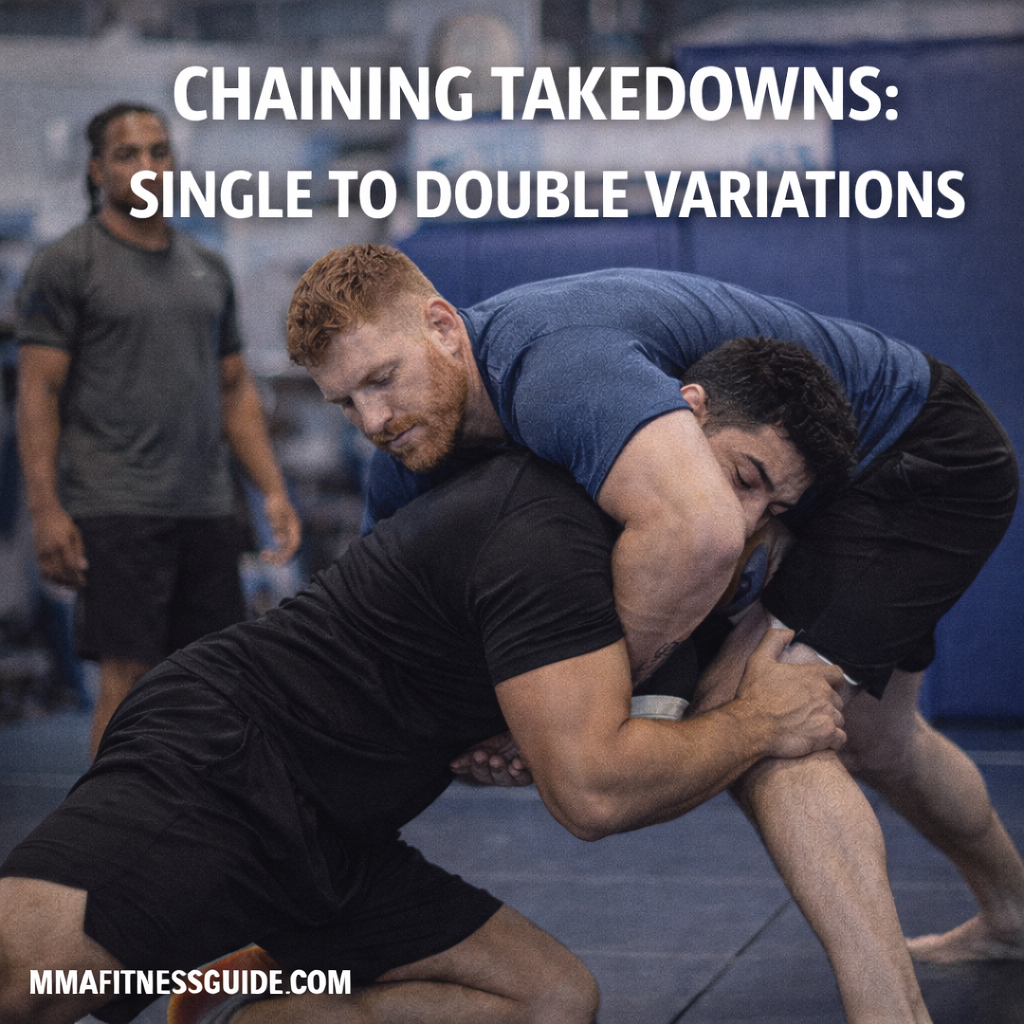
In MMA and wrestling-based grappling, the difference between failed shots and consistent takedowns often comes down to one skill: chaining attacks. Rarely does a clean takedown happen on the first attempt against a skilled opponent. Fighters who learn to flow from a single-leg into a double-leg dramatically increase their success rate and control where the fight takes place.
This guide breaks down how to chain single-leg attacks into double-leg finishes, why the transition works, and how to apply these variations in MMA without stalling or burning energy.
Why Chaining Takedowns Is Essential in MMA
Modern MMA defense is strong. Fighters train specifically to sprawl, frame, and disengage.
Chaining takedowns helps by:
- Forcing multiple defensive reactions
- Exploiting transitions instead of strength
- Reducing reliance on perfect entries
- Creating momentum through pressure
- Keeping opponents guessing
The first shot is often the setup — not the finish.
Single-Leg Takedowns as a Primary Entry
Single-leg takedowns are one of the safest entries in MMA.
Benefits include:
- Lower exposure to uppercuts and knees
- Easier recovery if the shot fails
- Strong control of balance
- Seamless transitions to the cage
However, single-legs are frequently defended, making follow-ups essential.
Common Single-Leg Defenses You’ll Encounter
Understanding defense helps you chain effectively.
Common reactions include:
- Hard sprawl with hip pressure
- Hopping and balancing on one leg
- Pushing the head down
- Turning the knee outward
- Posting on the cage
Each defense creates a predictable opening.
Why the Single-to-Double Transition Works
The transition from single to double works because it forces a weight shift.
Key advantages include:
- Opponent commits weight to defend one side
- Hips rise during balance adjustments
- Base narrows momentarily
- Upper body often becomes upright
Timing matters more than strength.
Core Single to Double Takedown Variations
Outside Single to Double Leg
This is one of the most common transitions.
How it works:
- Attack the outside single
- Force the opponent to hop or sprawl
- Switch hands from the leg to both knees
- Step your head to the opposite side
- Drive through the hips to finish the double
This works best when the opponent is defending upright.
Inside Single to Double Leg
The inside single offers quicker transitions.
Key steps include:
- Secure the inside single
- Elevate the leg slightly
- When they sprawl, drop the leg
- Immediately change levels
- Shoot through both legs for the double
This variation punishes aggressive sprawls.
High Single to Double Finish
The high single creates excellent leverage.
Execution includes:
- Lifting the leg high
- Forcing the opponent to post
- Dropping the leg as they regain balance
- Re-shooting to the hips
- Driving through for the double
This is effective against strong balance fighters.
Cage-Assisted Single to Double Transitions
The cage amplifies takedown success.
Benefits of using the cage include:
- Limiting opponent movement
- Preventing full sprawls
- Forcing upright posture
- Creating predictable reactions
From a single-leg on the cage, dropping levels into a double becomes much easier.
Head Position and Angle Control
Head placement is critical during transitions.
Focus on:
- Keeping your head tight to the body
- Switching head sides during transitions
- Driving with your legs, not your back
- Maintaining posture to avoid guillotines
Good head position protects you and improves finishes.
Timing the Transition Correctly
The best moment to transition is during resistance.
Transition when:
- The opponent hops hard
- The sprawl begins
- They push your head down
- They square their hips
Don’t force the switch — let their defense trigger it.
Striking Setups That Improve Takedown Chains
Strikes make takedowns easier to chain.
Effective setups include:
- Jab to level change
- Overhand to single-leg
- Body shots before entry
- Feints to force stance adjustments
Better entries create cleaner transitions.
Common Mistakes Fighters Make
Avoid these common errors:
- Holding onto failed single-legs too long
- Transitioning without changing levels
- Standing upright during the switch
- Forgetting head position
- Relying on strength instead of timing
Chaining should feel fluid, not forced.
Drills to Improve Single to Double Transitions
Train transitions intentionally.
Effective drills include:
- Single-leg to double shadow shots
- Partner resistance flow drills
- Cage-specific takedown rounds
- Reaction-based sprawl drills
- Live wrestling with chaining goals
Repetition builds instinct.
Applying Single to Double Chains in MMA
In MMA, safety matters as much as effectiveness.
Remember to:
- Keep posture to avoid strikes
- Be aware of knees during level changes
- Use the cage when possible
- Transition quickly to control positions
Successful takedowns lead to dominant positions — not just the mat.
Final Thoughts
Chaining single-leg attacks into double-leg finishes is a foundational skill for MMA fighters who want reliable takedowns. The goal isn’t to overpower opponents — it’s to outmaneuver their defenses through timing, pressure, and intelligent transitions.
Mastering single to double variations turns missed shots into successful takedowns and keeps opponents constantly reacting. When you chain attacks well, you control where the fight happens — and that control often decides the outcome.