Introduction
Rehabilitation is not just about exercises—it’s about how the body heals, adapts, and regains confidence after injury. One of the most overlooked tools in rehab is breathwork. Proper breathing techniques can significantly improve recovery quality, reduce pain, and help athletes reconnect with movement safely.
For MMA fighters and active individuals, integrating breathwork into rehab sessions supports both physical healing and mental resilience.
Why Breathwork Matters in Rehabilitation
Breathing directly influences the nervous system, muscle tension, and movement quality.
During rehab, effective breathwork helps:
- Reduce pain sensitivity
- Improve oxygen delivery to tissues
- Enhance relaxation and recovery
- Restore movement confidence
- Improve coordination and control
Healing accelerates when the body feels safe and regulated.
The Nervous System’s Role in Recovery
Injury often places the body in a stressed state.
Key effects include:
- Increased muscle guarding
- Heightened pain perception
- Reduced movement confidence
- Slower tissue healing
Breathwork helps shift the nervous system from a stressed, protective mode into a recovery-focused state.
Breathing Patterns After Injury
Many injured athletes develop poor breathing habits.
Common post-injury breathing patterns:
- Shallow chest breathing
- Breath holding during movement
- Rapid, anxious breathing
- Reduced diaphragm engagement
Correcting these patterns improves movement quality and comfort.
Diaphragmatic Breathing in Rehab
Diaphragmatic breathing is the foundation of rehab breathwork.
Benefits include:
- Improved core stability
- Reduced unnecessary muscle tension
- Better spinal support
- Enhanced relaxation
This breathing style supports safe, controlled movement.
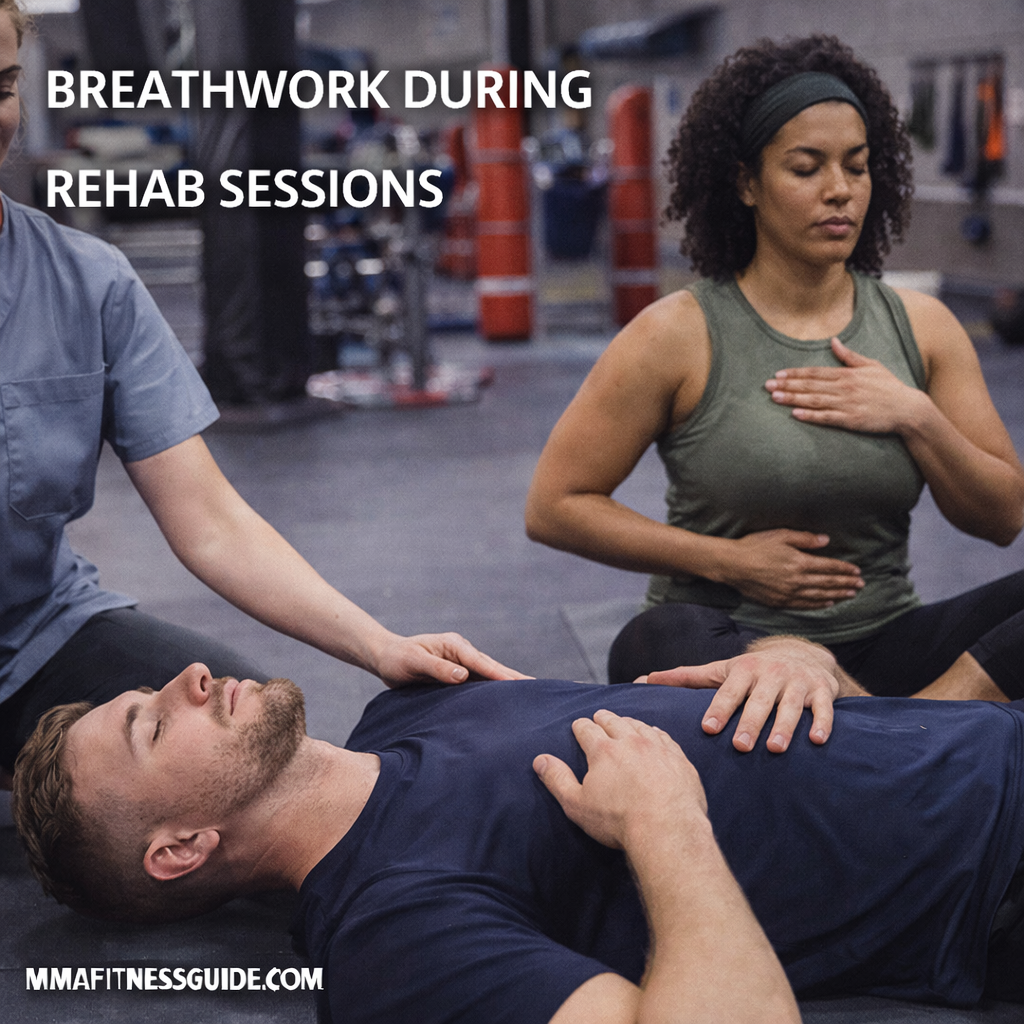
How to Practice Diaphragmatic Breathing
Simple steps for rehab settings:
- Lie on your back or sit upright
- Place one hand on the chest, one on the belly
- Inhale slowly through the nose
- Allow the belly and ribs to expand
- Exhale gently through the mouth
Practice for short, frequent sessions.
Breathwork and Pain Management
Breathing affects pain perception.
Slow, controlled breathing:
- Lowers nervous system arousal
- Reduces pain intensity
- Improves tolerance to movement
- Decreases fear-related tension
Pain often decreases when breathing improves.
Using Breathwork During Rehab Exercises
Breathing should support movement, not distract from it.
General guidelines:
- Inhale during easier phases
- Exhale during effort or discomfort
- Avoid breath holding
- Maintain a calm rhythm
This approach improves coordination and confidence.
Exhalation for Muscle Relaxation
The exhale plays a powerful role in rehab.
Longer exhales:
- Promote relaxation
- Reduce muscle guarding
- Improve joint mobility
Exhale-focused breathing is especially useful during stretching and mobility work.
Breathwork for Restoring Core Control
Breathing and core stability are connected.
Proper breathing:
- Coordinates diaphragm and deep core muscles
- Supports spinal stability
- Reduces compensatory movement
This is critical when returning to strength or sport-specific training.
Breathwork for Injury-Related Anxiety
Injury often brings mental stress.
Breathwork helps:
- Reduce fear of reinjury
- Improve focus during rehab
- Increase body awareness
- Build trust in movement again
Mental recovery supports physical recovery.
Nasal Breathing in Rehab
Nasal breathing offers added benefits.
Advantages include:
- Better oxygen efficiency
- Calmer nervous system response
- Reduced breathing rate
Nasal breathing is ideal for low-intensity rehab work.
Breathwork During Mobility and Stretching
Breathing enhances mobility outcomes.
Best practices:
- Inhale to prepare
- Exhale into stretches
- Avoid forcing range of motion
Relaxation improves flexibility safely.
Breathwork for Return-to-Training Transitions
As rehab progresses, breathwork remains valuable.
It helps with:
- Managing intensity increases
- Maintaining calm under load
- Improving movement efficiency
Breath control bridges rehab and full training.
Common Breathwork Mistakes in Rehab
Avoid these common errors:
- Overthinking breathing mechanics
- Forcing deep breaths aggressively
- Ignoring breath during effort
- Treating breathwork as optional
Breathing should feel natural and supportive.
How Often to Use Breathwork in Rehab
Consistency matters more than duration.
Recommended approach:
- Use breathwork every rehab session
- Practice briefly multiple times per day
- Integrate into warm-ups and cooldowns
Small doses deliver big benefits.
Working With Rehab Professionals
Breathwork should complement professional care.
Physical therapists may:
- Cue breathing during exercises
- Use breath to improve movement patterns
- Adjust breathing strategies based on injury
Collaboration improves outcomes.
Final Thoughts
Breathwork is a powerful yet simple tool in rehab sessions. By improving nervous system regulation, movement control, and pain tolerance, proper breathing supports faster, safer recovery. For MMA athletes and active individuals, learning to breathe well during rehab builds a stronger foundation for long-term performance and resilience.
Healing doesn’t just happen through movement—it happens through how you breathe while moving.