Introduction
Breathing and posture are two of the most overlooked foundations of exercise—especially for beginners. Many people focus on reps, sets, and intensity while unknowingly limiting progress through poor breathing patterns and inefficient posture. The result is reduced performance, quicker fatigue, and a higher risk of discomfort or injury.
Learning proper breathing and posture basics helps beginners move more efficiently, build strength safely, and feel more confident during workouts of any kind.
Why Breathing and Posture Matter Together
Breathing and posture are closely connected. Poor posture restricts breathing, while inefficient breathing reinforces poor posture.
When aligned correctly, they help:
- Improve oxygen delivery to muscles
- Enhance strength and stability
- Reduce neck, shoulder, and lower back strain
- Improve endurance and focus
- Support safer movement patterns
Good movement starts with good alignment and breath control.
Common Breathing Mistakes Beginners Make
Many beginners unknowingly breathe in ways that limit performance.
Common mistakes include:
- Shallow chest breathing
- Holding breath during effort
- Rapid, uncontrolled breathing
- Mouth breathing during light exercise
These habits increase tension and fatigue.
What Proper Breathing Looks Like During Exercise
Effective exercise breathing is controlled and rhythmic.
Key characteristics include:
- Breathing from the diaphragm
- Expansion through the ribs and abdomen
- Calm, steady breathing patterns
- Coordinating breath with movement
This type of breathing supports stability and endurance.
Diaphragmatic Breathing Basics
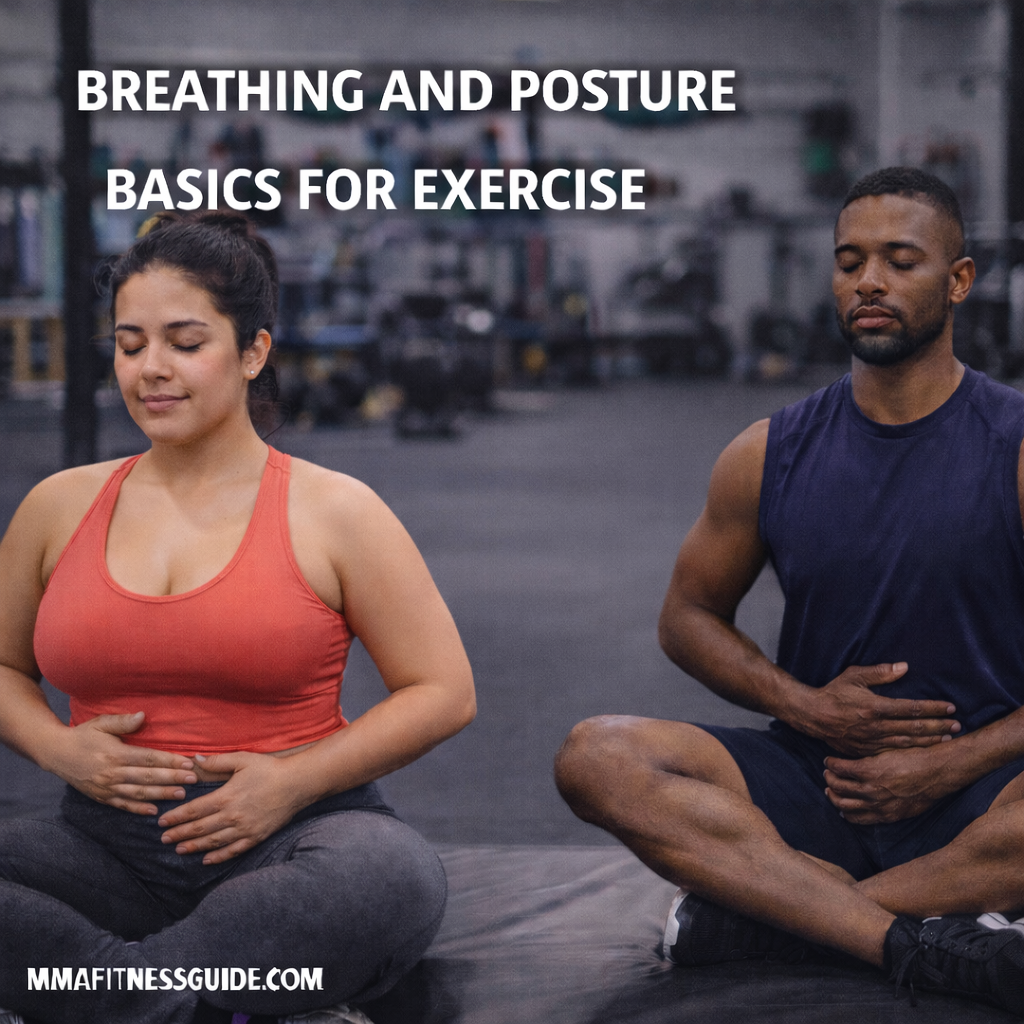
Diaphragmatic breathing, also called belly breathing, is the foundation of proper exercise breathing.
How it works:
- The diaphragm contracts downward on inhale
- The belly and ribcage expand
- The chest and shoulders remain relaxed
This allows deeper, more efficient breaths.
How to Practice Diaphragmatic Breathing
Beginners can practice anywhere.
Simple steps:
- Lie on your back or sit upright
- Place one hand on your chest, one on your belly
- Inhale through your nose, expanding the belly
- Exhale slowly through the mouth
- Keep the chest relatively still
Practice daily for a few minutes to build awareness.
Breathing During Strength Exercises
Breathing should support effort, not interrupt it.
General guidelines:
- Inhale during easier phases
- Exhale during effort or exertion
- Avoid holding your breath unintentionally
For example, exhale as you push, lift, or stand.
Breathing During Cardio and Conditioning
Breathing patterns vary by intensity.
Helpful tips:
- Use nasal breathing at low to moderate intensity
- Transition to controlled mouth breathing as intensity rises
- Maintain rhythm rather than gasping
Consistent breathing improves endurance and comfort.
Understanding Proper Exercise Posture
Posture refers to how your body is aligned during movement and at rest.
Good posture includes:
- Neutral spine
- Relaxed shoulders
- Head aligned over shoulders
- Even weight distribution
Posture supports efficient movement and breathing.
Common Posture Issues in Beginners
Modern lifestyles encourage poor posture habits.
Common issues include:
- Rounded shoulders
- Forward head position
- Excessive lower back arch
- Collapsed chest
These positions restrict breathing and strain joints.
Neutral Spine Explained
Neutral spine is the ideal alignment for most exercises.
Key features:
- Natural curve in the lower back
- Ribcage stacked over hips
- Head aligned with torso
Neutral does not mean rigid—it means balanced.
How Posture Affects Strength and Balance
Proper posture improves force transfer.
Benefits include:
- Better balance
- Increased strength output
- Reduced joint stress
- Improved coordination
Poor posture causes energy leaks and compensation.
Connecting Breathing to Core Stability
Breathing and core engagement work together.
When done correctly:
- Inhaling expands the core
- Exhaling helps gently brace the torso
- The spine remains supported during movement
This connection protects the lower back.
Simple Posture Cues for Beginners
Small cues create big improvements.
Helpful reminders:
- “Stand tall”
- “Ribs down, chest relaxed”
- “Head over shoulders”
- “Move with control”
Avoid forcing posture—aim for natural alignment.
Posture and Breathing in Everyday Life
Exercise posture carries into daily habits.
Pay attention to:
- Sitting posture at work
- Phone and screen use
- Standing alignment
- Walking mechanics
Improving daily posture improves workout performance.
Common Beginner Mistakes to Avoid
Avoid these habits:
- Overarching the lower back
- Shrugging shoulders during lifts
- Holding breath under stress
- Ignoring posture cues
Awareness is the first step to correction.
How Long It Takes to Improve Breathing and Posture
Progress happens gradually.
Most beginners notice:
- Improved awareness within weeks
- Better comfort during workouts
- Reduced tension and fatigue
Consistency matters more than perfection.
When to Slow Down and Reset
If movement feels strained:
- Pause the exercise
- Reset posture
- Take a few controlled breaths
- Resume with better alignment
Quality beats quantity.
Final Thoughts
Breathing and posture basics are foundational skills for every beginner. They improve performance, reduce injury risk, and make exercise feel more natural and sustainable. Mastering these fundamentals early builds confidence and sets the stage for long-term progress.
Strong movement starts with how you breathe and how you align your body—everything else builds from there.