Introduction
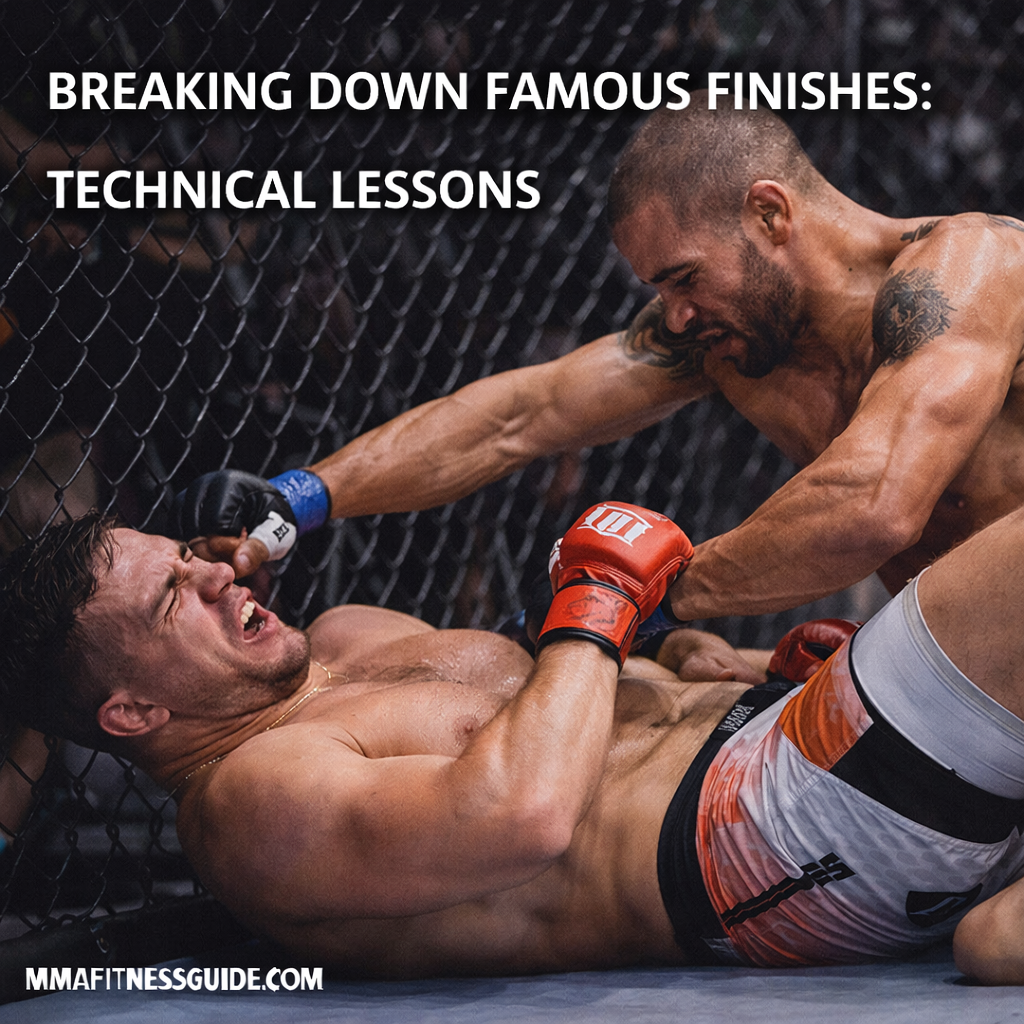
Some finishes in MMA become legendary—not just because they end fights, but because they showcase perfect timing, positioning, and technique under pressure. Famous finishes offer more than highlight reels; they provide valuable technical lessons that fighters at every level can study and apply.
By breaking down why these finishes worked, fighters can sharpen their own execution, improve decision-making, and avoid common mistakes that lead to being caught.
Why Studying Famous Finishes Matters
High-level finishes reveal what works when it matters most.
Studying them helps fighters:
- Understand timing and setup
- Recognize common defensive errors
- Learn efficient mechanics
- Improve fight IQ under pressure
Elite finishes are rarely accidents—they’re solutions to specific problems.
Finishes Are About Setups, Not Just Techniques
Most iconic finishes are the result of what happens before the final strike or submission.
Effective setups often include:
- Repeated patterns earlier in the fight
- Conditioning an opponent’s reactions
- Feints and misdirection
- Positional dominance
The finish is the final chapter, not the whole story.
Striking Finishes: Timing Beats Power
Knockouts from Counters
Many famous knockouts come from counters rather than raw aggression.
Key lessons include:
- Letting opponents overcommit
- Keeping hands relaxed and ready
- Staying balanced after strikes
- Punching through openings, not guards
Patience creates knockout opportunities.
Head Kicks After Punches
Head kick finishes rarely come naked.
Common setups:
- Repeated low kicks
- Jab-cross combinations
- Hands dropping from defensive reactions
The lesson is clear: disguise high-risk strikes.
Grappling Finishes: Position Before Submission
Rear-Naked Chokes
One of the most common finishes in MMA.
Technical takeaways:
- Secure back control before attacking
- Maintain chest-to-back pressure
- Control hands before applying the choke
- Be patient rather than forcing
Back control wins fights long before the tap.
Arm Triangles and Pressure Finishes
Pressure-based submissions teach efficiency.
Key lessons:
- Shoulder pressure matters more than squeezing
- Head positioning controls breathing
- Incremental adjustments finish fights
Relaxed pressure beats frantic effort.
Ground-and-Pound Finishes: Control Creates Damage
Ground-and-pound knockouts often look chaotic—but they’re structured.
Technical elements include:
- Posture control
- Wrist pinning
- Elbow positioning
- Balance over the hips
Control allows damage without sacrificing position.
Finishes Against the Cage
The cage amplifies technical advantages.
Common lessons:
- Using the fence to limit movement
- Cutting off escapes
- Changing levels when opponents shell up
Cage awareness turns pressure into opportunity.
Capitalizing on Fatigue
Many finishes occur when fatigue sets in.
Key observations:
- Hands drop as conditioning fades
- Footwork slows
- Defensive reactions become predictable
Smart fighters increase pressure when fatigue appears—not before.
Recognizing Defensive Habits
Famous finishes often exploit habits.
Examples include:
- Repeatedly backing straight up
- Lowering hands after combinations
- Turning the wrong direction during scrambles
Pattern recognition creates openings.
Mental Composure During Finishes
Great finishes require calm under chaos.
Elite fighters:
- Don’t rush when they smell blood
- Maintain technique under adrenaline
- Choose control over recklessness
Emotional control finishes fights cleanly.
What Not to Learn from Highlights
Highlight reels can be misleading.
Avoid copying:
- Wild swings without setup
- Low-percentage submissions
- Ignoring defensive responsibility
Context matters more than spectacle.
How to Study Finishes Productively
Watch fights with intention.
Focus on:
- What led to the opening
- Opponent reactions
- Positioning before impact
- Small adjustments, not just the end
Slow-motion replays reveal details.
Applying These Lessons in Training
Training should reflect fight realities.
Practical applications include:
- Drilling setups before finishes
- Practicing patience in sparring
- Emphasizing positional control
- Reviewing footage with coaches
Replication builds confidence.
Learning From Losses as Well as Wins
Famous finishes also teach defenders what to avoid.
Key defensive lessons:
- Don’t panic under pressure
- Respect fatigue signals
- Maintain fundamentals late
Every finish is a two-sided lesson.
Building Your Own High-Percentage Finishes
The best finishes match your style.
Focus on:
- Techniques that fit your attributes
- Reliable setups you can repeat
- Positions you consistently reach
Consistency beats creativity under pressure.
Final Thoughts
Famous MMA finishes are more than iconic moments—they’re technical case studies. When broken down properly, they reveal how preparation, positioning, and composure combine to end fights decisively. Fighters who study finishes with intent gain insight that shortcuts trial and error.
Great finishes don’t come from luck. They come from understanding, repetition, and execution at the right moment.