Introduction
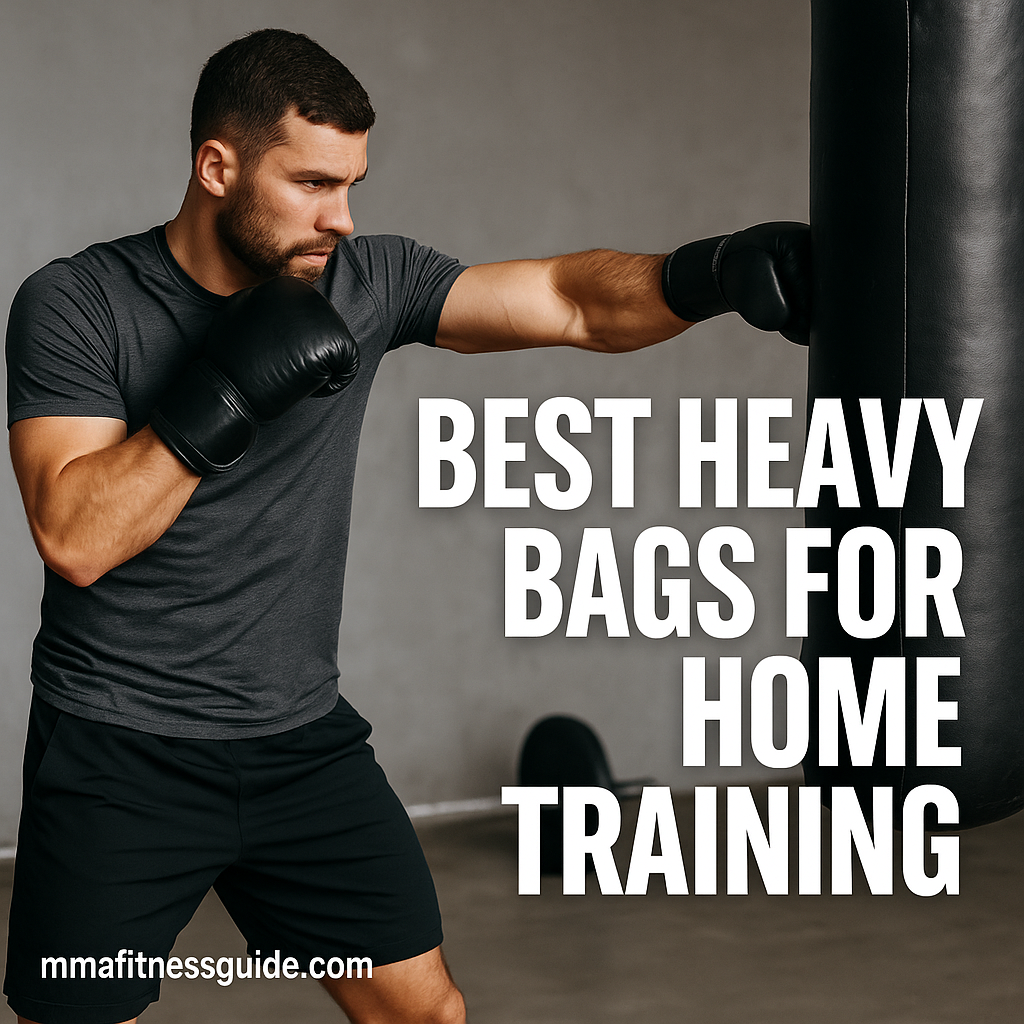
Training at home is one of the best ways to improve your striking, conditioning, and consistency — and having a good heavy bag makes all the difference. A quality bag helps you build power, sharpen technique, and get a full workout anytime without needing to visit the gym.
But with so many bag styles and sizes, picking the right one can feel confusing. This guide breaks down the best options for MMA athletes and beginners so you can choose a bag that fits your space, goals, and budget.
What to Look for in a Heavy Bag
Before choosing a bag, focus on these key features:
1. Durability
MMA striking includes:
- Punches
- Kicks
- Knees
- Elbows
You need a bag that can handle impact without tearing.
2. Weight
Heavier bags swing less.
Lighter bags move more and help train footwork.
Good starting weights:
- 70–100 lb for beginners
- 100–150 lb for power hitters
3. Bag Material
The most durable options:
- Synthetic leather (PU or vinyl)
- Microfiber leather
- Genuine leather (premium but costly)
4. Space Requirements
Hanging bags need more room; free-standing bags work better in small areas.
5. Type of Training
Different bags specialize in different skills.
Best Overall: Traditional Hanging Heavy Bag
A classic 80–100 lb heavy bag works for most fighters and fits almost any home setup.
Why It’s Great
- Perfect for boxing and kickboxing
- Stable when mounted properly
- Helps develop power and accuracy
- Durable and long-lasting
- Affordable options available
Best For
- Beginners who want a versatile bag
- Anyone with a garage or strong ceiling mount
If you only buy one bag, a traditional heavy bag is the best all-around choice.
Best for MMA Kicks: Muay Thai Long Bag (Banana Bag)
A long, narrow bag that reaches near the floor.
Why Fighters Love It
- Great for low kicks
- Allows full-body power strikes
- Won’t swing excessively
- Ideal for knees, elbows, roundhouse kicks
Best For
- MMA athletes practicing full kick ranges
- Small home gyms with vertical space
Muay Thai bags build real fight-ready striking mechanics.
Best for Small Spaces: Free-Standing Heavy Bag
No mounting, no drilling — just place it and train.
Why It Works
- Perfect for apartments
- No ceiling installation required
- Easy to move around
- Safer for beginners
Limitations
- Not ideal for heavy low kicks
- Can move around more on hard strikes
Best For
- Small home setups
- Entry-level training
If you want convenience, free-standing bags are the easiest option.
Best for Power Punchers: 150–200 lb XL Heavy Bag
If you want to build punching power, a heavier bag is the way to go.
Benefits
- Barely moves on impact
- Great for conditioning rounds
- Trains power combinations
- Good for strong athletes
Best For
- Heavier fighters
- People with strong mounts or garage gyms
A heavy bag gives the closest feel to hitting a real opponent.
Best for Precision & Movement: Double-End Bag
Not a traditional heavy bag — but essential for speed and accuracy.
Why It’s Helpful
- Builds reflexes and timing
- Improves accuracy
- Great for quick combos and head movement
- Adds variety to home training
Best For
- Improving striking skill
- Boxing-style movement
Pairs perfectly with a heavy bag.
Best Hybrid Option: Uppercut + Heavy Bag Combo
Some bags include angled surfaces for uppercuts and hooks.
Why It’s Useful
- Adds striking variety
- Simulates real fight angles
- Great for MMA boxing
- Allows elbows and dirty boxing practice
Best For
- Well-rounded strikers
- MMA-focused drilling
If you want one bag that does everything, this is a strong choice.
Best Budget Pick: Synthetic 70–80 lb Bag
A simple, cost-friendly option that still gets the job done.
Benefits
- Affordable
- Good durability
- Suitable for beginners
- Easy to mount
Best For
- New fighters
- Light to moderate training
A budget bag is perfect if you’re just starting out.
Filling Options: What’s Inside the Bag
Heavy bags come filled or empty.
Common fillings:
- Fabric scraps (soft, safe, common)
- Sand (very dense, not beginner-friendly)
- Foam (smooth, great for beginners)
- Water (free-standing bags only)
For most fighters:
Fabric-filled bags give the best feel.
Where to Put Your Heavy Bag at Home
Good locations include:
- Garage
- Basement
- Outdoor patio (weatherproof bag)
- Spare room
- Mounted in a ceiling beam
- Free-standing in a corner
Ensure enough space for movement:
At least 3–4 feet of space around the bag.
Training Tips for Using a Heavy Bag
To get the most out of home training:
- Start with light, technical rounds
- Mix punches, kicks, and knees
- Practice footwork, not just power
- Add conditioning intervals
- Record your rounds to check technique
- Use wraps or gloves to protect your hands
Even 10–15 minutes a day adds up fast.
Final Thoughts
The best heavy bag for home training depends on your space, goals, and skill level. Whether you choose a traditional heavy bag, a Muay Thai long bag, a free-standing model, or a double-end bag, the important thing is consistency. A home bag setup keeps you training year-round, boosts your striking, and builds confidence.
Pick the style that fits your needs and start building your home fight gym today.