Introduction
Music, podcasts, and guided audio can be powerful training tools—but only if your headphones can keep up. MMA training involves movement, sweat, impact, and noise, which means regular headphones often fail quickly or become distracting.
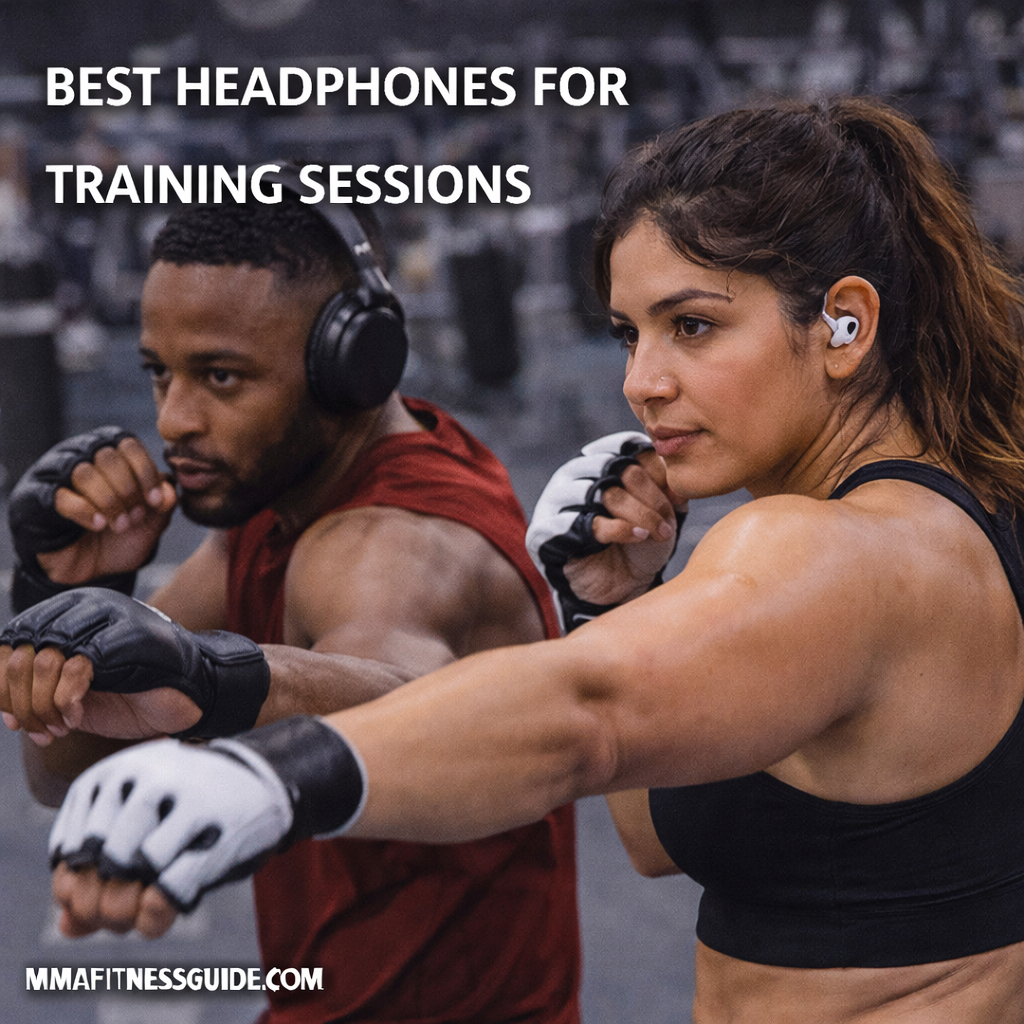
Choosing the best headphones for training sessions helps fighters stay focused, motivated, and consistent without sacrificing comfort or safety.
Why Headphones Matter in MMA Training
Headphones aren’t just for entertainment—they support performance.
Well-chosen training headphones help:
- Improve focus during solo workouts
- Maintain rhythm during conditioning
- Support warm-ups and cooldowns
- Enhance recovery sessions
- Block distractions in busy gyms
Poor headphones can break focus or become a liability.
Key Features to Look for in Training Headphones
Not all headphones are built for combat athletes.
Important features include:
- Secure fit during movement
- Sweat and water resistance
- Durable construction
- Clear sound at safe volumes
- Simple controls
Stability and durability matter more than studio-quality sound.
Over-Ear vs In-Ear Headphones
Over-Ear Headphones
Pros:
- Strong sound quality
- Better noise isolation
- Comfortable for static workouts
Cons:
- Can shift during movement
- Retain heat
- Not ideal for grappling or agility work
Best for lifting, warm-ups, or recovery sessions.
In-Ear Headphones (Earbuds)
Pros:
- Lightweight and low-profile
- Better for movement-based training
- Easier to pack and store
Cons:
- Fit varies by ear shape
- Can fall out if poorly designed
Most MMA athletes prefer in-ear options.
Wireless vs Wired Headphones
Wireless Headphones
Benefits include:
- No cords to snag
- Greater freedom of movement
- Cleaner setup for conditioning
Battery life and connection stability are key considerations.
Wired Headphones
Advantages:
- No charging required
- Consistent audio quality
Drawbacks:
- Cords can interfere with movement
- Less practical for dynamic sessions
Wireless is generally better for MMA training.
Secure Fit: The Most Important Factor
Movement exposes poor fit immediately.
Look for:
- Ear hooks or wings
- Multiple ear tip sizes
- Lightweight design
A secure fit prevents constant readjustment.
Sweat and Water Resistance Ratings
MMA training produces heavy sweat.
Key ratings:
- Splash-resistant: light sweat only
- Water-resistant: moderate sweat
- Sweatproof or sport-rated: best option
Durability saves money long-term.
Sound Quality vs Safety
Loud music can mask fatigue cues.
Best practices:
- Use moderate volume
- Prioritize clarity over bass
- Maintain situational awareness
Hearing protection matters as much as motivation.
Noise Cancellation: Helpful or Harmful?
Noise cancellation can be a double-edged sword.
Helpful for:
- Cardio machines
- Recovery sessions
- Solo workouts
Risky during:
- Shared gym spaces
- Sparring areas
- Busy training floors
Awareness should always come first.
Battery Life for Training Sessions
Long sessions demand reliability.
Look for:
- At least 6–8 hours per charge
- Quick-charge capability
- Charging case for earbuds
Dead batteries disrupt training flow.
Controls and Ease of Use
Simple controls prevent frustration.
Helpful features include:
- Physical buttons over touch controls
- Easy volume adjustment
- One-tap pause
Complex controls break focus.
Comfort During Extended Wear
Discomfort reduces consistency.
Consider:
- Lightweight materials
- Pressure-free fit
- Breathable design
Comfort supports longer sessions.
Headphones for Different Training Types
Best uses vary by session type.
Strength training:
- Over-ear or stable in-ear
Conditioning and agility:
- Secure in-ear only
Recovery and stretching:
- Comfort-focused designs
Match the tool to the task.
Hygiene and Maintenance
Headphones collect sweat and bacteria.
Best practices:
- Wipe down after every session
- Remove ear tips regularly for cleaning
- Avoid storing damp headphones
Clean gear lasts longer and stays safer.
Common Mistakes Fighters Make With Headphones
Avoid these issues:
- Using loose-fitting earbuds
- Ignoring sweat resistance
- Training at excessive volume
- Wearing headphones during unsafe drills
Awareness beats convenience.
When Not to Use Headphones
Headphones aren’t always appropriate.
Avoid using them during:
- Live sparring
- Partner drills
- Instruction-heavy classes
Safety and communication come first.
Balancing Focus and Awareness
The best training headphones enhance—not replace—focus.
Use audio to:
- Set rhythm
- Improve mood
- Support consistency
But stay connected to your environment.
Final Thoughts
The best headphones for training sessions are secure, sweat-resistant, comfortable, and simple to use. MMA athletes should prioritize fit, durability, and safety over flashy features. When chosen wisely, headphones can become a reliable training companion that supports focus, motivation, and recovery.
Good gear removes distractions—so your effort stays where it belongs.