Recovery is just as important as training for MMA fighters. Striking, grappling, wrestling, and conditioning sessions place heavy stress on muscles, joints, and connective tissue. Without proper recovery, performance drops, injury risk increases, and progress slows.
Handheld massage tools have become a staple in fight camps because they help fighters reduce soreness, improve circulation, and maintain mobility without needing constant access to a therapist. This guide breaks down the best types of handheld massage tools for MMA recovery, how to use them, and what to look for before buying.
Why Recovery Tools Matter for MMA Fighters
MMA training creates unique recovery demands due to:
- Repeated impact from striking
- Grip and forearm fatigue from grappling
- Hip and lower-back tightness from wrestling
- Neck and shoulder strain from clinch work
- High training frequency with limited rest days
Handheld massage tools allow fighters to address these issues daily, between sessions, and during fight camp.
Benefits of Handheld Massage Tools
When used consistently, massage tools can help fighters:
- Reduce muscle soreness and stiffness
- Improve blood flow and nutrient delivery
- Increase range of motion
- Speed up post-training recovery
- Identify tight or restricted areas early
They are most effective when paired with proper hydration, sleep, and mobility work.
Types of Handheld Massage Tools for MMA Recovery
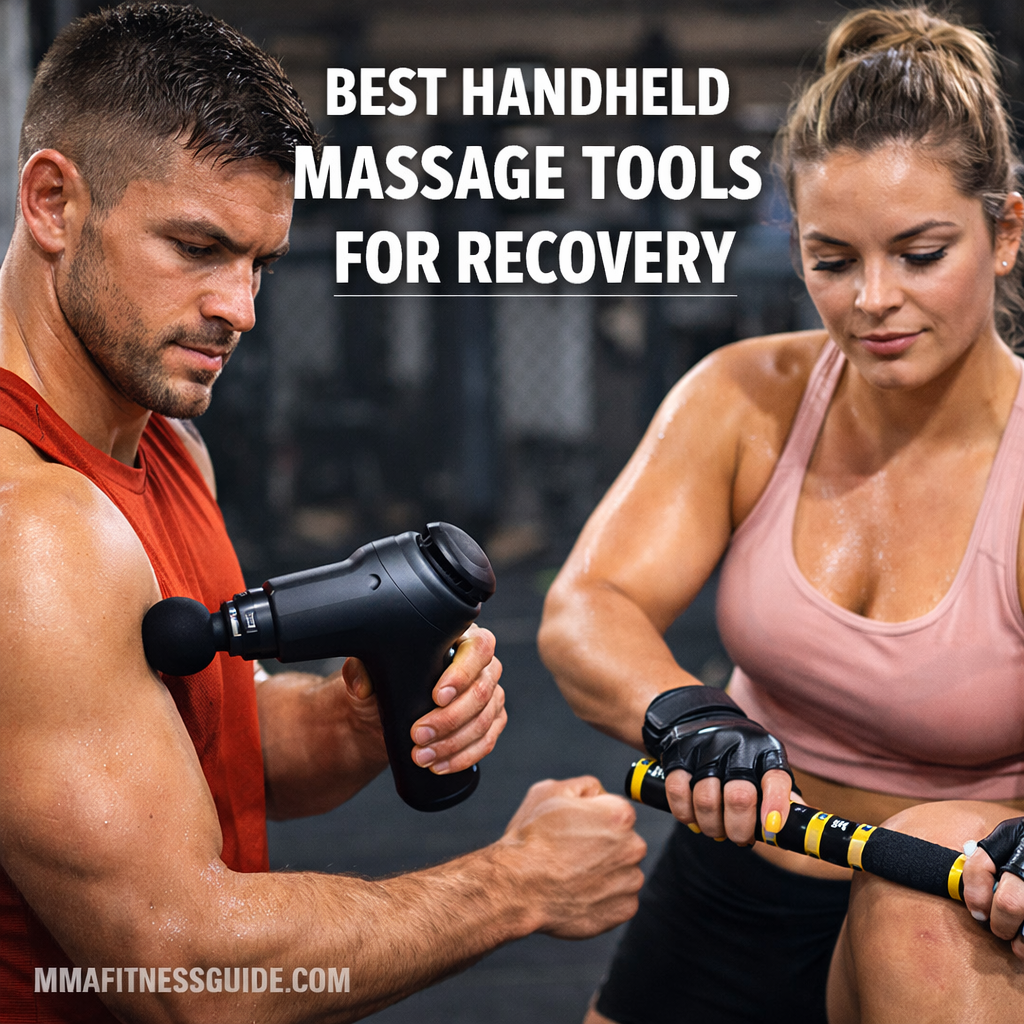
Percussion Massage Guns
Percussion guns deliver rapid pulses into muscle tissue.
Best for:
- Large muscle groups like quads, glutes, and hamstrings
- Post-sparring soreness
- Deep muscle tension
- Faster recovery between hard sessions
Considerations:
- Too much pressure can increase soreness
- Avoid direct use on joints or the neck
- Best used for short, controlled sessions
Manual Massage Rollers and Sticks
Massage sticks and rollers allow precise control over pressure.
Best for:
- Forearms and calves
- IT bands and shins
- Targeted tight spots
- Pre-training warm-ups
Advantages include portability and no reliance on batteries.
Trigger Point Massage Tools
These tools are designed to apply focused pressure to specific knots.
Best for:
- Shoulder blades
- Hips and glutes
- Upper back and traps
- Hard-to-reach trigger points
Trigger point tools are excellent for fighters dealing with recurring tightness in the same areas.
Vibrating Massage Tools
Vibration-based tools combine mild percussion with oscillation.
Best for:
- Sensitive areas
- Light recovery days
- Fighters new to massage tools
- Nervous system relaxation
They are less intense than percussion guns but still effective for circulation.
What to Look for in a Handheld Massage Tool
When choosing a massage tool for MMA recovery, prioritize function over hype.
Key features to consider:
- Adjustable intensity levels
- Ergonomic grip for sweaty hands
- Battery life (if electronic)
- Interchangeable heads for different muscle groups
- Quiet operation for home or gym use
- Durable build quality
A tool that’s easy to use consistently is better than a powerful one you avoid.
Best Muscle Groups to Target After Training
Focus your recovery on areas that take the most punishment.
Common priorities include:
- Forearms and hands
- Neck and upper traps
- Hips and hip flexors
- Lower back
- Calves and Achilles
- Shoulders and rotator cuff area
Rotate focus areas rather than attacking everything at once.
How to Use Massage Tools Effectively
Timing Matters
Best times to use massage tools include:
- Immediately after training
- Later in the evening before bed
- On rest or active recovery days
Avoid aggressive use right before heavy sparring.
Keep Sessions Short
Effective recovery sessions usually last:
- 5–10 minutes per area
- 15–20 minutes total
More pressure or longer sessions do not equal better recovery.
Listen to Your Body
Pain is not the goal. Signs you’re overdoing it include:
- Increased soreness the next day
- Bruising
- Tightening instead of loosening
Recovery should leave you feeling better, not beaten up.
Massage Tools vs Professional Bodywork
Handheld tools are not replacements for sports massage or physical therapy.
They work best as:
- Daily maintenance tools
- Supplements between appointments
- Travel-friendly recovery options
Fighters with chronic injuries should consult a professional before relying solely on tools.
Common Mistakes Fighters Make
Avoid these recovery mistakes:
- Using tools aggressively every day
- Ignoring hydration and sleep
- Rolling directly over joints or the spine
- Skipping warm-ups and relying only on recovery
- Treating recovery as optional
Recovery is part of training, not an afterthought.
Final Thoughts
Handheld massage tools are powerful recovery assets for MMA fighters when used correctly. Whether you prefer percussion guns, manual rollers, or trigger point tools, consistency matters more than brand or price.
By integrating massage tools into your routine, you can train harder, recover faster, and stay healthier throughout fight camp and beyond. The best fighters don’t just push their bodies — they take care of them.