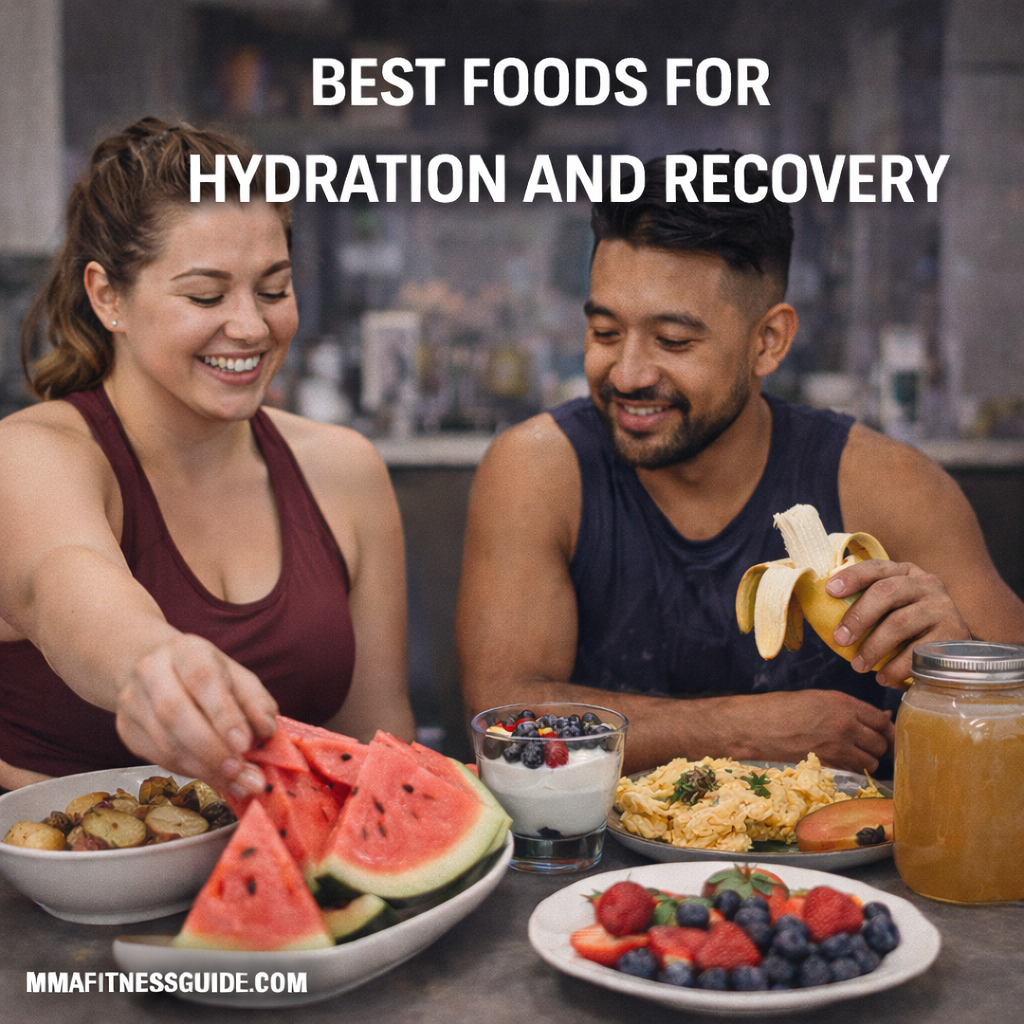
Hydration isn’t just about drinking water—what you eat plays a major role in how well your body rehydrates, recovers, and performs after MMA training. Intense sessions lead to fluid loss, electrolyte depletion, muscle breakdown, and nervous system fatigue. Choosing the right foods can speed recovery, improve energy levels, and help fighters return to training feeling stronger instead of drained.
This article covers the best foods for hydration and recovery, why they work, and how MMA athletes can use them effectively.
Why Food Matters for Hydration
Water alone doesn’t fully restore hydration after hard training.
Proper hydration requires:
- Fluids
- Electrolytes (sodium, potassium, magnesium)
- Carbohydrates for fluid absorption
- Nutrients that support muscle repair
Food helps the body retain and utilize fluids instead of flushing them out.
Key Nutrients That Support Hydration and Recovery
Certain nutrients play a direct role in rehydration and muscle repair.
Important nutrients include:
- Sodium for fluid balance
- Potassium for muscle and nerve function
- Magnesium for recovery and relaxation
- Carbohydrates for glycogen restoration
- Protein for muscle repair
The best recovery foods combine several of these elements.
Fruits That Support Hydration
Watermelon
Watermelon is over 90% water and contains electrolytes.
Benefits:
- High water content
- Natural sugars for glycogen
- Potassium support
- Easy digestion post-training
It’s ideal after intense or hot training sessions.
Oranges and Citrus Fruits
Citrus fruits support hydration and immune health.
Benefits:
- High water content
- Potassium
- Vitamin C
- Refreshing post-training taste
They pair well with protein-rich recovery meals.
Berries
Berries support recovery through antioxidants.
Benefits:
- Anti-inflammatory compounds
- Moderate hydration
- Low digestive stress
- Support muscle repair
They’re excellent in smoothies or post-training snacks.
Vegetables That Aid Rehydration
Cucumbers
Cucumbers are extremely hydrating.
Benefits:
- High water content
- Easy digestion
- Cooling effect
- Supports electrolyte balance
They’re useful during weight management phases.
Leafy Greens
Spinach, kale, and similar greens offer recovery benefits.
Benefits:
- Magnesium and potassium
- Anti-inflammatory compounds
- Support muscle function
They work best in balanced meals rather than alone.
Protein-Rich Foods for Recovery
Greek Yogurt
Greek yogurt supports both hydration and muscle repair.
Benefits:
- Protein for recovery
- Potassium
- Probiotics for gut health
- Easy post-training digestion
It’s especially helpful after hard conditioning sessions.
Eggs
Eggs are a simple recovery staple.
Benefits:
- High-quality protein
- Amino acids for muscle repair
- Easy meal integration
Pair eggs with hydrating vegetables or fruit for balance.
Foods That Restore Electrolytes
Bananas
Bananas are a classic recovery food.
Benefits:
- Potassium-rich
- Easy digestion
- Supports muscle contraction
- Combats cramping
They’re ideal immediately after training.
Potatoes
Potatoes are underrated for hydration.
Benefits:
- Potassium and sodium (when salted)
- Carbohydrates for glycogen
- Easy to prepare
They’re effective for post-training meals.
Bone Broth
Bone broth supports hydration and joint health.
Benefits:
- Sodium and minerals
- Easy fluid intake
- Supports connective tissue
It’s useful during heavy training weeks.
Hydrating Carbohydrate Sources
Carbohydrates help the body retain fluids.
Good options include:
- Rice
- Oats
- Quinoa
- Sweet potatoes
- Whole-grain bread
Carbs combined with sodium improve rehydration efficiency.
Smoothies for Hydration and Recovery
Smoothies are convenient and effective.
A balanced recovery smoothie may include:
- Fruit for hydration
- Protein source
- Yogurt or milk
- Pinch of salt
Smoothies are ideal when appetite is low post-training.
Timing Matters for Hydration Foods
When you eat matters as much as what you eat.
Best times to focus on hydration foods:
- Immediately after training
- Within 1–2 hours post-session
- Spread across the rest of the day
Hydration is cumulative, not a single event.
Foods to Limit During Recovery
Some foods slow hydration.
Limit:
- Highly processed foods
- Excess alcohol
- Very high-fat meals immediately post-training
- Excessive caffeine
These can interfere with fluid balance.
Hydration During Fight Camps vs Regular Training
Needs increase during fight camps.
During camps:
- Increase electrolyte intake
- Eat more hydrating foods daily
- Monitor urine color and energy levels
Consistent nutrition reduces performance drops.
Simple Post-Training Hydration Meal Ideas
Examples:
- Grilled chicken, rice, cucumber, and fruit
- Eggs, potatoes, and leafy greens
- Greek yogurt with berries and honey
- Smoothie with banana, yogurt, and salt
Simple meals work best consistently.
Signs You’re Rehydrating Properly
Positive signs include:
- Improved energy
- Reduced muscle cramping
- Better sleep
- Faster recovery between sessions
- Stable body weight day to day
Recovery improves when hydration is consistent.
Final Thoughts
Hydration and recovery don’t come from water alone. The right foods provide electrolytes, carbohydrates, and nutrients that help your body absorb fluids and repair muscles after MMA training. By consistently choosing hydrating, nutrient-dense foods, fighters can recover faster, train harder, and perform more reliably.
Smart nutrition turns hard training into real progress.