Kettlebells are one of the most effective tools for building strength, conditioning, and coordination—especially for beginners. Unlike traditional dumbbells, kettlebells challenge balance, grip strength, and core stability at the same time, making them ideal for full-body training and functional fitness.
This guide covers beginner kettlebell movements, explains proper technique, and shows how new trainees can safely build strength and confidence using simple, foundational exercises.
Why Kettlebells Are Great for Beginners
Kettlebells offer a low barrier to entry with high payoff.
Benefits for beginners include:
- Full-body strength development
- Improved coordination and balance
- Core engagement with every movement
- Cardiovascular conditioning
- Minimal equipment and space required
When learned correctly, kettlebell training builds a strong fitness base that carries over into martial arts, sports, and daily life.
Choosing the Right Kettlebell Weight
Starting too heavy is the most common beginner mistake.
General starting recommendations:
- Beginners (most adults): 8–12 kg (18–26 lbs)
- Lighter athletes or complete beginners: 6–8 kg (13–18 lbs)
- Stronger beginners with lifting experience: 12–16 kg (26–35 lbs)
Focus on technique first. You can always increase weight later.
Fundamental Kettlebell Safety Tips
Before learning movements, follow these basics:
- Warm up hips, shoulders, and core
- Keep wrists neutral and grip firm
- Control the kettlebell at all times
- Stop if form breaks down
- Train on a non-slip surface
Good technique prevents injury and builds long-term progress.
Beginner Kettlebell Movements to Learn First
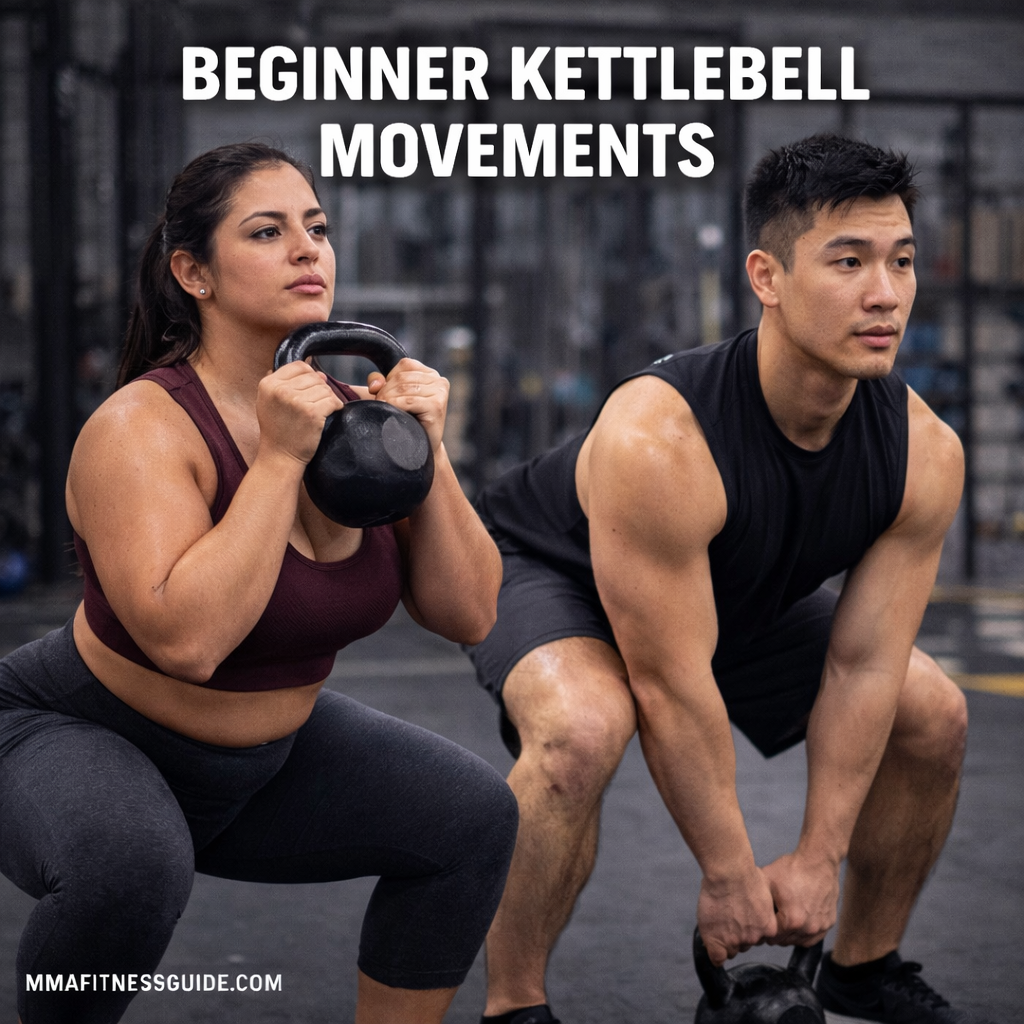
Kettlebell Deadlift
The kettlebell deadlift teaches proper hip hinge mechanics.
Key benefits:
- Strengthens glutes, hamstrings, and lower back
- Builds lifting confidence
- Prepares you for swings
Form cues:
- Feet shoulder-width apart
- Push hips back
- Keep chest tall and spine neutral
- Drive through heels to stand
Goblet Squat
The goblet squat improves squat depth and posture.
Why it’s great for beginners:
- Encourages upright torso
- Strengthens legs and core
- Teaches squat mechanics safely
Form cues:
- Hold kettlebell close to chest
- Sit between hips
- Keep knees tracking over toes
- Brace core throughout the movement
Kettlebell Swing (Beginner Version)
The swing is a foundational kettlebell movement but must be learned carefully.
Benefits:
- Builds explosive hip power
- Improves conditioning
- Strengthens posterior chain
Beginner tips:
- Start with deadlifts and hip hinges
- Focus on hip snap, not arm lifting
- Keep the bell below shoulder height initially
- Let the hips drive the movement
Kettlebell Press (Strict Press)
The kettlebell press builds shoulder strength and stability.
Key benefits:
- Develops shoulder and triceps strength
- Improves core stability
- Builds overhead confidence
Form cues:
- Brace core and glutes
- Press in a straight line overhead
- Keep wrist stacked over elbow
- Lower with control
Kettlebell Row
Rows balance pushing movements and strengthen the upper back.
Why beginners need it:
- Improves posture
- Builds back and grip strength
- Supports shoulder health
Form cues:
- Hinge at hips
- Pull elbow toward ribs
- Squeeze shoulder blade at the top
- Avoid twisting torso
Kettlebell Carry (Farmer or Goblet Carry)
Carries are simple but incredibly effective.
Benefits:
- Builds core and grip strength
- Improves posture
- Enhances full-body stability
How to perform:
- Hold kettlebell securely
- Walk with tall posture
- Keep ribs down and core tight
- Take slow, controlled steps
Sample Beginner Kettlebell Workout
This simple routine can be done 2–3 times per week.
Example workout:
- Kettlebell Deadlift – 3 sets of 10
- Goblet Squat – 3 sets of 8
- Kettlebell Row – 3 sets of 8 per side
- Kettlebell Press – 3 sets of 6 per side
- Farmer Carry – 3 rounds of 30–45 seconds
Rest 60–90 seconds between sets.
Common Beginner Mistakes to Avoid
Watch out for these issues:
- Using too much weight too soon
- Squatting instead of hinging during swings
- Overusing arms instead of hips
- Rushing reps without control
- Ignoring warm-ups and mobility
Slow, consistent progress beats fast mistakes.
How Often Beginners Should Train With Kettlebells
For most beginners:
- 2–3 sessions per week
- At least one rest day between sessions
- Focus on quality over volume
As strength and confidence improve, training frequency can increase gradually.
Final Thoughts
Beginner kettlebell movements build strength, coordination, and conditioning with minimal equipment and maximum efficiency. By mastering basic exercises like deadlifts, goblet squats, swings, presses, and carries, beginners create a solid fitness foundation that supports long-term progress and injury prevention.
Start light, train with intent, and focus on technique—the results will follow.