Rest Is a Weapon, Not a Weakness
In MMA, there’s a constant push to train harder, longer, and more intensely than everyone else.
But the truth is — growth happens during recovery, not during the grind.
Active recovery days give your muscles, joints, and nervous system the time they need to rebuild stronger. They’re not “days off” — they’re part of a smarter training strategy.
If you’ve ever felt burnt out, sore, or plateaued despite training constantly, chances are you’re not recovering enough.
What Is Active Recovery?
Active recovery means engaging in low-intensity movement that increases blood flow and promotes recovery without adding stress to your body.
Think of it as “moving rest.”
Instead of sitting on the couch all day, you stay active — but in ways that let your body heal, loosen, and recharge.
Examples of active recovery:
- Light jogging or walking
- Yoga or mobility flow
- Swimming or cycling at an easy pace
- Foam rolling and stretching
- Technique drilling at low intensity
The goal isn’t to push your limits — it’s to restore them.
Why Active Recovery Matters for Fighters
Combat sports take a serious toll on the body. Every session — striking, grappling, or conditioning — creates microtears in your muscles and stress on your joints.
Without recovery, those small breakdowns add up to injuries, fatigue, and performance drops.
Active recovery helps by:
- Reducing muscle soreness through improved blood circulation
- Flushing out lactic acid and metabolic waste
- Improving flexibility and joint range of motion
- Recharging your nervous system for better focus
- Preventing overtraining and burnout
A rested fighter is a dangerous fighter.
The Science Behind It
After intense training, your body enters a recovery phase where it repairs muscle fibers and replenishes glycogen stores.
Light movement enhances this process by increasing oxygen delivery to muscles.
Studies show that low-intensity activity accelerates recovery compared to complete rest — meaning you’ll feel less sore and perform better the next day.
Think of active recovery as “active repair.”
How Often Should Fighters Do Active Recovery?
Most MMA athletes benefit from 1–2 active recovery days per week, depending on training volume.
Example weekly layout:
- Mon: Striking + Conditioning
- Tue: Grappling
- Wed: Active recovery (mobility + light cardio)
- Thu: Sparring + Strength
- Fri: Technical drilling
- Sat: Active recovery (yoga + foam rolling)
- Sun: Rest or mental reset
This rhythm keeps your body in peak condition without overtraining.
What to Do on Active Recovery Days
Here are effective, fighter-friendly options to structure your recovery days:
1. Mobility Flow
Spend 20–30 minutes moving through slow, controlled joint rotations and stretches.
Focus on hips, shoulders, and spine — key areas for fighters.
2. Light Cardio
Low-impact work like swimming, cycling, or jump rope at 50–60% effort.
Improves endurance and promotes circulation without strain.
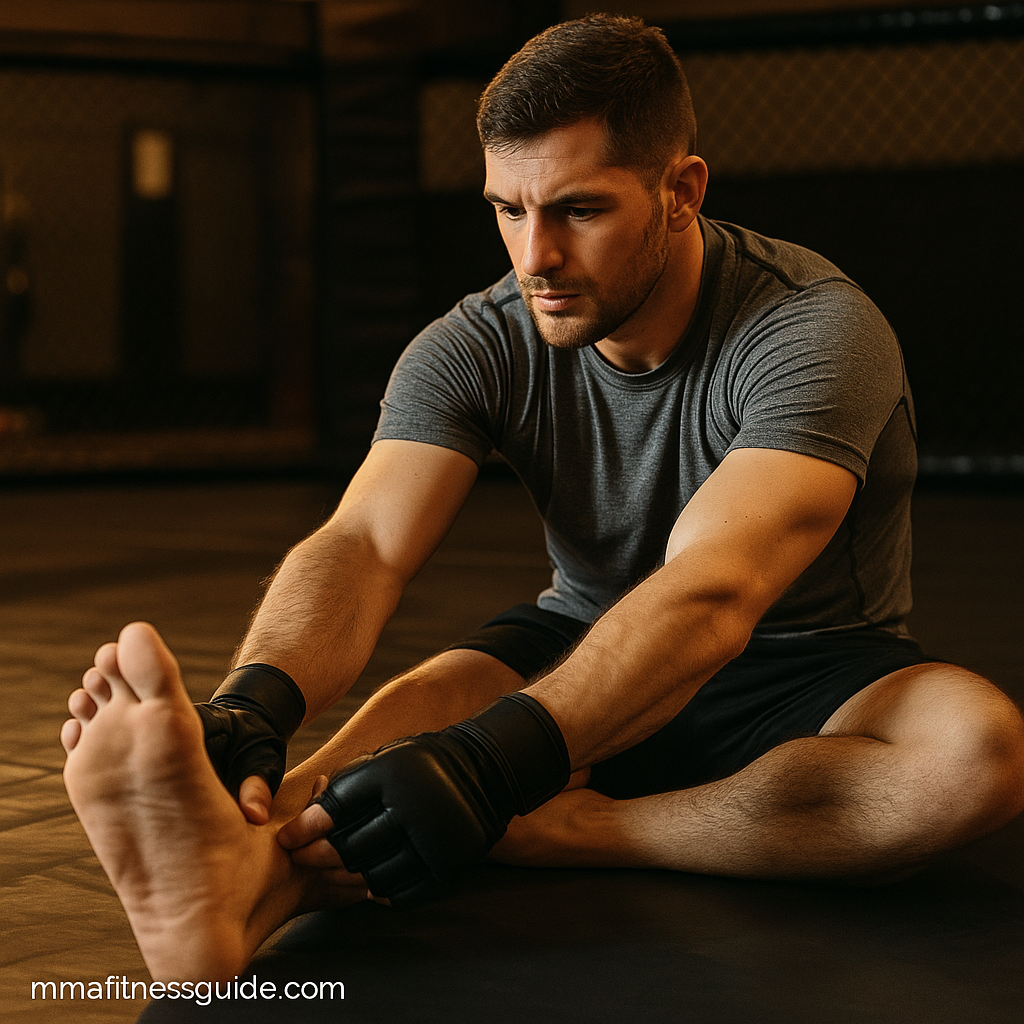
3. Yoga or Stretching
Restores balance, flexibility, and breathing control.
Combat athletes benefit especially from deep hip and hamstring stretches.
4. Foam Rolling
Releases tension, increases mobility, and reduces soreness.
Focus on quads, glutes, lats, and calves — your hardest-working muscles.
5. Technical Flow
Drill slow, controlled technique — think shadowboxing, light grappling, or bag flow rounds at 50% speed.
Keep the focus on precision, not power.
Mental Recovery Matters Too
Physical rest is only half the equation.
Active recovery also resets your mind — helping fighters manage stress, frustration, and fatigue.
Use recovery days to:
- Reflect on training goals
- Watch tape or visualize success
- Meditate or journal
- Disconnect from screens and social media
Mental stillness creates clarity — and clarity improves fight IQ.
Common Mistakes to Avoid
- Going too hard: Recovery days aren’t for testing cardio.
- Skipping entirely: Thinking rest is “lazy” leads to burnout.
- Neglecting sleep: No recovery strategy works without quality sleep.
- Ignoring nutrition: Replenish with protein, electrolytes, and hydration.
Remember, overtraining doesn’t make you stronger — it breaks you down.
Key Takeaways
- Active recovery keeps you performing at your best and prevents burnout.
- Include 1–2 sessions weekly with light cardio, stretching, or technique flow.
- Prioritize sleep, hydration, and nutrition alongside movement.
- Use recovery days to recharge physically and mentally.
As Khabib Nurmagomedov once said,
“Discipline is not about training hard. It’s about knowing when to rest.”
Train smart, recover smarter, and you’ll stay in the fight longer.