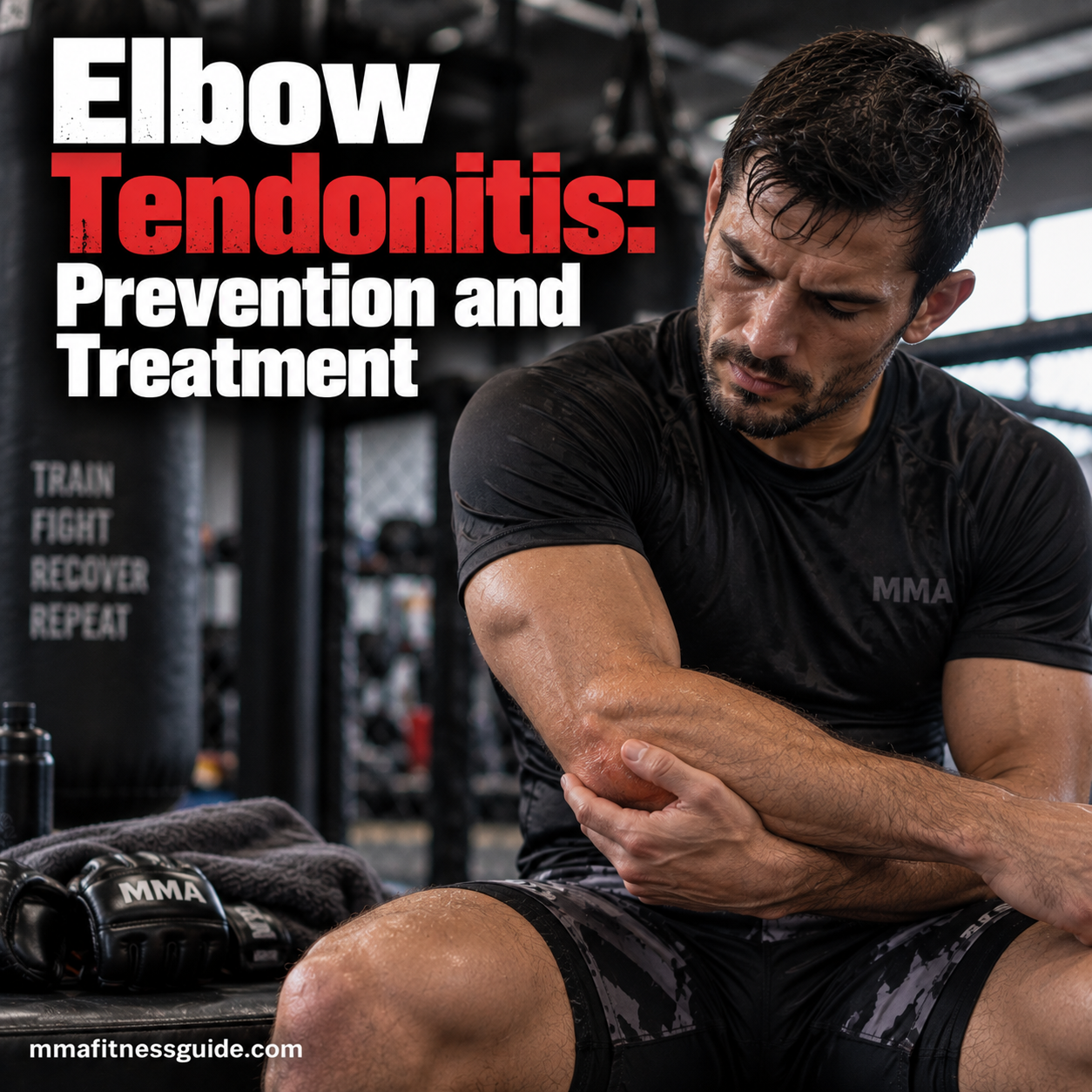
Repeated jabs, hard collar ties, posting during scrambles, and rounds of grip fighting can load the elbow hundreds of times in a single MMA session. When that workload exceeds what the forearm tendons can comfortably handle, pain may begin appearing on the inside or outside of the elbow.
At first, it might only hurt when squeezing a glove, gripping a training partner, or extending a punch. Continuing the same training volume without addressing the problem can make those symptoms increasingly difficult to ignore.
Managing elbow tendon pain usually involves identifying the movements that aggravate it, temporarily adjusting training load, and gradually rebuilding the strength and capacity of the forearm muscles and tendons.
What Is Elbow Tendonitis?
“Tendonitis” is commonly used to describe pain involving a tendon around the elbow. When symptoms persist, clinicians often use the term tendinopathy, since the problem isn’t necessarily ongoing inflammation alone.
Two common patterns are lateral and medial elbow tendinopathy.
Lateral Elbow Tendinopathy (“Tennis Elbow”)
Pain occurs primarily around the outside of the elbow, where several wrist-extensor tendons attach.
In combat sports, symptoms may become noticeable during:
- Repeated gripping
- Wrist stabilization while punching
- Posting on the mat
- Pulling during grappling
- Strength exercises requiring a firm grip
Squeezing an object or extending the wrist against resistance may reproduce the discomfort.
Medial Elbow Tendinopathy (“Golfer’s Elbow”)
This pattern produces pain around the inside of the elbow, near the attachment of the wrist-flexor and forearm muscles.
Symptoms may appear during:
- Grip fighting
- Collar ties
- Underhooks
- Pulling movements
- Gi gripping
- Repeated squeezing
Both conditions commonly develop gradually rather than after one obvious injury.
Why MMA Training Can Irritate the Elbow
The elbow sits between two areas doing substantial work: the hand and wrist on one side and the shoulder on the other.
During striking, the forearm muscles stabilize the wrist as force travels through the arm. During grappling, those same muscles repeatedly contract while squeezing, pulling, framing, and controlling an opponent.
Potential contributors include:
- Sudden increases in striking volume
- Long grappling sessions with heavy gripping
- Frequent maximal-effort grip work
- Additional forearm training on top of MMA
- Repeated posting through the arm
- Punching mechanics that repeatedly overload the elbow
- Insufficient recovery between demanding sessions
- Increasing workload faster than the tendons can adapt
Symptoms often appear after training volume changes—for example, adding several gi sessions or substantially increasing bag and pad rounds.
Early Symptoms to Watch For
Elbow tendinopathy can begin as mild discomfort that disappears once you’re warmed up.
Possible symptoms include:
- Localized aching around the inner or outer elbow
- Tenderness near the tendon attachment
- Pain while gripping or squeezing
- Discomfort during wrist movement
- Morning stiffness
- Pain during pulling exercises
- Symptoms that become more noticeable after training
These signs aren’t enough to diagnose tendonitis by themselves. Elbow pain can also come from joint injuries, nerve irritation, ligament problems, fractures, or other conditions.
Sudden severe pain following an armbar, fall, hard post, or other traumatic event should be treated differently from gradually developing overuse symptoms.
How to Reduce the Risk of Elbow Tendon Problems
No routine can guarantee that tendon pain won’t occur, but controlling workload and maintaining strength can make the elbow better prepared for repeated training demands.
1. Prepare the Wrists and Forearms
Before demanding striking or grappling, gradually expose the arms to the movements they’ll perform.
A short warm-up might include:
- Wrist circles
- Opening and closing the hands
- Light wrist flexion and extension
- Easy technical punches
- Low-intensity grip work
Progress from easy movements into harder rounds instead of immediately asking the forearms to produce maximal force.
2. Build Wrist and Forearm Strength
Grip strength is only one part of elbow preparation. Wrist flexors, extensors, and rotational muscles also need adequate capacity.
Useful exercises may include:
- Wrist curls
- Reverse wrist curls
- Controlled wrist extension
- Pronation and supination exercises
- Farmer carries
- Appropriate grip exercises
Use manageable resistance and controlled repetitions rather than turning every forearm exercise into a maximal grip test.
3. Check Punching Mechanics
Repeatedly reaching beyond a comfortable punching range can place unnecessary stress on the elbow.
During bag and pad work, pay attention to:
- Appropriate striking distance
- Hip and shoulder rotation
- Maintaining control near full extension
- Staying relaxed between punches
- Avoiding repeated hyperextension of the elbow
If elbow pain consistently appears during one particular punch, have a qualified coach examine the technique.
4. Be More Efficient With Grappling Grips
A fighter doesn’t need maximum grip tension during every second of a grappling exchange.
Where technically appropriate:
- Relax grips when maximum force isn’t necessary
- Change grips rather than maintaining one position indefinitely
- Use skeletal positioning and leverage instead of squeezing alone
- Be cautious when posting on an extended arm
Efficient gripping can reduce unnecessary forearm fatigue during long rounds.
5. Watch Changes in Training Volume
Tendons need time to adapt to increased workload.
Be particularly attentive when adding:
- More bag rounds
- Additional grappling sessions
- Gi training
- Pulling exercises
- Grip-specific conditioning
- Higher weekly training frequency
If elbow symptoms appear shortly after one of these changes, the increase in workload may be worth reviewing.
Managing Elbow Tendon Pain
Treatment depends on the cause and severity of the symptoms. Persistent or significant elbow pain deserves assessment by a qualified healthcare professional.
For milder overuse symptoms, several strategies are commonly used.
1. Modify Aggravating Training
Complete inactivity isn’t automatically necessary, but repeatedly performing movements that substantially worsen symptoms can interfere with recovery.
Depending on the problem, modifications could include:
- Reducing heavy bag volume
- Temporarily limiting hard grip fighting
- Changing strength exercises
- Avoiding painful pulling movements
- Training technique at lower intensity
The objective is to reduce irritating load while maintaining activities that remain comfortable.
2. Use Cold for Short-Term Symptom Relief if Helpful
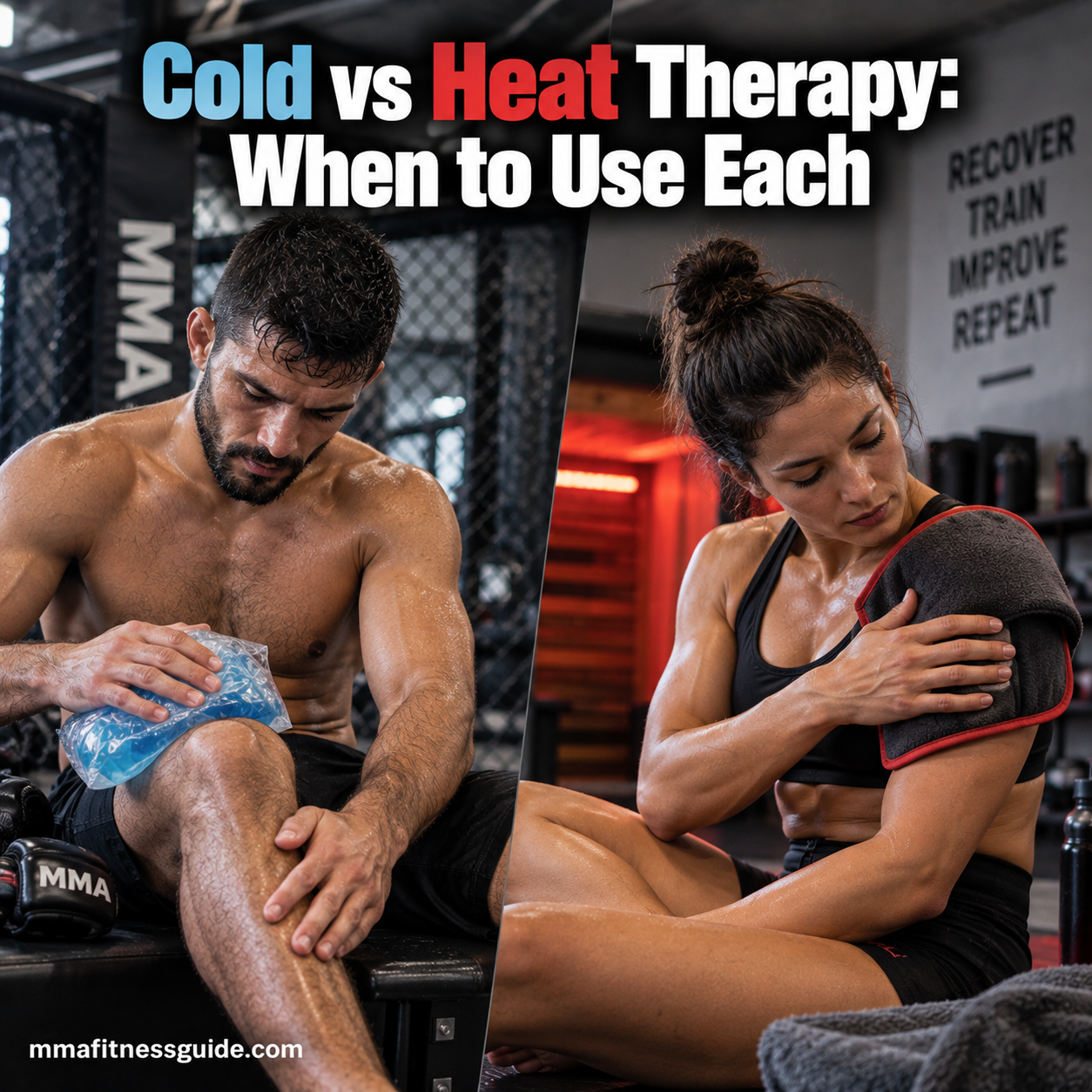
A wrapped cold pack may temporarily reduce pain after an irritating session.
If you use one:
- Place fabric between the cold source and skin
- Keep exposure relatively brief
- Stop if the skin becomes painful or excessively numb
Cold may help symptoms, but it doesn’t rebuild the tendon’s ability to tolerate training load.
3. Work on the Forearm Muscles
Gentle massage of the forearm flexor or extensor muscles may make surrounding muscular tightness feel more comfortable.
Avoid aggressively pressing directly into a painful tendon attachment.
4. Use Stretching Selectively
Some fighters find gentle wrist-flexor or wrist-extensor stretching comfortable.
Avoid forcing the wrist into a painful range simply because the area feels tight. Stretching should not substantially aggravate symptoms during or afterward.
5. Gradually Strengthen the Tendon and Forearm
Progressive resistance exercise is commonly used during rehabilitation for elbow tendinopathy.
Depending on the condition and stage of recovery, exercises may involve:
- Controlled wrist extension
- Controlled wrist flexion
- Eccentric wrist exercises
- Isometric holds
- Forearm pronation and supination
- Gradually heavier gripping
Eccentric exercise can be useful, but it isn’t the only form of strengthening available. The appropriate load and progression depend on the individual.
A physical therapist or other qualified clinician can help establish a progression when symptoms persist.
6. Consider a Counterforce Strap if Appropriate
Some people with certain types of elbow tendinopathy find temporary symptom relief from a counterforce strap.
It should be viewed as an optional aid rather than a fix for the underlying workload or strength issue.
Make sure it fits correctly and doesn’t cause numbness, tingling, or additional discomfort.
Can You Keep Training?
The answer depends on the injury and how the elbow responds to activity.
Some athletes can continue modified training when symptoms are mild and predictable. That might mean technical drilling without hard gripping or reducing striking intensity while rehabilitation progresses.
Stop or substantially modify the activity if:
- Pain becomes sharp or severe
- Symptoms progressively worsen during the session
- Grip strength suddenly decreases
- The elbow becomes significantly swollen
- You cannot normally bend or straighten the arm
- Numbness or tingling develops
- The injury followed significant trauma
A sudden pop, visible deformity, major swelling, or substantial loss of function warrants prompt medical evaluation.
How Long Does Elbow Tendonitis Take to Recover?
There isn’t a reliable universal timetable.
A mild, recently irritated tendon may settle relatively quickly after workload changes. Persistent tendinopathy can take considerably longer and may require weeks or months of progressive rehabilitation.
Recovery is influenced by factors such as:
- How long symptoms have been present
- Training volume
- Severity of the condition
- Previous elbow injuries
- Strength and tendon capacity
- Whether aggravating activities continue
- Consistency with rehabilitation
Instead of using a calendar date alone, progression should also be based on symptoms, strength, movement, and the elbow’s response to increasing training loads.
Returning to Normal MMA Training
As symptoms improve, gradually rebuild the activities that originally irritated the elbow.
For striking, that could progress from:
Shadowboxing → light bag work → moderate pads → harder rounds
For grappling:
Technical drilling → controlled positional work → moderate rolling → harder rounds
Grip-intensive training can be increased in the same gradual manner.
Large jumps from rehabilitation straight back into full-volume sparring or grappling can expose the tendon to more load than it has recently experienced.
Reducing the Chance of Symptoms Returning
Once the elbow feels better, maintain some of the habits used during rehabilitation.
That can include:
- Regular forearm strengthening
- Gradual increases in training volume
- Efficient punching mechanics
- More deliberate use of grip strength
- Adequate recovery between demanding sessions
- Early workload adjustments when symptoms begin returning
Pay particular attention when entering fight camp or increasing weekly training frequency.
Final Thoughts
Elbow pain can turn ordinary MMA movements into obvious warning signs. If gripping a training partner, posting on the mat, or extending a punch repeatedly produces pain, continuing to add more rounds isn’t addressing the problem.
Start by identifying which movements are loading the irritated area. Reduce those demands enough for symptoms to settle, then progressively rebuild wrist, forearm, and grip capacity as tolerated.
If symptoms persist, worsen, interfere with normal arm function, or follow an acute injury, get the elbow properly evaluated. The goal isn’t simply to make it hurt less for tomorrow’s session—it’s to restore enough capacity for the elbow to handle striking and grappling workloads again.