Introduction
Concussions are one of the most serious risks in combat sports. Even light sparring, accidental clashes, or unexpected falls can cause head impacts that affect your brain. While MMA training can be done safely, it’s important for every athlete — beginner or advanced — to understand what concussions look like and how to respond to them.
You don’t need medical training to spot warning signs. A little awareness helps protect both yourself and your training partners.
Below is a simple, practical guide to concussion basics and safe protocols to follow.
What Is a Concussion?
A concussion is a type of mild traumatic brain injury (mTBI). It happens when the brain moves rapidly inside the skull, usually due to a strike, fall, or sudden impact.
You do not need to be knocked out to have a concussion.
Most concussions happen with no loss of consciousness at all.
Common Causes in MMA Training
Concussions can happen during:
- Hard sparring
- Accidental head clashes
- Falls during takedowns
- Strikes landing harder than expected
- Grappling scrambles where the head hits the mat
Beginners sometimes experience impacts because they’re still learning how to move and protect their head.
Signs and Symptoms to Watch For
Symptoms can show up immediately or hours later.
Physical symptoms:
- Headache
- Dizziness
- Nausea
- Sensitivity to light or sound
- Balance issues
- Blurry vision
Cognitive symptoms:
- Feeling “foggy”
- Trouble focusing
- Memory gaps
- Slower reaction time
Emotional symptoms:
- Irritability
- Anxiety
- Feeling unusually emotional
- Sudden mood changes
Serious red flags (seek medical attention):
- Vomiting
- Severe headache
- Uneven pupils
- Confusion or disorientation
- Trouble walking
- Loss of consciousness
These require immediate evaluation by a medical professional.
What to Do If You Suspect a Concussion
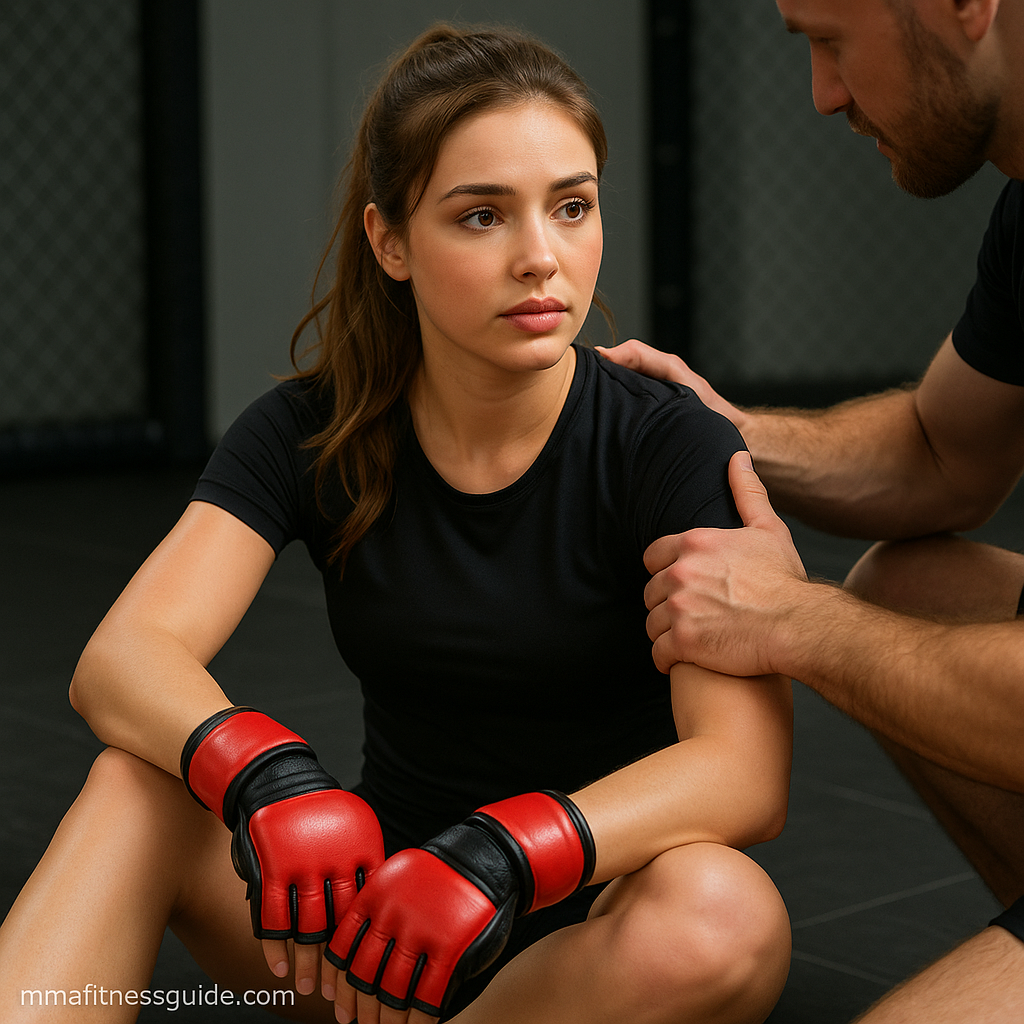
If you or a training partner shows symptoms, stop training immediately. Continuing can make the injury much worse.
Simple steps:
- Stop training right away
- Avoid driving or intense activity
- Avoid hard thinking tasks (studying, video games, screen time)
- Rest the body and the brain
- Monitor symptoms for 24–48 hours
- See a medical professional if symptoms worsen or don’t improve
It’s always better to be safe than to push through a possible head injury.
Rest and Recovery Basics
Your brain needs time to heal. Most people improve within 1–2 weeks when they rest properly.
Rest includes:
- No sparring
- No heavy lifting
- No running or hard cardio
- Reduced screen time
- Good sleep
- Staying hydrated
Light, easy walking is usually okay after the first day or two if symptoms don’t get worse.
Return-to-Training Protocol (Simple Version)
Here is a basic step-by-step structure used by many athletes.
Do not move to the next step unless symptoms stay gone.
Stage 1: Full Rest (1–3 days)
Complete rest until symptoms improve.
Stage 2: Light Activity
Easy cardio like walking or gentle cycling.
Stage 3: Moderate Activity
Light workouts that don’t involve impact.
Shadowboxing is okay; no pads or contact.
Stage 4: Controlled Drilling
Technical drilling with a partner at low intensity.
No strikes to the head.
Stage 5: Light Sparring / Pad Work
Pad rounds, light partner drills, and movement.
Still avoid heavy impact.
Stage 6: Full Training
Return to regular practice once completely symptom-free.
Hard sparring is the last step.
If symptoms return at any step, go back one stage and rest.
Why Rushing Back Is Dangerous
Many fighters try to return too quickly because they “feel okay,” but the brain is still healing even after symptoms fade.
Coming back too early can cause:
- Slower reactions
- Increased risk of another concussion
- Longer recovery time
- Trouble thinking clearly
- Higher chance of being knocked out
A short break now prevents long-term problems later.
How to Reduce Concussion Risk in Training
You can’t remove all risk, but you can lower it.
Smart training habits:
- Spar lighter and smarter
- Avoid head-hunting during drills
- Communicate with training partners
- Tap early in grappling scrambles
- Wear headgear if required
- Focus on defense and head movement
Physical habits:
- Strengthen your neck
- Improve balance
- Keep your chin tucked
- Learn proper breakfalls
- Don’t train while tired or unfocused
Good habits make the biggest difference.
When to Seek Medical Advice
Get checked by a medical professional if:
- Symptoms last longer than a week
- You’ve had multiple concussions
- Symptoms return after training
- You feel “not like yourself”
- Headaches worsen with activity
It’s always better to get a proper evaluation when unsure.
Final Thoughts
Concussions are part of contact sports, but awareness and smart decision-making significantly reduce the risks. If you notice symptoms in yourself or a teammate, take a break and follow safe recovery steps. Training consistently is important — but training safely is more important.