You’re pinned against the cage during a hard sparring round. Your opponent is applying pressure, your shoulders are tightening, and you catch yourself holding your breath while trying to escape. As fatigue builds, you begin rushing your movements instead of looking for an opening. A brief opportunity to create space gives you a chance to exhale, regain your breathing rhythm, and focus on your next move.
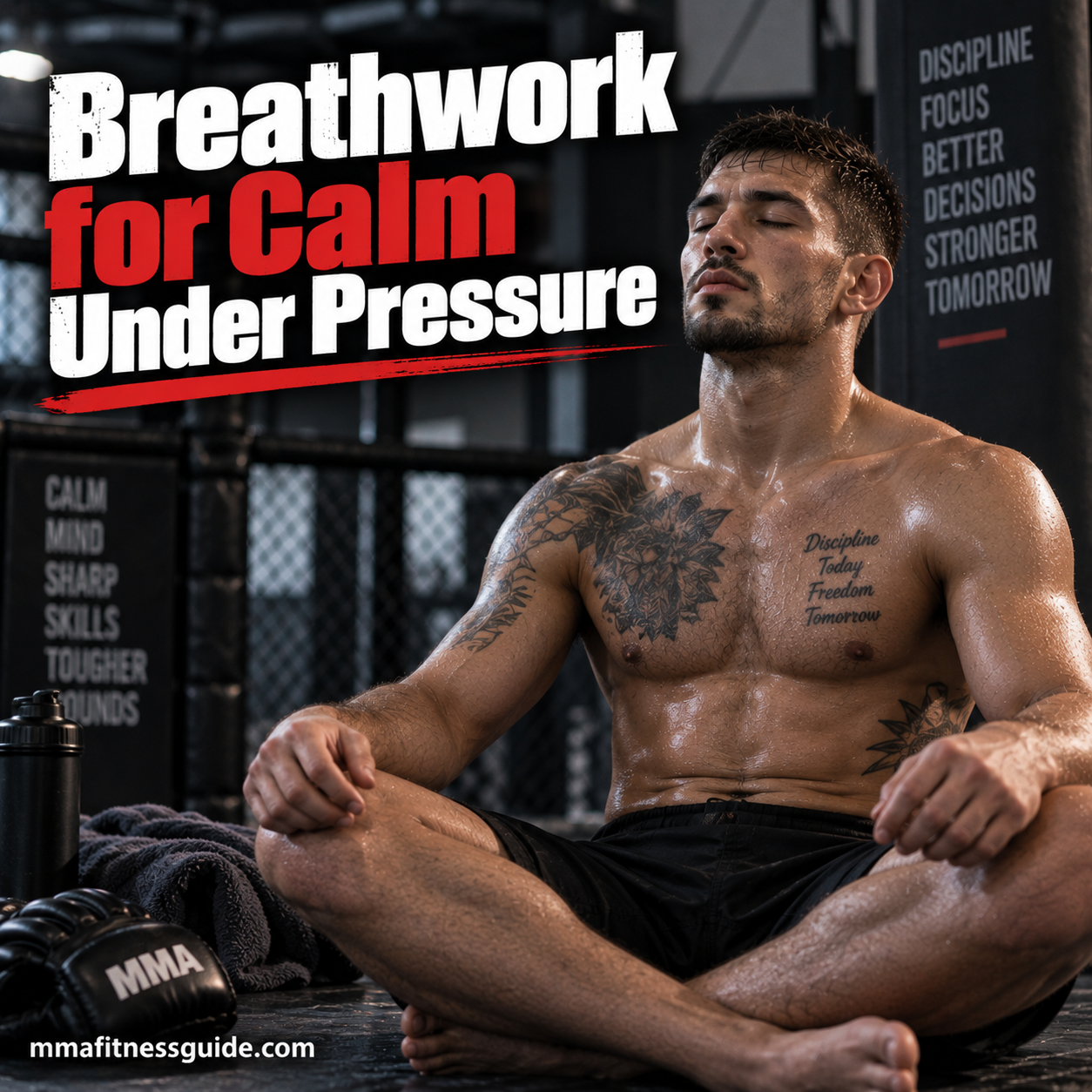
Breathing habits can influence how fighters respond to physical exertion and psychological stress. Practicing slow, comfortable breathing during recovery periods may help reduce feelings of tension, while learning to avoid unnecessary breath-holding can support more controlled movement during training. From managing pre-fight nerves to recovering between rounds, developing awareness of your breathing gives you another practical skill to use when pressure rises.
Why Breathwork Matters for Fighters
Breathing isn’t just physical — it’s psychological. Controlled breathing affects:
- Heart rate and nervous system state
- Emotional control during stress
- Reaction time and mental clarity
- Muscle tension and fluidity of movement
- Cardio efficiency
- Recovery between rounds
Most fighters breathe unconsciously and inefficiently. Breathwork trains the body and mind to stay steady when intensity rises.
The Link Between Breath and the Nervous System
Your breath is the fastest way to switch between:
- Fight-or-flight mode (sympathetic) — high stress, fast breathing, tense muscles
- Rest-and-digest mode (parasympathetic) — calm, clear, composed
Fighters need both states, but must be able to switch on command. Breathwork allows you to do exactly that.
Common Breathing Problems Fighters Experience
- Holding the breath during striking or grappling
- Hyperventilating during high intensity
- Breathing too shallow from the chest
- Panicking under pressure
- Being unable to “come down” between rounds
- Running out of breath due to poor rhythm
These issues disappear when breathing becomes a trained skill.
Foundational Breathwork Techniques for Fighters
Below are the most effective breathwork methods for calming the mind and controlling the body under pressure.
1. Diaphragmatic Breathing (Foundation Technique)
This is the cornerstone of all fighter breathwork.
How to do it:
- Breathe through the nose
- Let your belly expand, not your chest
- Exhale slowly through the mouth
Benefits:
- Improves oxygen efficiency
- Reduces anxiety
- Helps recovery during rounds
- Builds calmness during stress
Practice 2–3 minutes daily.
2. Box Breathing (Great Between Rounds)
Perfect for calming nerves and stabilizing heart rate quickly.
Pattern:
- Inhale 4 seconds
- Hold 4 seconds
- Exhale 4 seconds
- Hold 4 seconds
Best uses:
- Between rounds
- Before sparring
- Before competition walkouts
This method brings you back to neutral quickly.
3. Extended Exhale Breathing (Deep Relaxation)
The exhale activates the parasympathetic system — the calm state.
Pattern:
- Inhale 4 seconds
- Exhale 6–8 seconds
Benefits:
- Rapid stress reduction
- Loosens tension in shoulders and jaw
- Helps control emotional spikes
This is ideal for reducing anxiety before training.
4. Performance Breathing for Intense Rounds
This helps you stay calm while moving at high intensity.
Pattern:
- Fast nasal inhale
- Sharp mouth exhale
Use this in:
- Scrambles
- Long striking exchanges
- Hard conditioning
This pattern keeps the mind present and controlled during chaos.
5. “Reset Breaths” During Training
A single intentional breath can reset your entire state.
Technique:
- Big inhale through the nose
- Full exhale through the mouth
- Slight pause
This quickly resets rhythm and clears “panic breathing.”
Use reset breaths during mitt work, sparring, or rolling.
6. Pre-Training Breath Priming
A short activation drill to get the body alert.
Pattern:
- 20–30 seconds fast nasal breathing
- 3–5 slow deep breaths afterward
This wakes up the nervous system, sharpens focus, and improves reaction time.
Using Breathwork in Real MMA Scenarios
During Sparring
Slow inhales + controlled exhales keep you from stiffening or rushing.
While Grappling Under Pressure
Diagonal breathing (into the lower ribs) reduces panic when stuck in bad positions.
Before a Fight
Box breathing or extended exhales calm adrenaline spikes.
Between Rounds
3–4 slow abdominal breaths reset your pace and help absorb corner instructions.
During Hard Conditioning
Sharp, rhythmic breaths prevent gas-out panic.
Breathwork for Weight Cuts
Breathing helps fighters stay calm when cutting water.
- Slow exhale breathing reduces anxiety
- Diaphragmatic breathing helps regulate heat
- Box breathing stabilizes mood and patience
Many fighters underestimate the mental side of weight cuts — breathwork makes the process smoother.
Breathwork for Everyday Stress
Fighters deal with work, school, relationships, finances, and life headaches like anyone else.
Breathwork helps fighters stay grounded:
- During arguments
- When feeling overwhelmed
- Before big decisions
- After long days
- When stress disrupts sleep
Learning breath control outside the gym reinforces breath control inside the cage.
Simple 5-Minute Breathwork Routine for Fighters
1 minute: Slow nasal breathing
1 minute: Diaphragmatic expansion
1 minute: Box breathing
1 minute: Extended exhale breathing
1 minute: Calm normal breathing with eyes closed
This routine builds mental composure and emotional resilience.
Final Thoughts: Breathwork Is a Fighter’s Hidden Weapon
Breathwork is one of the simplest, most accessible tools a fighter can use to stay calm, focused, and powerful under pressure. It enhances performance, sharpens mindset, and improves recovery — all without equipment or cost.
If you master your breath, you master your state of mind.