Striking puts massive stress on the hands and wrists — especially in MMA, Muay Thai, and boxing, where fighters throw hundreds of punches per session. Even with wraps and gloves, small repetitive impacts add up over time, leading to soreness, swelling, and long-term damage if not properly managed.
Hand and wrist care isn’t optional for strikers. It’s a non-negotiable part of training longevity. This guide covers the best ways to protect your hands, strengthen the supporting muscles, and prevent the most common injuries in striking-heavy training.
Why Hand and Wrist Care Matters
Your hands are your primary weapons in striking. If they’re injured, everything suffers — punching power, grip strength, grappling ability, and even basic daily movement.
Good hand and wrist care improves:
- Punching power
- Impact absorption
- Joint stability
- Recovery speed
- Long-term durability
- Training consistency
Most hand injuries come from poor technique, weak stabilizers, or inadequate preparation — all things you can fix.
Common Hand and Wrist Injuries for Strikers
Understanding the risks helps prevent them.
Boxer’s Knuckle
Inflammation or damage to the extensor tendon over the knuckle from repeated impact.
Wrist Sprains
Happen when the wrist bends on impact, usually from poor alignment.
Thumb Sprains
Often caused by incorrect fist position or striking without tight wraps.
Metacarpal Fractures
The classic “boxer’s fracture,” usually from landing incorrectly with the 4th or 5th knuckle.
Tendonitis
Overuse of wrist flexors/extensors from heavy bag sessions or mitt work.
These injuries slow progress and can sideline training for weeks or months.
How to Protect Your Hands Before Training
1. Warm Up the Small Muscles
Light activation increases blood flow and reduces stiffness.
Do 1–2 minutes of:
- Wrist circles
- Finger opens/closes
- Rubber band finger extensions
- Light shadowboxing emphasizing clean fist shape
This alone prevents many aches.
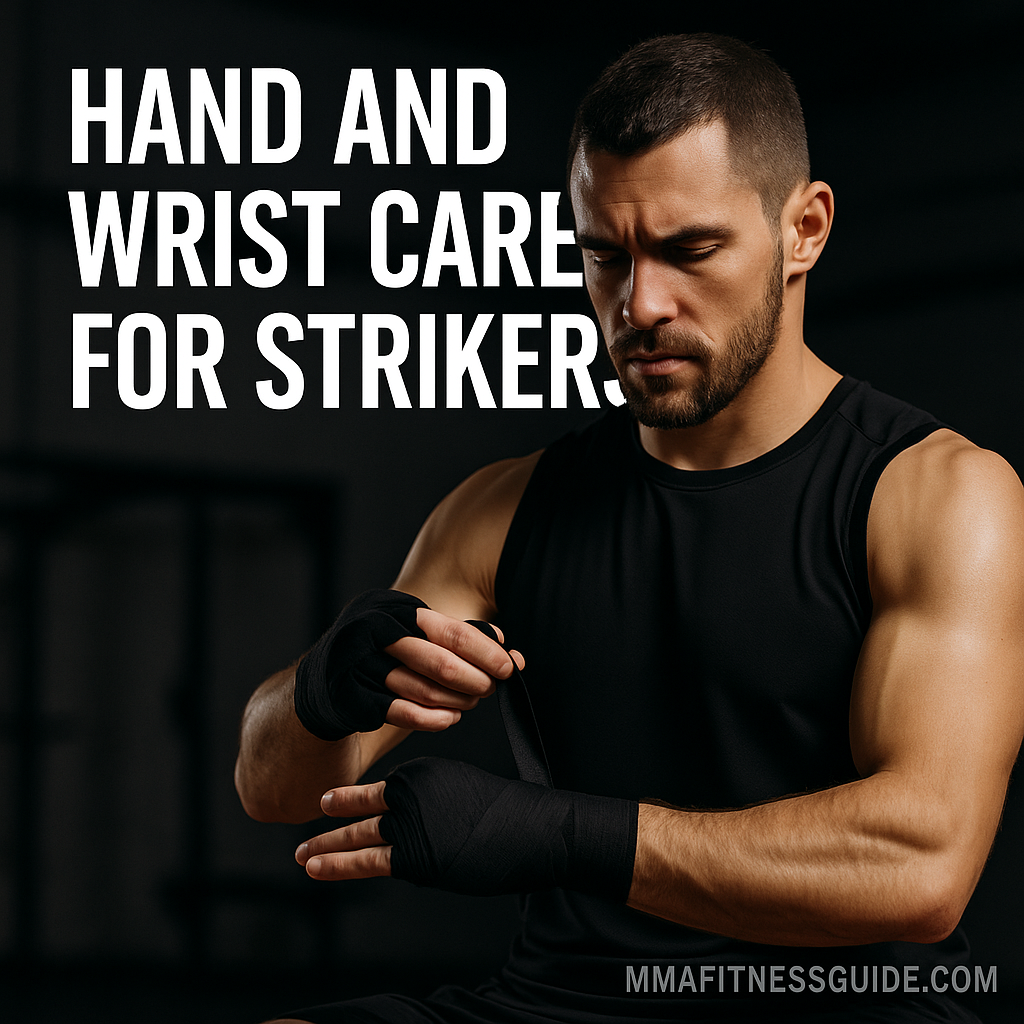
2. Wrap Your Hands Properly
Hand wraps stabilize wrists and compress knuckles.
Good wraps should:
- Anchor the wrist
- Protect knuckles
- Secure thumb
- Limit unwanted movement
Invest in 180-inch wraps for full coverage.
3. Choose the Right Gloves
Your gloves matter more than you think.
Use:
- 16 oz gloves for sparring
- 12–14 oz for bag work depending on weight
- Gloves with good wrist support (Velcro or lace-up)
- High-quality foam padding that doesn’t compress quickly
Cheap gloves = injured hands.
Technique Tips to Avoid Hand and Wrist Injuries
Punch with Proper Alignment
Your fist, wrist, and forearm should form a straight line on impact.
Strike with the Top Two Knuckles
This is structurally safest and reduces wrist collapse.
Stay Relaxed Until Impact
Tension slows reaction time and causes premature fatigue.
Don’t Overreach
Punching past your balance increases the chance of wrist bending.
Rotate the Fist
Especially during the cross and hook — rotation adds structure and power.
Strengthening the Hands and Wrists
Strikers should include 5–10 minutes of strength work 2–3 times per week.
1. Wrist Curls and Extensions
Builds forearm and wrist stability.
2. Rice Bucket Training
Improves grip, finger strength, and tendon durability.
3. Finger Extensor Bands
Balances the forearm and prevents overuse injuries.
4. Wrist Rotations with Light Dumbbell
Strengthens rotational stabilizers.
5. Grip Squeezes
Use a stress ball or grip trainer to build overall hand strength.
Consistent strength work keeps wrists from buckling on hard shots.
Recovery Habits for Hand and Wrist Health
Ice After Heavy Sessions
10–15 minutes controls inflammation.
Contrast Baths
Alternating warm and cold water improves circulation and healing.
Light Stretching
Helps maintain mobility and reduces tendon stiffness.
Self-Massage
Forearm and palm massage releases tension that affects punching mechanics.
Take Deload Weeks
Your hands need periodic breaks — especially after intense bag cycles.
When to Avoid Heavy Punching
Skip heavy bag work if you feel:
- Sharp pain during impact
- Swelling in specific knuckles
- Wrist instability
- Tingling or numbness
- Reduced grip strength
Switch to light technique drills, shadowboxing, and footwork instead.
Ignoring early warning signs leads to long layoffs.
Best Tools & Gear for Hand Health
- 180-inch hand wraps
- Semi-elastic Mexican-style wraps
- High-quality boxing or Muay Thai gloves
- Gel knuckle guards
- Wrist support sleeves
- Rice bucket or sand bucket
- Finger bands
- Light dumbbells (2–5 lb)
These tools support long-term striking health.
Final Thoughts: Healthy Hands = Long-Term Striking Power
Your hands and wrists are the foundation of effective striking. When cared for properly, they allow you to:
- Punch harder
- Train longer
- Maintain consistent progress
- Reduce injury risk
- Build confidence in your striking
Treat hand and wrist care as part of your training — just like warming up, drilling, or conditioning. Your future self (and your punch power) will thank you.