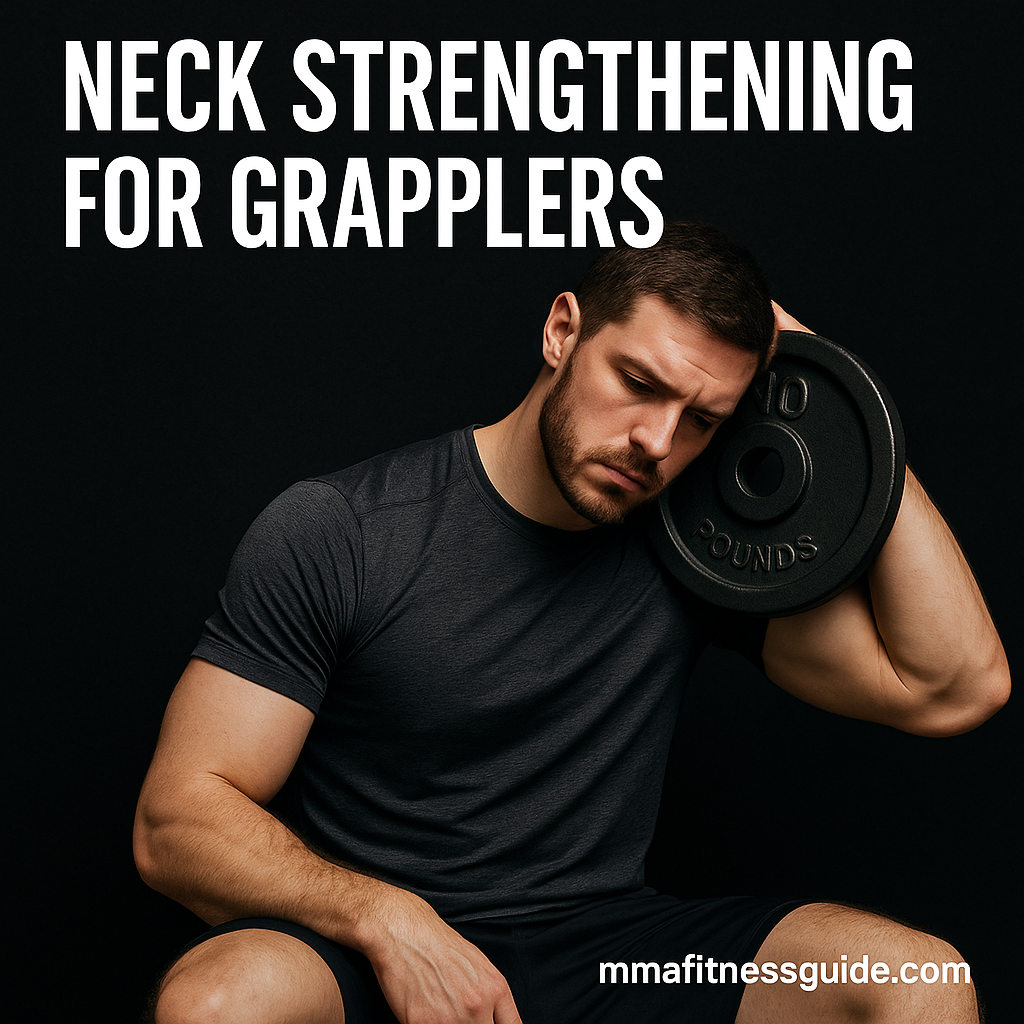
A strong neck is one of the most underrated assets for any grappler. Whether you train BJJ, wrestling, judo, sambo, or MMA, your neck is constantly exposed to strain — pulling, twisting, compressing, and absorbing force during scrambles, takedowns, and submissions. Strengthening it not only protects you from injury but also improves posture, balance, and defensive positioning.
This guide covers why neck strength matters, the best exercises, how often to train, and how to build a safer, more resilient grappler’s neck.
Why Neck Strength Matters for Grapplers
The demands placed on the neck during grappling are unique. You’re not just dealing with static pressure — you’re dealing with unpredictable forces.
A strong neck improves:
- Injury resilience against cranks, guillotines, and stacking pressure
- Posture control in wrestling ties, collar ties, and guard passing
- Balance and scrambling ability when opponents pull or redirect you
- Shock absorption during takedown impacts
- Confidence in exchanges that normally feel risky
Grapplers with weak necks often fatigue faster, lose posture more easily, and are more vulnerable to cervical strain or “stingers.”
Common Neck Injuries in Grappling
Understanding the risks helps you train smarter.
Neck Strains
Overstretching or sudden pulling during takedown defense or guard play.
Muscle Spasms
Often caused by repeated pressure or poor posture.
Cervical Cranks
Sudden torsion or bending when opponents attack with guillotines, can open the neck, or aggressive stacking.
Nerve Irritation
Common when the neck gets compressed or extended under weight.
Impact Trauma
From takedowns, throws, or falling awkwardly.
Strength work drastically reduces the risk of these injuries.
The Best Neck Strengthening Exercises for Grapplers
These movements improve strength in all critical directions: flexion, extension, lateral flexion, rotation, and isometric control.
1. Isometric Neck Bridges (Safer Variation)
Instead of full wrestling bridges, isometric bridges build strength without risky hyperextension.
How to do it:
- Lie on your back.
- Lift hips slightly.
- Press the back of your head into the mat.
- Hold 10–20 seconds.
Why it works:
- Builds static grappling strength
- Reinforces posture defense
2. Neck Flexion and Extension with Bands
Resistance bands allow controlled, progressive loading.
Benefits:
- Safe for beginners
- Great for warm-ups
- Strengthens motion used in posture recovery
3. Lateral Neck Raises (With Band or Plate)
Strengthening the sides of the neck reduces vulnerability to collar-tie pulling and snapping.
Benefits:
- Protects from sudden jerks
- Improves tie-up control
- Builds neck symmetry
4. Grappler Isometrics (Partner or Wall)
One of the most realistic strength builders.
Examples:
- Pushing forehead into a partner’s shoulder
- Side head pressure against the wall
- Chin-to-chest resistance holds
Benefits:
- Direct transfer to real grappling
- Strength under fatigue
5. Stability Ball Head Pressure Drills
A great technique-specific drill for BJJ and wrestling.
How to do it:
- Place forehead on a wall-mounted ball
- Hold posture and slowly circle hips
Benefits:
- Builds endurance
- Strengthens postural muscles
- Simulates guard passing pressure
6. Shrugs and Farmer Carries
A strong upper back stabilizes the neck.
Why these help:
- Strengthens traps, which support cervical muscles
- Builds durability for long sessions
- Improves posture and pressure tolerance
Sample Neck Routine for Grapplers
Perform 3x weekly, 10–15 minutes total.
Warm-Up (2 minutes)
- Light band flexion/extension
- Scapular mobility movements
Main Work (8–10 minutes)
- Band neck flexion: 3×15
- Band extension: 3×15
- Lateral band raises: 3×12 each side
- Stability ball head pressure hold: 2×20 seconds
- Farmer carry: 2×30–45 seconds
Optional Add-On (Advanced)
- Isometric bridge hold: 2×15 seconds
- Partner collar-tie isometrics: 2×20 seconds
How Often Should Grapplers Train Their Neck?
For best results:
- Beginners: 2–3× per week (light to moderate)
- Intermediate: 3× per week with progressive resistance
- Advanced: 4× per week, short sessions integrated into warm-ups
Neck training responds well to frequency — but don’t overload with heavy volume.
Safety Tips for Neck Training
- Start with light resistance and controlled movement
- Avoid fast, jerky motions
- Do not perform extreme bridges early in training
- Stop immediately if you feel nerve tingling
- Maintain neutral posture during band work
- Pair neck training with upper back strengthening
A strong neck is built slowly and intelligently — not through brute force.
Final Advice for Grapplers Building Neck Strength
- Train consistently, not aggressively
- Prioritize isometrics and band work
- Use partner drills for real-world transfer
- Strengthen traps and upper back
- Focus on posture control, not only raw power
With proper training, your neck becomes a natural shield — helping you resist submissions, absorb pressure, and move confidently through every grappling exchange.