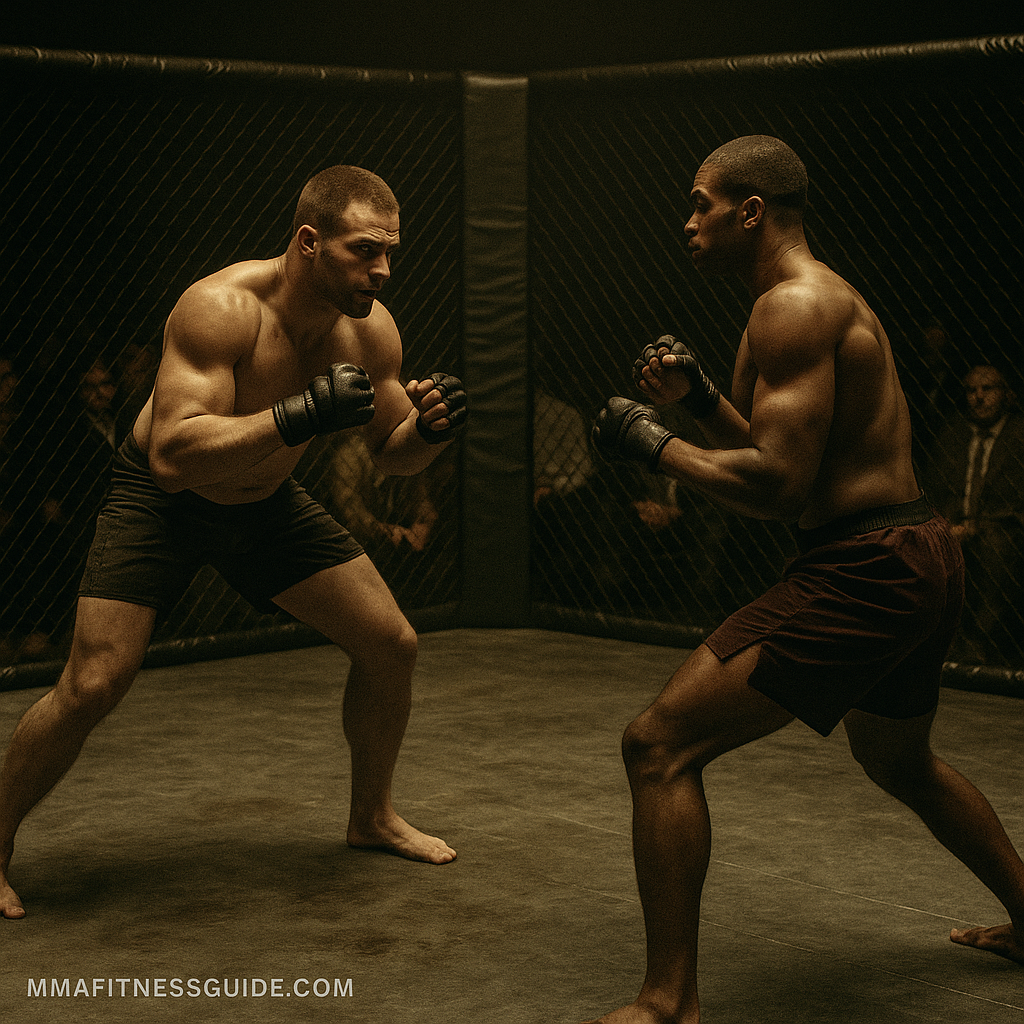
When Chaos Built a Legacy
Before the UFC became the global powerhouse it is today, it was something far more raw — and far more chaotic.
In the early 1990s, the Ultimate Fighting Championship wasn’t about flashy production or million-dollar paydays. It was about one question:
“Which martial art is the most effective?”
That simple idea gave birth to a movement that would forever change combat sports.
UFC 1: The Experiment That Shocked the World
In 1993, the first UFC event took place in Denver, Colorado.
There were no weight classes, few rules, and no time limits. Fighters from different backgrounds — karate, boxing, wrestling, jiu-jitsu, and even sumo — stepped into the cage to prove their art was supreme.
The event was brutal, unpredictable, and unlike anything the American audience had ever seen.
But from the chaos, one man stood out: Royce Gracie, the slender Brazilian jiu-jitsu practitioner who dominated opponents twice his size.
His performance showed that technique and leverage could beat brute force — and martial arts would never be the same.
The Early Rules (or Lack Thereof)
To modern fans, early UFC events seem shocking.
Here’s what the first few tournaments looked like:
- No gloves or protective gear
- No weight divisions
- No rounds or time limits
- Victory only by knockout, submission, or corner stoppage
Almost anything went — headbutts, hair-pulling, and groin strikes included.
It wasn’t called “No Holds Barred” for nothing.
This wild format was marketed as “real fighting,” but it also sparked outrage and calls for regulation.
The Rise of Controversy and Reform
By the mid-1990s, political pressure mounted.
Senators and athletic commissions condemned the sport, calling it “human cockfighting.” Pay-per-view providers dropped UFC broadcasts, and the organization nearly collapsed.
But out of necessity came evolution.
Weight classes were introduced. Time limits were added. Certain techniques were banned.
These changes helped transform the UFC from an underground spectacle into a legitimate sport.
The Gracie Influence and the Birth of Modern MMA
The Gracie family’s early dominance proved the effectiveness of Brazilian Jiu-Jitsu (BJJ) and forced other martial artists to evolve.
Strikers learned grappling. Wrestlers learned submissions.
By the late ’90s, the sport had a new breed of athlete: the mixed martial artist — someone trained to handle every range of combat.
This hybrid approach defined the modern era of the UFC.
The Fertitta Era and Regulation
In 2001, brothers Lorenzo and Frank Fertitta, along with Dana White, purchased the struggling UFC for just $2 million.
Their vision — combined with new athletic commission regulations and the Unified Rules of MMA — saved the sport.
Gloves became mandatory. Rounds were set. Medical standards improved.
And with the arrival of “The Ultimate Fighter” TV series in 2005, MMA exploded into mainstream popularity.
The Legacy of the Early Days
The early UFC was brutal, controversial, and unrefined — but it laid the foundation for one of the fastest-growing sports in the world.
Without those chaotic beginnings, MMA wouldn’t have evolved into the technical, athletic, and globally respected discipline it is today.
“From chaos came order — and from the cage, a sport was born.”
Key Takeaways
- The first UFC events had minimal rules and were designed to test martial arts styles.
- Early controversy led to major rule changes and athletic regulation.
- Royce Gracie’s dominance showcased the power of technique over size.
- Modern MMA was built on the lessons learned from those early, chaotic tournaments.