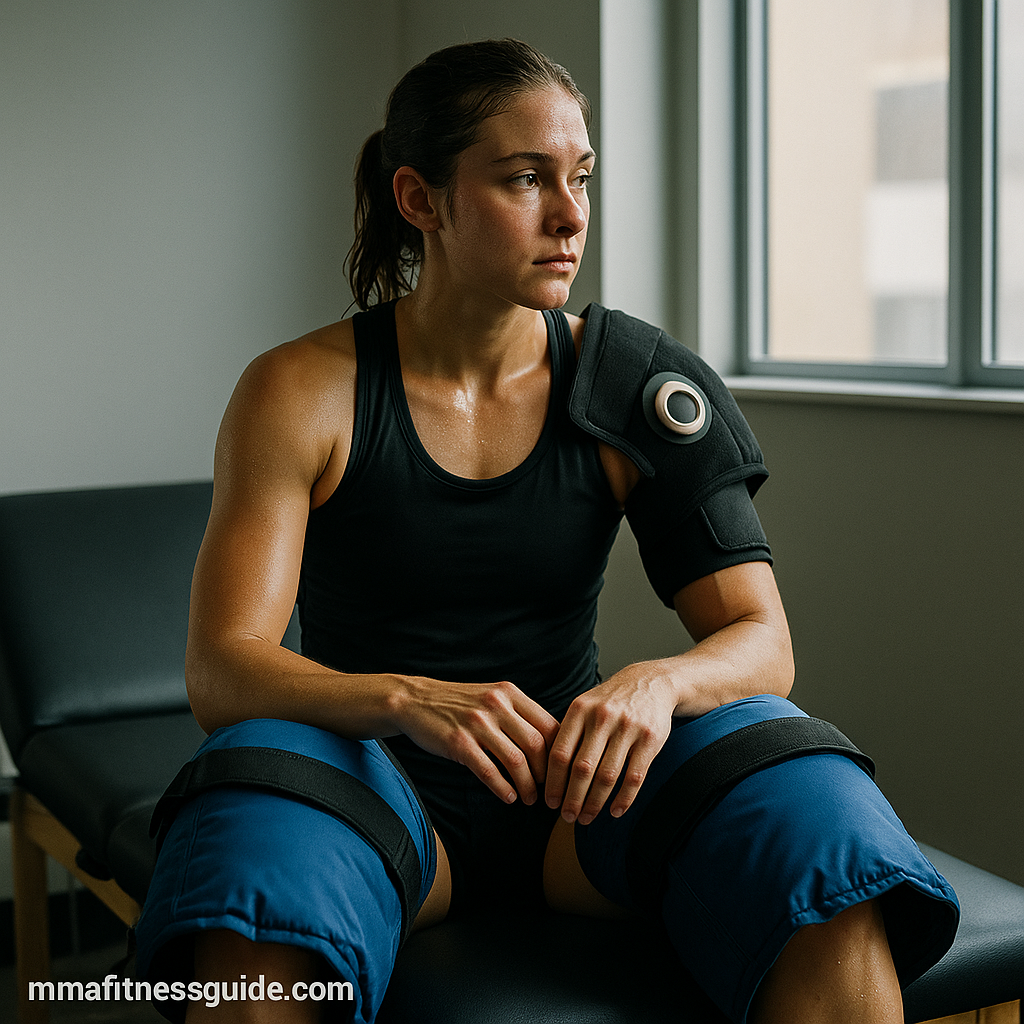
Cold Recovery — The Modern Debate
From old-school ice baths to cutting-edge cryotherapy chambers, cold treatment has become a recovery essential for MMA fighters.
Both methods promise to reduce soreness, speed up healing, and keep athletes training longer — but which actually works better?
The answer depends on your goals, access, and recovery style.
How Ice Baths Work
Ice baths involve submerging your body in cold water (50–59°F / 10–15°C) for 10–15 minutes.
The concept is simple: constrict blood vessels, reduce inflammation, and flush waste products like lactic acid from tired muscles.
Benefits of Ice Baths:
- Decreases muscle soreness and inflammation
- Helps prevent delayed onset muscle soreness (DOMS)
- Can be done at home or in any gym with a tub or barrel
- Inexpensive and easy to maintain
Drawbacks:
- Can cause discomfort or shivering if too cold
- May temporarily reduce muscle strength if done immediately before training
- Requires time and setup
Best For: Fighters on a budget, or anyone training multiple times a day who needs consistent inflammation control.
How Cryotherapy Works
Cryotherapy exposes the body to extreme cold air (-200°F / -130°C) for 2–3 minutes in a specialized chamber.
It triggers a systemic response that can reduce pain and inflammation while boosting circulation once you step out.
Benefits of Cryotherapy:
- Extremely fast sessions — done in minutes
- Can reach deep muscle tissues
- Reduces joint pain and swelling effectively
- May enhance mental alertness and mood post-session
Drawbacks:
- Requires access to a cryo chamber — often costly or available only at select gyms
- Can cause mild skin irritation or dizziness in sensitive users
- Limited evidence for long-term athletic recovery benefits compared to traditional cold water
Best For: Fighters with access to pro recovery facilities, or those looking for a fast, high-tech solution.
The Science of Cold Exposure
Both cryotherapy and ice baths trigger vasoconstriction (narrowing of blood vessels), followed by vasodilation (re-expansion) once the body warms up.
This cycle flushes toxins and brings fresh oxygenated blood to the muscles.
Research suggests both can help reduce muscle soreness and improve short-term recovery, but the differences come down to depth, cost, and comfort.
Cryotherapy vs Ice Baths: Side-by-Side
| Feature | Ice Bath | Cryotherapy |
|---|---|---|
| Temperature | 50–59°F (water) | –200°F (air) |
| Duration | 10–15 minutes | 2–3 minutes |
| Cost | Low (DIY or gym) | High (special facility) |
| Recovery Depth | Surface & muscle | Deeper tissue & joints |
| Accessibility | Easy | Limited |
| Comfort | Cold and long | Quick but intense |
Which One Should Fighters Use?
If you’re training daily, ice baths are still the most accessible and proven option.
They’re reliable for muscle recovery after sparring, heavy grappling, or conditioning sessions.
If you’re looking to enhance circulation, mood, and inflammation recovery in shorter time frames — and you can afford it — cryotherapy can be a great addition.
Many fighters actually use both: ice baths regularly, and cryotherapy during intense camps or after competition.
Pro Tips for Cold Recovery
- Hydrate before and after cold exposure.
- Don’t overdo it — 10–15 minutes is plenty.
- Use compression gear after sessions to maintain circulation.
- Pair cold recovery with proper sleep and nutrition for best results.
Final Verdict
Both methods work — it’s about access and preference.
- Ice baths are reliable, proven, and budget-friendly.
- Cryotherapy is quick, modern, and effective when available.
Cold therapy isn’t about punishment — it’s about performance.
“Train hard, recover smart — that’s how champions stay ready.”