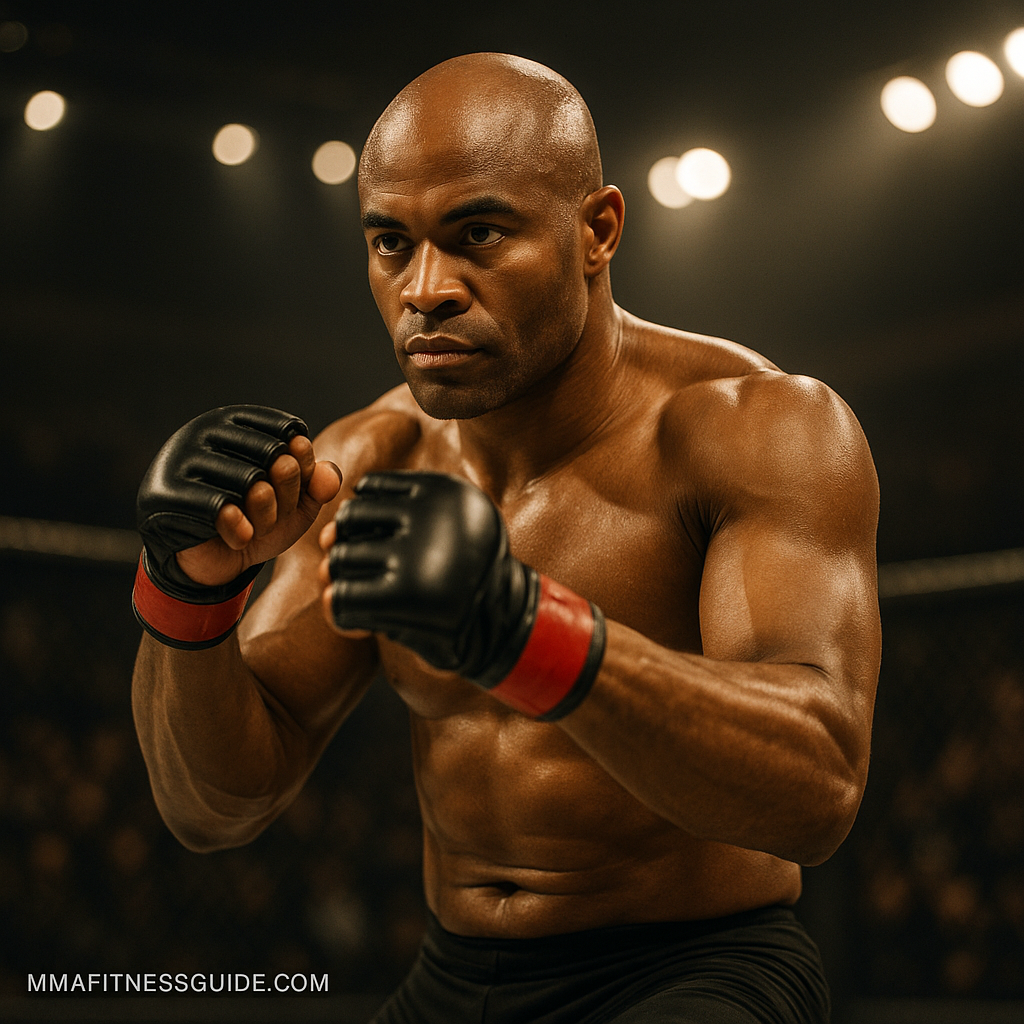
Valentina Shevchenko doesn’t need to throw twenty punches to create an opening. Sometimes, a small adjustment in distance, a subtle change in rhythm, or a perfectly timed counter is enough to turn an opponent’s attack against them.
Watch her striking closely, and you’ll notice something that casual viewers often miss: much of the work happens before she throws a punch or kick.
She positions her feet, measures distance, observes reactions, and waits for an opportunity. When the opening appears, her movements are compact and deliberate.
Known as “The Bullet,” Shevchenko has built her MMA career around technical striking, disciplined defense, and the ability to adapt to different opponents. Her background in Muay Thai and kickboxing gives her a particularly useful striking foundation, but her effectiveness comes from how she combines those skills with distance management, timing, and an understanding of MMA’s wider demands.
For fighters looking to improve their stand-up game, studying Shevchenko offers practical lessons that can be applied in sparring, pad work, and technical drills.
From Muay Thai Roots to MMA Success
Born in Kyrgyzstan in 1988, Valentina Shevchenko began martial arts training at a young age under the guidance of longtime coach Pavel Fedotov.
Her mother, Elena Shevchenko, also has an extensive background in martial arts and combat sports leadership.
Shevchenko developed her striking skills through disciplines including Taekwondo, Muay Thai, and kickboxing. She accumulated numerous international titles before transitioning into MMA, bringing years of competitive striking experience into the cage.
That background matters because Muay Thai teaches fighters to operate at several distances.
A skilled practitioner must understand punching range, kicking range, clinch positioning, and the defensive transitions between them.
However, MMA introduces additional challenges. A fighter who commits too heavily to a kick may expose themselves to a takedown. A prolonged clinch exchange can lead to wrestling against the fence.
Shevchenko’s development as a mixed martial artist illustrates the importance of adapting a specialist skill set to a sport where opponents have multiple ways to attack.
Her striking remains a defining feature of her style, but it works alongside her wrestling, clinch techniques, and grappling.
Understanding Shevchenko’s Striking Style
Shevchenko is frequently associated with counterstriking, but describing her as simply a defensive fighter misses several important details.
She can initiate exchanges, pressure opponents, and attack with combinations. What makes her approach distinctive is her willingness to prioritize positioning and timing rather than throwing continuously.
Three principles help explain her striking.
Distance control: She tries to operate at ranges where she can attack effectively while limiting an opponent’s options.
Timing: She looks for moments when an opponent is entering range, recovering from a strike, or temporarily out of position.
Efficiency: She favors deliberate attacks rather than wasting energy on unnecessary movements.
These principles are connected. Good distance creates opportunities for better timing, and good timing makes individual strikes more effective.
A fighter who understands all three can become difficult to approach without relying exclusively on speed or punching power.
1. Distance Management: Winning Before the Exchange Begins
One of the first things to study when watching Shevchenko is where she stands relative to her opponent.
Distance determines which attacks are available.
At long range, kicks and probing strikes become useful. At boxing range, punches and short combinations become more relevant. At close range, clinch techniques, elbows, and wrestling threats enter the picture.
Shevchenko frequently uses footwork and positioning to influence where exchanges occur.
How she uses range
Imagine an opponent stepping forward with a jab.
If Shevchenko is positioned just outside the jab’s effective range, the opponent may have to extend farther or take an additional step to reach her.
That extra movement creates information.
She can observe the opponent’s weight distribution, direction of travel, and defensive positioning.
From there, she may retreat, angle away, or counter when an opening develops.
The important lesson is that distance isn’t simply about staying away from danger. It is about creating conditions in which your attacks are more effective than your opponent’s.
Practice drill: The distance-control exercise
Work with a partner using light contact and controlled movements.
- Begin outside punching range.
- Have your partner advance slowly with a jab.
- Move just far enough to avoid the strike.
- Reset your stance without crossing your feet.
- Gradually add a controlled counter after the jab.
Start without counters until you can consistently maintain your balance.
The objective is to recognize distance rather than develop a habit of retreating automatically.
As you improve, experiment with lateral movement instead of always moving backward.
2. Counterstriking: Turning an Opponent’s Attack Into an Opportunity
Counterstriking is one of the most recognizable elements of Shevchenko’s game.
Rather than treating every incoming attack as something to survive, she looks for opportunities created by the attack itself.
When an opponent punches, their defensive structure can temporarily change.
A jab may expose part of the body. A wide hook can create an opening down the center. An aggressive combination may leave the attacker poorly positioned during recovery.
A counterstriker learns to identify these moments.
Why timing matters more than reaction speed alone
Many beginners assume that successful counterstriking requires extraordinary reflexes.
Reaction speed helps, but anticipation is equally valuable.
Experienced fighters recognize patterns.
If an opponent repeatedly steps forward before throwing a jab, the step becomes a warning signal.
If someone always follows a jab with a rear cross, the first punch provides information about what may come next.
Shevchenko’s extensive striking background gives her a foundation for recognizing familiar attacks and responding with appropriate techniques.
However, counters are never automatic. Opponents can feint, change combinations, or deliberately bait a predictable response.
Good counterstriking requires observation and adjustment.
Practice drill: Jab-and-counter progression
Begin with a cooperative partner.
- Round 1: Your partner throws single, predictable jabs. Focus only on defending.
- Round 2: Add a light jab counter after defending.
- Round 3: Allow your partner to vary the timing of the jab.
- Round 4: Introduce occasional feints so you must distinguish genuine attacks from false signals.
Keep the pace controlled and use appropriate protective equipment.
This progression develops recognition before increasing complexity.
The goal is not to counter every attack. It is to recognize when a safe, realistic counter is available.
3. Angle Awareness and Footwork
A fighter who moves exclusively forward and backward becomes easier to track.
Lateral movement and pivots change the relationship between the two fighters, potentially creating attacking opportunities while reducing exposure to immediate counters.
Shevchenko uses footwork to reposition herself during exchanges and to avoid remaining directly in front of an advancing opponent.
Her southpaw stance also influences the angles available against orthodox opponents.
When opposite stances meet, lead-foot positioning can affect the path of straight punches, rear kicks, and exits.
However, simply placing your lead foot outside an opponent’s lead foot does not guarantee an advantage. Balance, distance, hand positioning, and the opponent’s response still matter.
The difference between moving and repositioning
Beginners often move without a specific purpose.
They circle continuously, take unnecessarily large steps, or retreat until they reach the fence.
Effective footwork should accomplish something.
A small pivot might create space for a counter. A lateral step might move a fighter away from an opponent’s preferred punching line. A controlled retreat might encourage an aggressive opponent to overextend.
The key is maintaining a stance that allows you to defend or attack immediately.
Practice drill: Strike and exit
Use a heavy bag or focus mitts.
- Begin in your normal fighting stance.
- Throw a controlled jab-cross combination.
- Take a small lateral step or pivot.
- Reestablish your stance.
- Throw another short combination from the new angle.
Avoid jumping unnecessarily or bringing your feet together.
Start slowly, then increase speed while maintaining balance.
For MMA-specific training, practice the same movement with a coach or partner who can simulate pressure toward the cage.
This helps you learn when an angle is available and when another defensive response is necessary.
4. Kicking Versatility: Attacking Different Targets
Shevchenko’s kicking background gives her several options at long and middle range.
Depending on the opponent’s stance and positioning, she can attack the legs, body, or head.
Each target serves a different tactical purpose.
Leg kicks can disrupt movement and make an opponent less comfortable advancing. Body kicks can score and force defensive adjustments. Head kicks can exploit openings when an opponent’s guard or positioning allows them.
Her spinning techniques also reflect her extensive martial arts background, although these require careful setup and carry risks if attempted at the wrong distance.
The lesson isn’t to throw more complicated kicks. It’s to understand why and when each technique makes sense.
A powerful kick that misses can leave a fighter exposed to punches, takedowns, or counters.
For beginners, developing reliable basic kicks and recovering quickly into a balanced stance is more useful than immediately attempting advanced spinning techniques.
5. Defensive Excellence: Making Opponents Miss Without Losing Position
Shevchenko’s defense is closely connected to her offense.
She doesn’t rely on one defensive technique. Instead, she combines distance management, footwork, blocks, and evasive movements according to the situation.
Consider the difference between blocking a punch and avoiding it through footwork.
A block can protect against an incoming strike while allowing a fighter to remain close enough to counter.
Footwork may remove the fighter from the immediate attacking line, but moving too far can eliminate the countering opportunity.
Neither response is universally better.
Effective defense means selecting the appropriate response while remaining balanced and aware of follow-up attacks.
This becomes especially important in MMA, where excessive head movement can expose a fighter to kicks or knees, and poorly timed defensive movements can create takedown opportunities.
Building defensive awareness
During technical sparring, dedicate individual rounds to specific defensive goals.
For example, spend one round concentrating on maintaining distance and another on defending jabs without retreating excessively.
Have your coach identify recurring mistakes.
Are you dropping your hands after punching? Are you moving straight backward? Are you countering before recovering your balance?
Correcting these habits gradually creates a more reliable defensive foundation.
6. Composure and Decision-Making Under Pressure
Shevchenko often appears composed during exchanges, but composure should not be confused with inactivity.
A fighter can remain calm while actively gathering information, defending, and preparing attacks.
This skill becomes especially valuable against opponents who apply constant forward pressure.
Aggressive fighters may attempt to overwhelm their opponents with combinations and force them into rushed decisions.
Responding with uncontrolled aggression can make the situation worse.
Instead, fighters can focus on manageable tasks: maintaining their stance, recognizing the next attack, and finding a safe exit.
Shevchenko’s longtime coach Pavel Fedotov has discussed the importance of concentration and emotional control in her preparation. He has also emphasized the value of extensive training and experience across martial arts disciplines.
UFC
+1
How to develop composure in training
Start with predictable, low-intensity pressure drills.
Have a partner advance while throwing controlled combinations. Your job is to defend, maintain positioning, and identify a safe opportunity to exit or counter.
Gradually introduce more variety as your technical ability improves.
Keep sparring intensity appropriate to your experience, with a qualified coach supervising. Hard sparring and repeated head impacts are not necessary for learning these skills.
Composure develops through familiarity, preparation, and controlled exposure to increasingly complex situations.
7. What Shevchenko’s Fights Reveal About Adaptability
Studying actual fights provides more useful information than watching isolated highlight clips.
Three matchups illustrate different aspects of Shevchenko’s approach.
Against Holly Holm: Countering a skilled striker
Shevchenko defeated Holly Holm by unanimous decision in July 2016.
The matchup featured two experienced strikers with different approaches to distance and movement.
Shevchenko’s counters and ability to adjust during exchanges were important features of the contest.
When reviewing this fight, watch how she responds when Holm initiates an attack.
Pay attention to her positioning before the exchange, the defensive movement she chooses, and whether she remains in range afterward.
The lesson is that counterstriking against a technically skilled opponent requires patience and the ability to recognize patterns.
Against Jessica Eye: Setting up a finishing strike
At UFC 238 in June 2019, Shevchenko knocked out Jessica Eye with a head kick in the second round.
The finish demonstrates why striking setups matter.
Earlier body attacks can encourage an opponent to anticipate another strike toward the midsection, potentially creating an opening higher up.
The head kick was effective because of its timing, placement, and the circumstances of the exchange—not simply because it was powerful.
When studying the sequence, examine the preceding attacks rather than watching only the knockout.
Against Alexa Grasso: The importance of adapting
Shevchenko’s rivalry with Alexa Grasso offers an important counterpoint to the idea that technical experience makes a fighter untouchable.
Grasso submitted Shevchenko at UFC 285 in March 2023 after capitalizing on an opening during a spinning attack.
Their second fight ended in a split draw, and Shevchenko regained the flyweight championship with a unanimous-decision victory in their September 2024 rematch.
UFC
+1
These fights demonstrate that even accomplished technicians can make mistakes and that opponents can identify and exploit patterns.
The practical lesson is to study both successful and unsuccessful techniques.
Understanding why an attack failed can be just as valuable as understanding why another succeeded.
8. How to Apply Shevchenko’s Principles to Your Own Training
You don’t need to copy Shevchenko’s exact stance, combinations, or fighting style to benefit from studying her.
Your height, reach, athletic ability, and experience will influence which techniques work for you.
Instead, focus on transferable principles.
Sample 45-Minute Precision Striking Session
For beginner-to-intermediate fighters, adjusted by a qualified coach.
5 min
Warm-up and footwork
Light shadowboxing, stance transitions, and controlled lateral movement.
10 min
Distance management
Partner drills emphasizing range recognition and balanced defensive movement.
10 min
Counterstriking
Controlled jab defense and counter combinations on pads or with a partner.
10 min
Strike and exit
Practice short combinations followed by pivots or lateral steps.
5 min
Technical sparring
Light, supervised practice emphasizing positioning and decision-making.
5 min
Review and cooldown
Identify one successful adjustment and one technical mistake to address next session.
The purpose of this session is not exhaustion.
It is to improve the quality of your decisions and movements.
Track progress through simple observations: how often you lose your balance, whether you recognize attacks earlier, and how consistently you maintain position after throwing combinations.
Common Mistakes When Trying to Copy Shevchenko
Watching an elite fighter can create the impression that advanced techniques are easy to reproduce.
However, Shevchenko’s style reflects decades of training.
Beginners should avoid several common mistakes.
Waiting too long to attack: Counterstriking does not mean standing still until an opponent makes an obvious mistake. You still need to establish threats and create opportunities.
Retreating without purpose: Constant backward movement can eventually leave you trapped against the cage.
Throwing kicks without setups: Even technically sound kicks become predictable when opponents recognize when they are coming.
Overusing spinning attacks: Advanced techniques require appropriate distance, timing, and awareness of takedown risks.
Ignoring wrestling and grappling: Striking techniques must work within MMA’s complete rule set.
Build reliable fundamentals first. More complicated techniques become useful when they complement a sound technical foundation.
Final Thoughts: Precision Is a Skill You Can Develop
Valentina Shevchenko’s career illustrates how striking experience, positioning, and tactical adjustments can work together in MMA.
Her UFC record includes multiple flyweight title defenses, knockout victories, submissions, and successful performances against opponents with different fighting styles.
UFC
+1
Her approach also demonstrates that technical mastery doesn’t eliminate mistakes. Fighters must continually adapt as opponents study their habits and develop new strategies.
For anyone looking to improve their striking, the most useful lesson is straightforward: make each movement serve a purpose.
Learn to recognize distance. Develop reliable counters. Maintain your balance after attacking. Practice defensive movements that leave you ready for the next exchange.
Precision doesn’t come from trying to move faster than everyone else. It develops through repetition, observation, and the ability to make the appropriate decision at the appropriate moment.
That’s what makes Shevchenko’s striking worth studying—and why her approach offers lessons for fighters at every level.