Why Flexibility Matters for Fighters and Fitness Beginners
Whether you’re an aspiring MMA fighter or just starting your fitness journey, flexibility is the foundation of movement, recovery, and injury prevention.
Stretching isn’t just for yogis — it’s essential for improving mobility, performance, and posture. The best part? It doesn’t take long, and anyone can start right now.
Let’s break down the basics of stretching and how to build a simple, effective routine that works for beginners.
What Is Stretching, Really?
Stretching is the practice of lengthening muscles and tendons to improve flexibility and range of motion.
It’s not about pushing your body to its limits — it’s about controlled movement and gradual progress.
There are two main types of stretching:
- Static stretching: Holding a stretch for 15–60 seconds. Ideal for cool-downs and flexibility.
- Dynamic stretching: Moving through controlled motions. Perfect for warm-ups and pre-training routines.
Both have their place — and when combined, they make your body stronger and more adaptable.
The Benefits of Regular Stretching
- Improved Flexibility
Looser muscles = better movement. You’ll kick higher, move smoother, and reduce stiffness. - Better Blood Flow
Stretching increases circulation, bringing oxygen and nutrients to muscles — key for recovery. - Reduced Risk of Injury
Flexible muscles handle stress and sudden movements better. It’s your best defense against strains. - Enhanced Posture
Stretching tight muscles (especially hips, hamstrings, and shoulders) improves alignment. - Mental Calmness
Stretching encourages mindful breathing, helping you relax after intense training or a long day.
Basic Stretching Routine for Beginners
Here’s a simple 10-minute full-body routine you can do anywhere — no equipment needed.
1. Neck Circles (Dynamic)
- Roll your head gently from side to side.
- Avoid forcing it backward.
- Duration: 30 seconds.
2. Shoulder Rolls (Dynamic)
- Roll shoulders forward and backward in slow circles.
- Duration: 30 seconds each direction.
3. Arm Cross Stretch (Static)
- Pull one arm across your chest and hold.
- Feel the stretch in your shoulder.
- Duration: 20 seconds each side.
4. Standing Quad Stretch (Static)
- Grab your ankle behind you, pull gently toward your glutes.
- Keep knees close together.
- Duration: 20 seconds each leg.
5. Hip Circles (Dynamic)
- Hands on hips, make large circles slowly.
- Duration: 30 seconds.
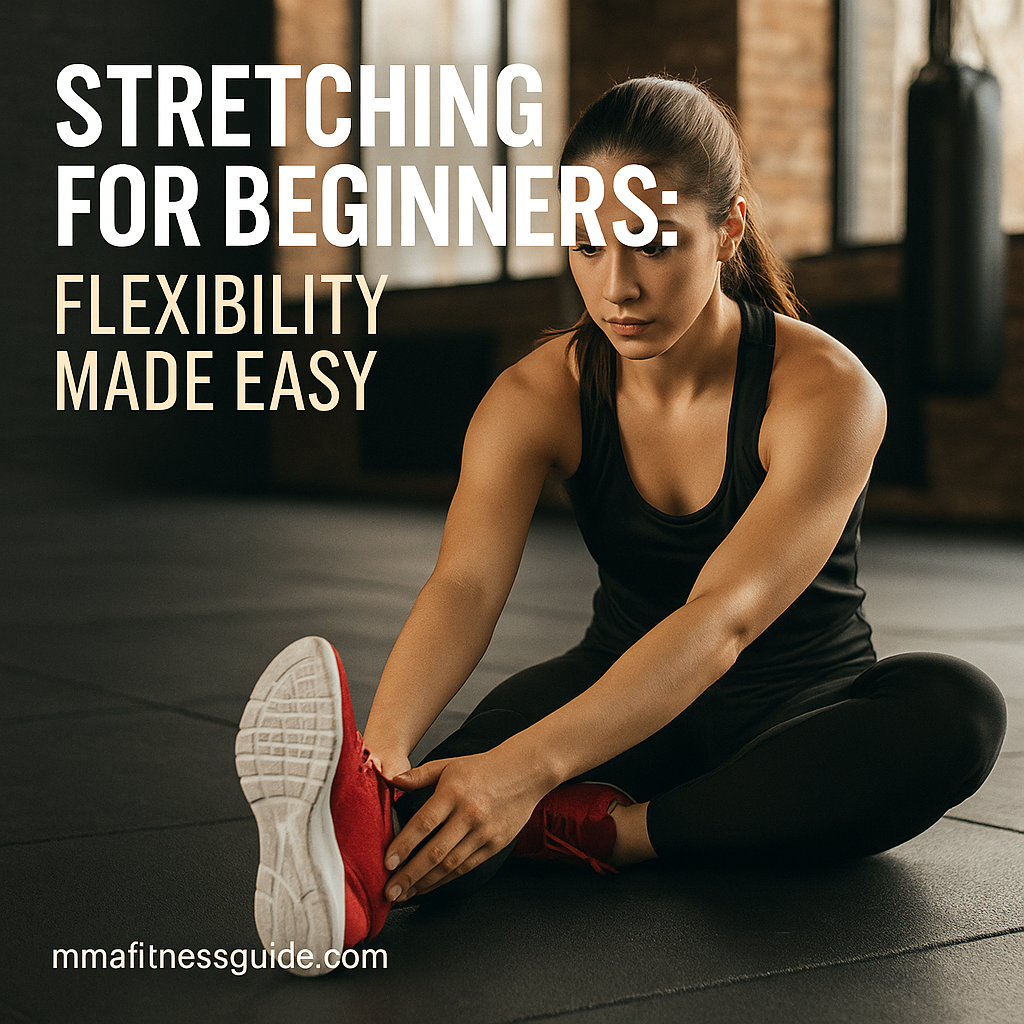
6. Seated Hamstring Stretch (Static)
- Sit on the floor, reach for your toes with a straight back.
- Don’t force it — stop at mild tension.
- Duration: 30 seconds.
7. Butterfly Stretch (Static)
- Sit with soles of feet together, gently press knees toward floor.
- Duration: 30 seconds.
8. Calf Stretch (Static)
- Step one foot back, press heel down, and lean forward slightly.
- Duration: 20 seconds each leg.
9. Cat-Cow Stretch (Dynamic)
- On all fours, alternate arching and rounding your spine.
- Duration: 45 seconds.
10. Deep Breathing Finish (Static)
- Sit cross-legged, inhale deeply, and relax shoulders.
- Duration: 60 seconds.
Tips for Safe and Effective Stretching
- Warm up first: Stretching cold muscles increases risk of strain.
- Don’t bounce: Gentle and steady movements are safer.
- Breathe: Exhale as you stretch deeper — never hold your breath.
- Consistency beats intensity: A little every day is better than one long session.
How Often Should You Stretch?
Start with 5–10 minutes a day, especially after workouts or before bed.
As flexibility improves, increase the duration or add focused stretches for tight areas.
Even 3 sessions per week can make a noticeable difference in just a few weeks.
Common Beginner Mistakes
- Forcing deep stretches too soon
- Ignoring proper breathing
- Skipping post-workout stretching
- Comparing flexibility to others
- Stretching inconsistently
Remember: flexibility is a journey, not a competition.
Why Fighters Prioritize Stretching
Professional fighters stretch daily to maintain agility, prevent injuries, and stay balanced during high-intensity training.
In combat sports, flexibility isn’t optional — it’s part of the skill set.
From smoother transitions to faster recovery, it gives fighters an edge.
Key Takeaways
- Stretching improves flexibility, recovery, and overall performance.
- A consistent 10-minute routine is enough to start seeing progress.
- Flexibility builds resilience and body awareness — key traits for fighters and fitness beginners alike.
As Bruce Lee said,
“Be water, my friend.”
Flexibility — both physical and mental — allows you to adapt, recover, and keep moving forward.