From Dojang to Octagon
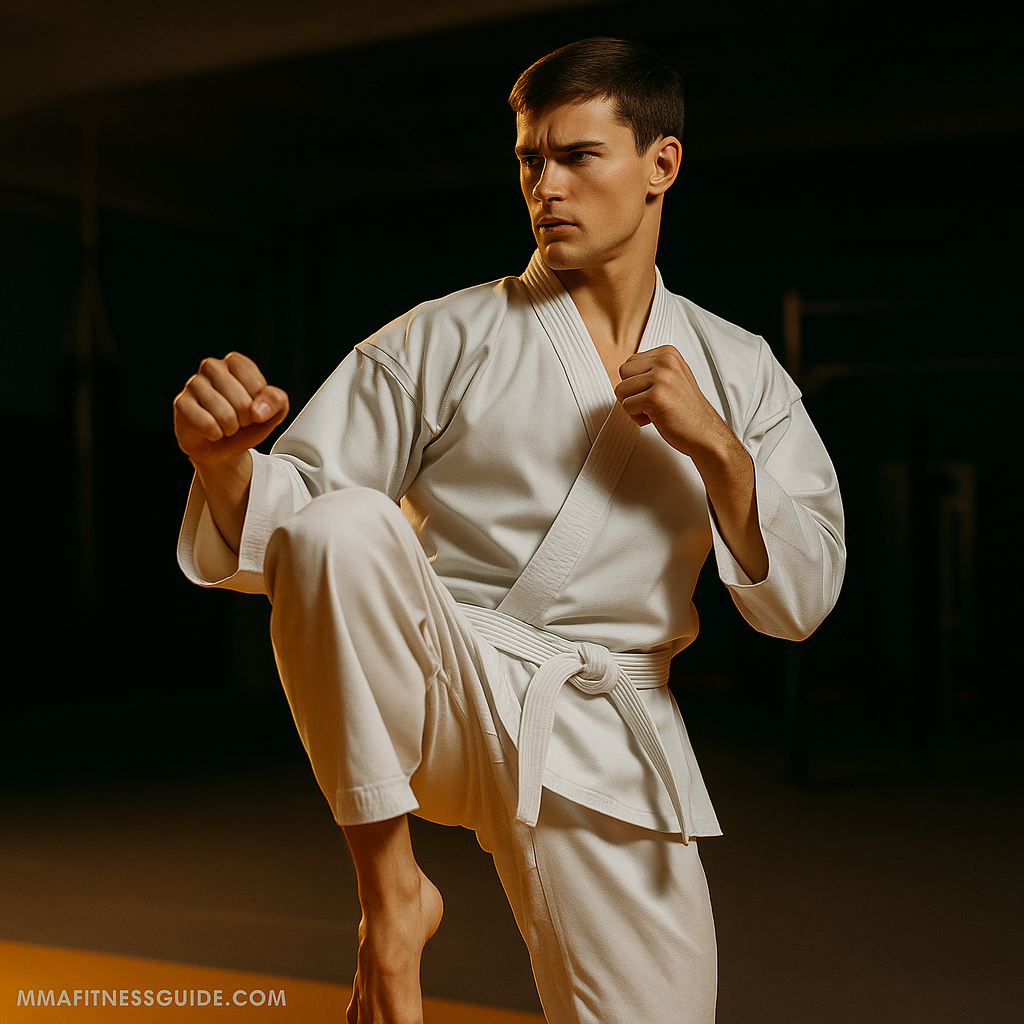
Tae Kwon Do is known for its speed, precision, and spectacular kicking techniques — but can those flashy moves actually work in MMA?
The answer is yes — when adapted for real fight conditions.
Modern mixed martial artists like Anthony Pettis, Edson Barboza, and Yair Rodríguez have shown that Tae Kwon Do’s explosive kicks can be just as effective in the cage as they are in competition.
Let’s break down which techniques translate best, how to modify them for MMA, and what makes Tae Kwon Do a hidden weapon for creative strikers.
Why Tae Kwon Do Works in MMA
At first glance, Tae Kwon Do might seem too traditional or flashy for cage fighting.
But its core principles — speed, timing, and unpredictability — are exactly what make it dangerous.
Key transferable strengths:
- Lightning-fast kicks that come from angles most fighters don’t expect.
- Excellent distance control from years of point fighting.
- Explosive leg and hip strength for power generation.
- Fluid movement and footwork that pairs perfectly with modern MMA striking.
Tae Kwon Do isn’t just about spinning kicks — it’s about creating openings with precision and control.
1. The Roundhouse Kick (Dollyo Chagi)
One of Tae Kwon Do’s bread-and-butter techniques, the roundhouse kick becomes a devastating weapon in MMA when modified for balance and speed.
How it adapts to MMA:
- Use a shorter chamber for faster delivery.
- Aim for body or leg instead of head for better stability.
- Rotate fully on the supporting foot to generate torque.
Why it works:
It lands fast, disguises easily, and can target multiple levels (legs, body, head) — a key element of MMA striking variety.
2. The Side Kick (Yop Chagi)
The side kick is one of the most underused yet effective techniques in MMA — a perfect example of Tae Kwon Do’s influence.
Modern examples: Stephen “Wonderboy” Thompson, Georges St-Pierre.
How it adapts:
- Use it as a range-control tool, not a knockout shot.
- Chamber the knee high and drive the heel forward.
- Step off-line or pivot out after landing to avoid counters.
Why it works:
It’s excellent for stopping forward pressure and damaging the midsection or thigh, while maintaining safe distance.
3. The Spinning Back Kick (Dwi Chagi)
One of Tae Kwon Do’s most iconic moves — and one that consistently scores highlight-reel knockouts in MMA.
How to use safely in the cage:
- Only throw when your opponent commits forward.
- Keep your eyes on the target as you spin.
- Recover your stance immediately after contact.
Why it works:
If timed right, it generates enormous force — hitting the solar plexus or liver with knockout potential.
4. The Axe Kick (Naeryo Chagi)
Rarely seen but highly effective against shorter or aggressive opponents.
How it adapts:
- Use as a surprise follow-up to push kicks or feints.
- Snap downward instead of swinging wide to reduce exposure.
- Best used sparingly to avoid counters.
Why it works:
It attacks vertically — an angle few fighters are prepared to defend — perfect for breaking rhythm or finishing an exchange.
5. The Back Kick and Hook Kick Variations
These spinning and hook-based kicks are risky but devastating when disguised properly.
Tips for adaptation:
- Feint low, spin high.
- Keep chin tucked and stance compact.
- Use spins off cage exits or when the opponent circles away.
Why it works:
It blends unpredictability with knockout power — ideal for fighters who can read timing and distance.
6. Tae Kwon Do Footwork for MMA
Tae Kwon Do fighters excel in in-and-out movement, a key advantage over flat-footed opponents.
Adaptation tips:
- Stay light on the balls of your feet for quick resets.
- Mix linear Tae Kwon Do movement with MMA circling.
- Use stance switches to disguise attacks.
The fluid rhythm confuses traditional boxers and wrestlers, opening up striking opportunities.
7. Balancing Tae Kwon Do with Other Styles
To make Tae Kwon Do truly effective in MMA, blend it with:
- Boxing: for better hand combinations and counters.
- Muay Thai: for clinch control and short-range striking.
- Wrestling or BJJ: for takedown defense and ground security.
This hybrid approach transforms flashy kicks into functional fight tools.
Key Training Tips
- Drill kicks slowly for precision before adding speed.
- Strengthen your core, glutes, and hip flexors.
- Practice footwork with cones or shadow drills.
- Always recover stance — don’t admire your kick.
Controlled repetition makes your kicks not only powerful, but safe for MMA application.
Key Takeaways
- Tae Kwon Do kicks can dominate in MMA when adapted properly.
- Side kicks, roundhouses, and spinning kicks are powerful tools when timed well.
- Footwork and rhythm from Tae Kwon Do add unpredictability to your striking.
- Blend with boxing and wrestling for a complete, cage-ready style.
As Anthony Pettis said,
“Creativity wins fights. When they think they’ve seen it all, that’s when you land something they never expected.”
Tae Kwon Do brings that creativity — turning traditional technique into modern fight innovation.