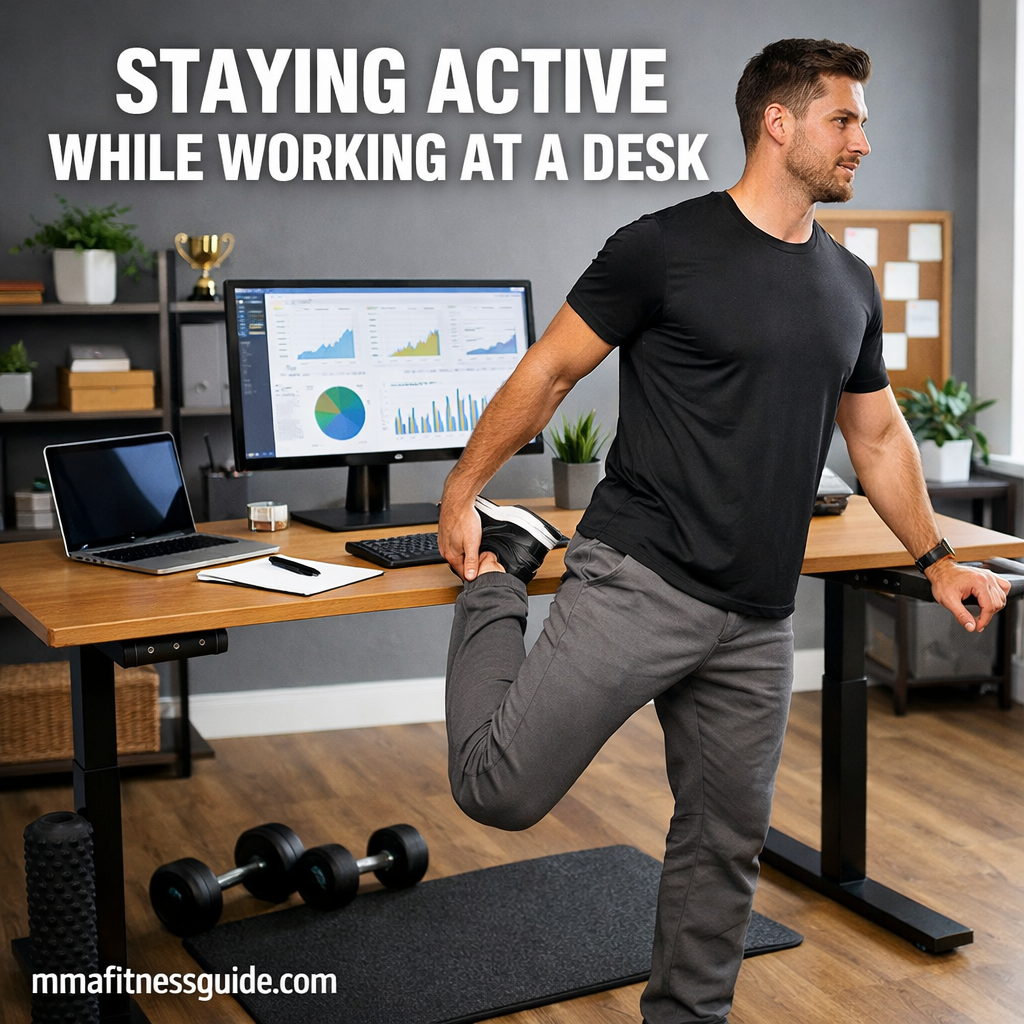
After three or four hours at a computer, you may notice the effects before you even stand up. Your hips feel stiff, your shoulders have crept toward your ears, and the first few steps away from the desk feel noticeably different from how you moved that morning.
For someone also training MMA or working on their fitness, those hours of sitting are worth paying attention to. You don’t have to turn the office into a gym, though. Standing while you take a call, walking for five minutes at lunch, or doing a few shoulder and hip movements between tasks can break up long periods in the same position.
The goal is simple: give your body more opportunities to move during a workday that otherwise requires very little movement.
What Happens When You Stay in One Position for Hours
Sitting itself isn’t something you need to fear. The bigger issue is spending long stretches in essentially the same position.
After extended desk work, you might notice:
- Stiff hips
- Lower-back discomfort
- Tightness through the upper back
- Neck and shoulder tension
- Tired or restless legs
- Reduced overall movement during the day
Instead of trying to find one “perfect” sitting position, regularly give your body a different position to work with.
Break Up Sitting With Short Periods of Movement
A movement break doesn’t need to become a workout.
Stand up. Walk to refill your water. Perform a few shoulder rolls. Take the stairs to another floor. Walk around while you’re on a phone call.
These small interruptions are easier to fit into a workday than trying to schedule several longer exercise sessions.
A practical starting point is to look for natural breaks in your schedule and attach movement to them.
For example:
Finish a meeting → stand and walk for two minutes.
Refill your coffee → take the longer route back.
Complete a major task → stand and move your shoulders and hips.
That makes movement part of the workday instead of another task you have to remember.
Try These Quick Desk Movements
If you only have a minute or two, use movements that address areas that have been stationary.
Try:
- 5–10 shoulder rolls
- Gentle neck turns
- Wrist circles
- Ankle circles
- Seated or standing torso rotations
- Opening and closing your hands
- Standing hip extensions
Move slowly and within a comfortable range.
The purpose isn’t to stretch as far as possible. You’re simply changing positions and moving joints that have been relatively still.
Stand Up Regularly
You don’t need to follow a rigid timer if it interferes with your work.
Instead, try standing whenever you naturally have an opportunity.
You might stand:
- Between meetings
- While reading a document
- During a phone call
- While waiting for something to load
- When drinking water
- After completing a task
If reminders help, experiment with getting up roughly every 30–60 minutes. Treat that as a prompt rather than a strict rule.
Even a short break from sitting changes your position and gives you a chance to take a few steps.
Use Your Workspace to Encourage Movement
The easier movement is, the more likely you are to do it.
If available, a sit-stand desk lets you alternate between sitting and standing. But buying new furniture isn’t necessary.
Other options include:
- Keeping water away from your desk so you have to get up
- Taking calls while standing
- Walking during part of your lunch break
- Using stairs when practical
- Keeping a resistance band nearby
- Moving your printer or other frequently used items farther away
Small amounts of inconvenience can actually create useful movement.
Stop Chasing Perfect Posture
Trying to maintain one textbook posture for eight hours isn’t realistic.
Even a position that initially feels comfortable can become uncomfortable if you hold it long enough.
Instead, vary your position.
Sit upright for a while. Lean back when appropriate. Stand. Walk. Adjust your chair. Move your shoulders.
A comfortable workstation still matters, particularly if you spend most of your working week at a computer, but don’t expect ergonomics to eliminate the need to move.
Add a Two-Minute Micro-Workout
If your workspace allows it, a short set of basic exercises can add movement without requiring workout clothes or a shower afterward.
For example:
- 10 bodyweight squats
- 5–10 wall or desk push-ups
- 10–15 calf raises
- 10 resistance-band rows
That’s enough.
Later in the day, you could repeat the same sequence or choose something different.
Keep these sessions easy if you’re also training MMA or strength training. Your office movement shouldn’t leave your legs exhausted before evening practice.
Move While You’re Still Seated
When standing isn’t practical, you can still change positions and move.
Try:
- Ankle circles
- Heel raises
- Toe raises
- Gentle knee extensions
- Shoulder rolls
- Wrist movements
You can also simply reposition your legs and shoulders rather than remaining frozen in the same posture.
These movements aren’t replacements for walking or regular exercise, but they provide an alternative when you’re stuck at the desk.
Use Walking to Accumulate More Daily Activity
Walking fits around desk work particularly well because it requires almost no setup.
Try a short walk:
- Before starting work
- During lunch
- Between meetings
- While taking a phone call
- Immediately after finishing work
You can also divide your walking throughout the day.
Three 10-minute walks may fit your schedule better than finding one uninterrupted 30-minute block.
If you train MMA in the evening, an easy walk can also provide activity without adding another demanding conditioning session.
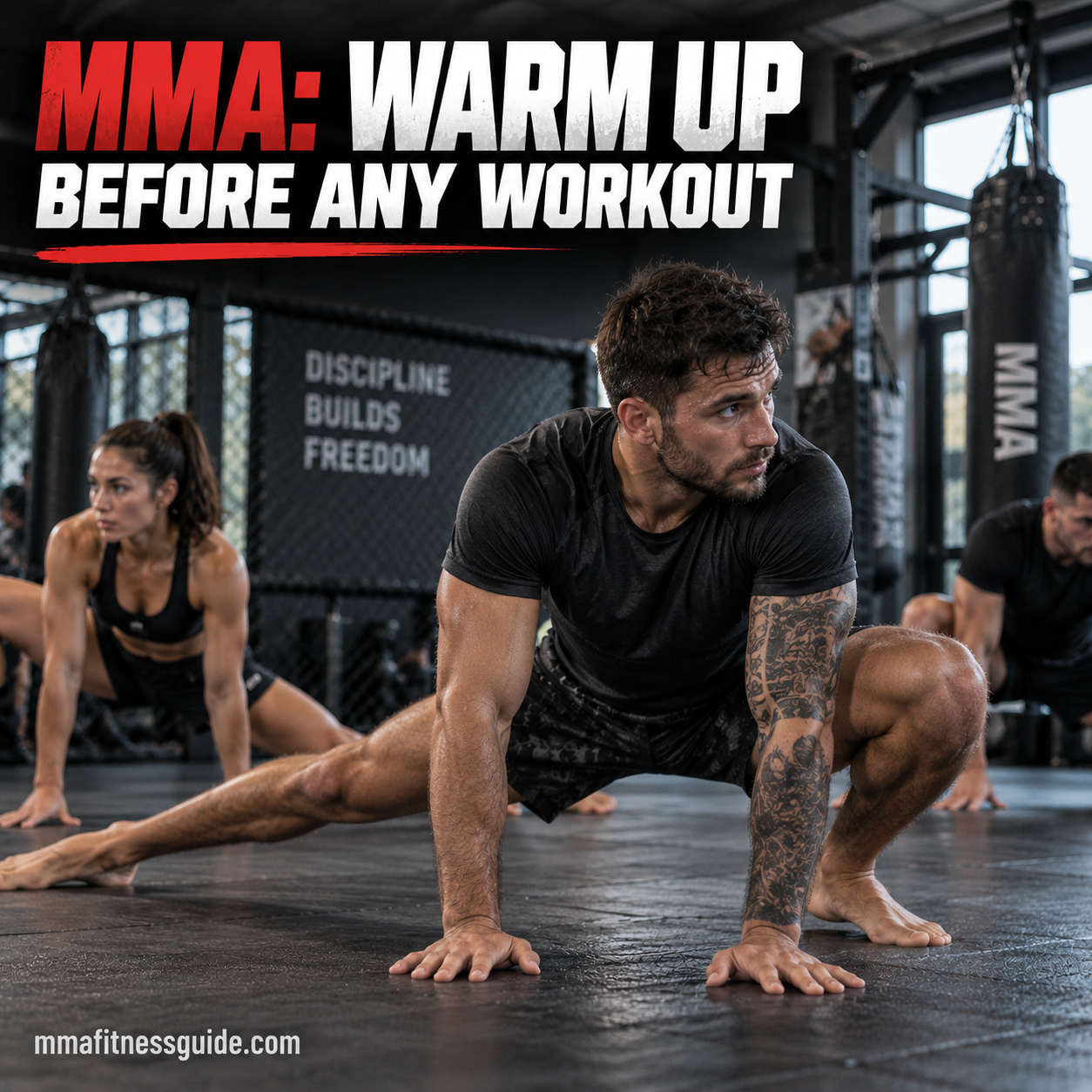
Loosen Up Before Evening MMA Training
Going directly from several hours at a computer into MMA practice can feel awkward.
Before training, spend a few minutes gradually moving the areas that have been stationary.
For example:
- Shoulder circles
- Hip rotations
- Walking lunges
- Ankle mobility
- Torso rotations
- Easy footwork
- A few minutes of light movement
Then complete the warm-up prescribed by your gym or coach.
This gives your body time to transition from desk work into more demanding movement.
Use Stretching When It Feels Useful
After work, you may enjoy spending a few minutes on areas that feel particularly stiff.
Common choices include:
- Hip flexors
- Calves
- Hamstrings
- Chest
- Shoulders
- Upper back
Keep stretches comfortable rather than forcing range of motion.
Five minutes may be plenty after a normal workday. You don’t need a lengthy flexibility routine every evening unless flexibility is a specific training goal.
Use Reminders If You Keep Forgetting
Desk work makes it easy to become absorbed in a task and suddenly realize you’ve barely moved for several hours.
Simple prompts can help.
Try:
- Calendar reminders
- A phone or watch notification
- Moving whenever you finish a meeting
- Standing whenever you refill your drink
- Leaving a resistance band somewhere visible
The best reminder is one that doesn’t become so annoying that you start ignoring it.
Don’t Try to Compensate With One Brutal Workout
Sitting all day doesn’t mean your evening workout needs to punish you for it.
A hard MMA class, run, or strength session serves a different purpose from regular movement during the workday.
Think of them as separate pieces.
Your workout develops fitness and skill.
Your movement breaks prevent your entire day from consisting of long periods in one position.
Both can exist in the same routine.
Pay Attention to Persistent Discomfort
Occasional stiffness after sitting isn’t unusual, but don’t automatically assume every ache is caused by your desk.
Pay closer attention if you experience:
- Persistent or worsening pain
- Numbness or tingling
- Weakness
- Pain that regularly interrupts work or sleep
- Symptoms that don’t improve when you change positions
Those symptoms may deserve evaluation by an appropriate healthcare professional rather than simply adding more stretches.
How Desk Movement Fits With MMA Training
If you spend eight hours working at a computer and train MMA afterward, movement breaks can help bridge the gap between those two very different parts of your day.
A few minutes of walking and mobility won’t replace conditioning, strength work, or MMA practice.
They serve a simpler purpose: keeping some movement in your day before you ask your body to punch, kick, wrestle, grapple, or lift later.
That can make your overall routine feel less like sit all day → suddenly train hard → sit again.
Start With Three Simple Changes
There’s no reason to redesign your entire workday at once.
For the next week, try:
- Stand or walk briefly at least once during each long block of desk work.
- Take one 5–10 minute walk during the workday.
- Do one minute of shoulder, hip, or ankle movement when you notice stiffness.
Once those habits become automatic, add more movement if it fits your schedule.
Final Thoughts
A desk job and an active lifestyle aren’t mutually exclusive.
The challenge is that work can keep you in the same position for hours unless you deliberately interrupt it. Walking to refill your water, standing during a call, moving your shoulders between meetings, or taking ten minutes outside at lunch may seem insignificant individually.
Across five workdays, those opportunities add up.
Keep your MMA sessions and dedicated workouts for training. During the workday, concentrate on something simpler: sit less continuously and give yourself more reasons to move.