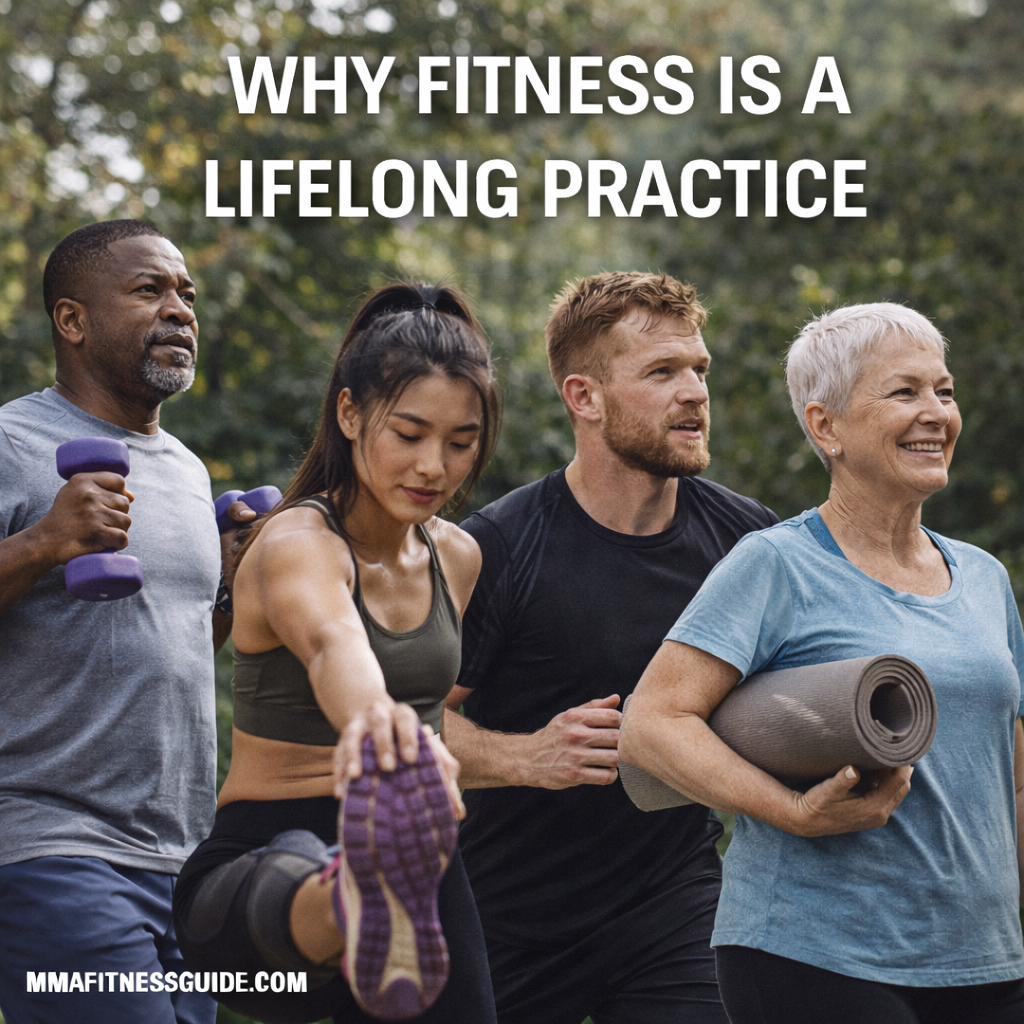
The workout that fits your life at 25 may not be the workout you need at 45, 65, or 80. Your strength, recovery, schedule, responsibilities, and goals will change—but the value of staying active doesn’t disappear with them.
That’s why lasting fitness isn’t built around completing a 30-day challenge or following the hardest routine you can tolerate. It comes from learning how to keep moving through busy seasons, setbacks, injuries, aging, and changes in motivation.
The goal is not to train perfectly for a few months. It’s to build a relationship with movement that can adapt with you for decades.
Fitness Is About Continuity, Not Perfection
One of the biggest mistakes people make is treating fitness as an all-or-nothing effort.
Short-term thinking often leads to:
- Extreme routines followed by burnout
- Guilt after missed workouts
- Cycles of starting and stopping
- Frustration when results slow down
A lifelong approach focuses on continuity—showing up consistently over years, not weeks.
Your Body Changes, and Fitness Should Too
What works at one stage of life won’t always work later.
A lifelong fitness practice adapts to:
- Age and recovery needs
- Injuries and limitations
- Schedule changes
- Energy levels
- Mental health fluctuations
Fitness that evolves keeps you active instead of forcing you to quit.
Motivation Is Temporary—Habits Are Durable
Motivation fades. Habits last.
People who maintain fitness long term rely on:
- Routine over excitement
- Identity over willpower
- Systems over goals
When fitness becomes a habit, it doesn’t require constant motivation to continue.
Fitness Supports More Than Physical Health
Long-term fitness benefits go far beyond appearance or strength.
Regular movement supports:
- Mental clarity and stress management
- Emotional regulation
- Confidence and self-trust
- Energy and resilience
- Cognitive health as you age
Fitness becomes a foundation for overall well-being, not just physical capability.
The Role of Identity in Lifelong Fitness
People who stay fit long term often see themselves as:
- Someone who moves regularly
- Someone who values health
- Someone who adapts instead of quits
Identity-based fitness shifts the question from “Should I work out today?” to “How do I move today?”
Fitness Is a Skill You Practice
Movement quality improves with time.
A lifelong approach allows you to:
- Learn better technique
- Develop body awareness
- Reduce injury risk
- Move more efficiently
- Enjoy activity more deeply
Fitness isn’t just effort—it’s skill development.
Consistency Beats Intensity Over Decades
High intensity isn’t sustainable forever—but consistency is.
Lifelong fitness prioritizes:
- Moderate, repeatable effort
- Recovery and rest
- Injury prevention
- Sustainable volume
Training that you can repeat year after year always wins.
Fitness Through Different Life Seasons
Life brings busy periods, setbacks, and transitions.
A lifelong mindset accepts:
- Reduced training during stressful times
- Maintenance phases instead of progress
- Returning gradually after breaks
- Adjusting expectations without guilt
Staying connected matters more than pushing hard.
Aging Is Inevitable—Decline Is Not
Movement slows the effects of aging.
Long-term fitness helps:
- Preserve muscle mass
- Maintain joint health
- Improve balance and coordination
- Protect independence later in life
Fitness doesn’t stop aging—it helps you age better.
Why Short-Term Goals Still Matter
A lifelong practice doesn’t mean avoiding goals.
Short-term goals can:
- Provide direction
- Renew focus
- Add variety
- Reinforce commitment
The key is viewing goals as chapters, not endpoints.
The Mental Shift That Changes Everything
The most important shift is this:
Fitness isn’t something you do—it’s something you practice.
Practice implies:
- Patience
- Flexibility
- Long-term thinking
- Compassion for setbacks
This mindset removes pressure and creates sustainability.
Teaching Fitness as a Lifelong Value
When fitness is framed as lifelong:
- Kids learn healthy habits early
- Adults feel less pressure to be perfect
- Older individuals feel welcomed, not excluded
Fitness becomes inclusive rather than intimidating.
How to Start Thinking Long Term Today
You don’t need to change everything at once.
Start by:
- Choosing consistency over intensity
- Planning recovery, not just workouts
- Allowing flexibility
- Letting go of comparison
- Focusing on how movement improves your life
Small choices made repeatedly create lasting change.
Final Thoughts
Fitness works best when it’s treated as a lifelong practice, not a temporary project. Bodies change, motivation fluctuates, and life gets busy—but movement remains one of the most reliable tools for health, resilience, and quality of life.
When you stop chasing quick results and start building sustainable habits, fitness becomes something you carry with you—not something you constantly start over.