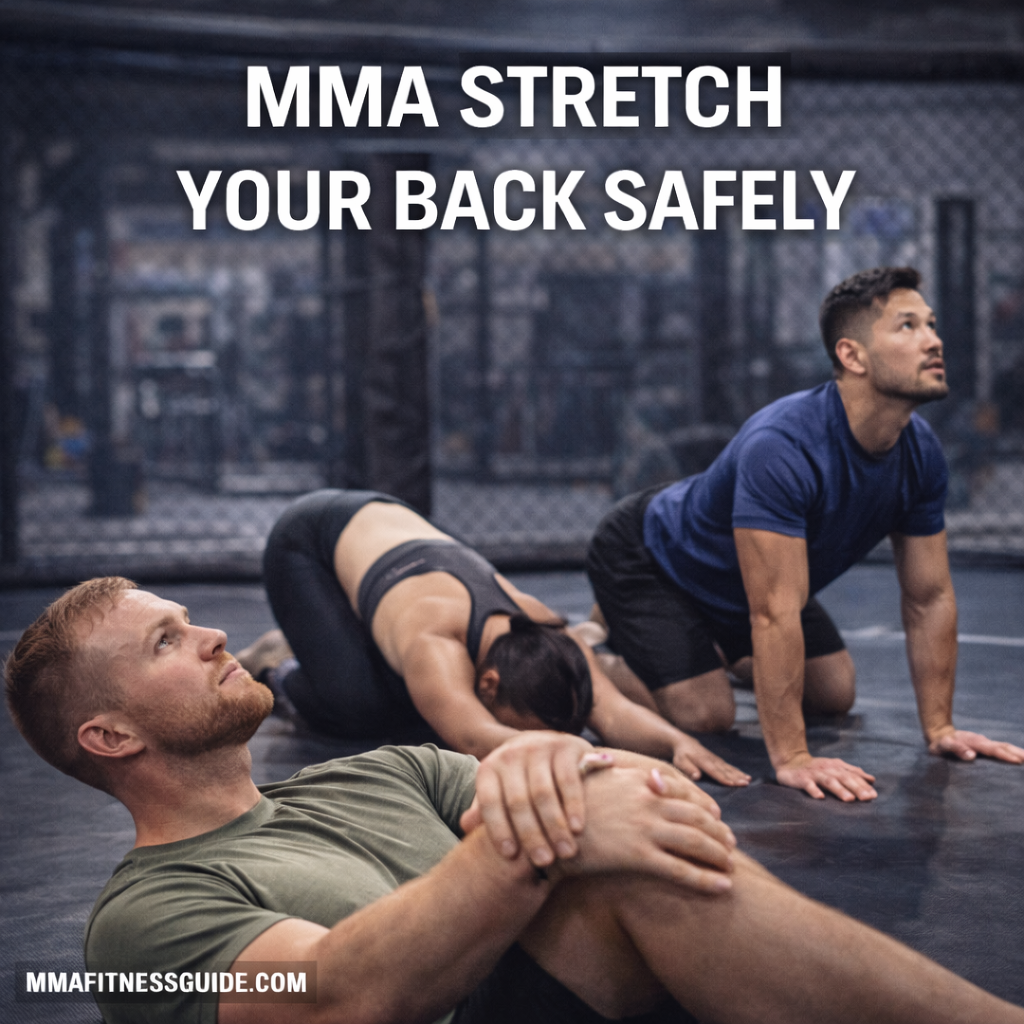
Back tightness and soreness are common for beginners starting MMA training. Striking, grappling, takedowns, and conditioning all place new demands on the spine and surrounding muscles. Without proper mobility work, stiffness can turn into pain, reduced movement quality, or even injury.
This guide explains how beginners can stretch their back safely for MMA, which stretches are most effective, and how to avoid common mistakes that lead to discomfort or setbacks.
Why Back Mobility Matters in MMA
The back plays a central role in nearly every MMA movement.
Good back mobility helps with:
- Striking rotation and power
- Grappling posture and balance
- Takedown defense and transitions
- Breathing efficiency
- Injury prevention
A stiff back limits technique and increases strain on hips, shoulders, and knees.
Common Causes of Back Tightness in Beginners
New MMA athletes often experience back tightness due to:
- Poor posture during training
- Weak core muscles
- Limited hip mobility
- Overuse without recovery
- Holding tension while learning new skills
Stretching should be paired with relaxation and proper movement patterns.
Safety Rules Before Stretching Your Back
Stretching incorrectly can make things worse.
Follow these safety basics:
- Never stretch through sharp pain
- Warm up lightly before stretching
- Move slowly and with control
- Breathe deeply during stretches
- Stop if discomfort increases
Gentle consistency beats aggressive stretching every time.
Best Back Stretches for MMA Beginners
Cat-Cow Stretch
This stretch mobilizes the entire spine.
Benefits:
- Improves spinal flexibility
- Reduces stiffness
- Encourages controlled movement
How to perform:
- Start on hands and knees
- Inhale as you arch your back
- Exhale as you round your spine
- Move slowly through 8–10 reps
Child’s Pose
A simple but effective stretch for the lower and mid-back.
Benefits:
- Relieves spinal compression
- Calms the nervous system
- Reduces training tension
How to perform:
- Kneel on the floor
- Sit hips back toward heels
- Reach arms forward
- Hold for 30–60 seconds
Seated Spinal Twist
This stretch improves rotational mobility.
Benefits:
- Supports striking rotation
- Improves posture
- Reduces stiffness from grappling
How to perform:
- Sit tall with legs extended
- Bend one knee and cross it over
- Rotate gently toward the bent knee
- Hold for 20–30 seconds per side
Twist slowly and avoid forcing the movement.
Knee-to-Chest Stretch
Targets the lower back gently.
Benefits:
- Reduces lower back tension
- Relieves post-training stiffness
- Supports recovery
How to perform:
- Lie on your back
- Pull one or both knees toward your chest
- Hold while breathing deeply
- Maintain for 20–40 seconds
Standing Forward Fold (Modified)
A safe version helps decompress the spine.
Benefits:
- Stretches the back and hamstrings
- Improves posture awareness
- Encourages relaxation
How to perform:
- Stand with knees slightly bent
- Hinge forward at the hips
- Let arms hang naturally
- Avoid forcing depth
When to Stretch During MMA Training
Timing matters for back health.
Best times to stretch:
- After training sessions
- During cooldowns
- On rest or recovery days
- After light warm-up movements
Avoid deep static stretching before intense training.
Stretching vs Strengthening the Back
Stretching alone isn’t enough.
Beginners should also:
- Strengthen core muscles
- Improve hip mobility
- Practice proper posture
- Learn relaxed breathing
A strong, mobile back performs better and stays healthier.
Common Back Stretching Mistakes
Avoid these beginner errors:
- Forcing stretches too deep
- Holding breath during stretches
- Stretching cold muscles
- Ignoring pain signals
- Stretching aggressively every day
Comfortable stretches promote progress—painful ones delay it.
How Often Beginners Should Stretch Their Back
For most beginners:
- Light stretching daily
- Longer sessions 3–4 times per week
- Short mobility breaks after training
Consistency matters more than intensity.
When to Be Cautious
If you experience:
- Sharp or radiating pain
- Numbness or tingling
- Pain that worsens over time
- Pain after minimal movement
Pause stretching and consult a professional before continuing.
Final Thoughts
Stretching your back safely is essential for beginners training MMA. Gentle, controlled stretches improve mobility, reduce stiffness, and support long-term progress without increasing injury risk. Focus on comfort, breathing, and consistency—not forcing range.
A healthy back allows you to train harder, move better, and enjoy MMA without unnecessary pain.