Introduction
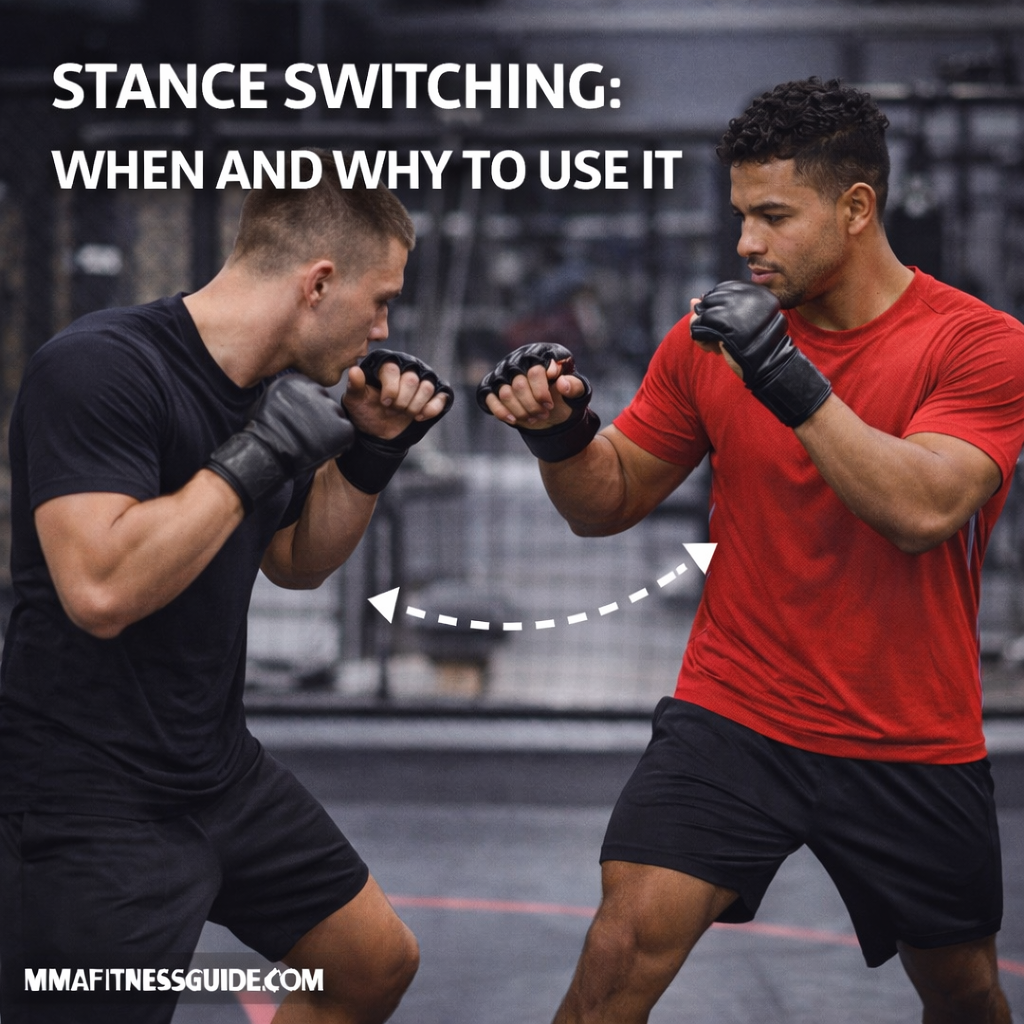
Stance switching has become increasingly common in modern MMA and striking-based martial arts. Once considered an advanced or risky tactic, switching stances is now a fundamental skill used by elite fighters to create angles, confuse opponents, and open up attacks.
Understanding when and why to switch stances—and when not to—is essential for using this tool effectively rather than turning it into a liability.
What Is Stance Switching?
Stance switching refers to changing your lead leg and lead hand during movement or exchanges.
Common stance changes include:
- Orthodox to southpaw
- Southpaw to orthodox
- Temporary switches during combinations
- Angle-based stance changes
The goal is to create tactical advantages, not constant movement.
Why Fighters Use Stance Switching
Stance switching serves multiple purposes.
Key reasons include:
- Creating new striking angles
- Disrupting opponent timing
- Accessing different weapons
- Escaping pressure or the cage
When used intentionally, it expands offensive options.
Creating Angles Through Stance Changes
Switching stances alters foot positioning.
This helps fighters:
- Attack from unexpected lines
- Step off the centerline
- Change range quickly
Angles are often more valuable than power.
Using Stance Switching to Set Up Strikes
Different stances open different attacks.
Examples include:
- Lead hand dominance changes
- New kicking lanes
- Easier access to rear power shots
Switching creates openings without forcing exchanges.
Defensive Benefits of Stance Switching
Stance changes aren’t just offensive.
Defensive uses include:
- Escaping linear attacks
- Resetting after combinations
- Avoiding cage pressure
Well-timed switches disrupt opponent momentum.
Stance Switching in Combination Work
Many elite fighters switch mid-combination.
Benefits include:
- Extended combinations
- Increased unpredictability
- Smoother transitions
Flow matters more than speed.
When Stance Switching Becomes a Liability
Poorly timed switches create openings.
Common mistakes include:
- Switching while flat-footed
- Crossing feet without balance
- Switching under heavy pressure
Stability should always come first.
Energy Efficiency and Stance Switching
Excessive switching wastes energy.
Efficient switching:
- Serves a purpose
- Maintains balance
- Resets posture
Movement should simplify—not complicate—fighting.
Stance Switching for Wrestlers and Grapplers
Stance changes affect takedowns.
Considerations include:
- Lead leg exposure
- Sprawl readiness
- Shot angles
Wrestlers must protect entries during switches.
Cage Awareness and Stance Switching
Space dictates usefulness.
Effective switching:
- Uses open mat space
- Avoids switching near the fence
- Maintains escape routes
Cage positioning matters more than stance preference.
Developing Ambidexterity Safely
Switching stances requires balanced skill.
Training should include:
- Basic strikes from both stances
- Defensive fundamentals on both sides
- Footwork drills
Avoid rushing advanced attacks too early.
Stance Switching at Different Skill Levels
Not all fighters need frequent switching.
Beginners:
- Focus on fundamentals
- Learn defensive balance first
Intermediate fighters:
- Add controlled stance changes
Advanced fighters:
- Use switching strategically
Progression prevents bad habits.
Common Stance Switching Drills
Helpful drills include:
- Shadowboxing with intentional switches
- Pad work emphasizing angles
- Light sparring focused on footwork
Repetition builds confidence.
Psychological Impact on Opponents
Stance switching affects perception.
Opponents may:
- Hesitate
- Misjudge distance
- React slower
Mental disruption creates physical openings.
Fighters Known for Effective Stance Switching
Many elite fighters use stance switching well.
They succeed because:
- Fundamentals remain strong
- Switches are purposeful
- Defense stays intact
Technique supports creativity.
When Not to Switch Stances
Sometimes stability matters more.
Avoid switching:
- When fatigued
- Under heavy pressure
- Without clear intent
Discipline determines effectiveness.
Final Thoughts
Stance switching is a powerful tool when used with purpose, balance, and awareness. It’s not about constant movement or showing versatility—it’s about creating advantages while maintaining control. Fighters who master stance switching expand their options without sacrificing stability.
Use stance switching to simplify your fighting, not complicate it.