Introduction
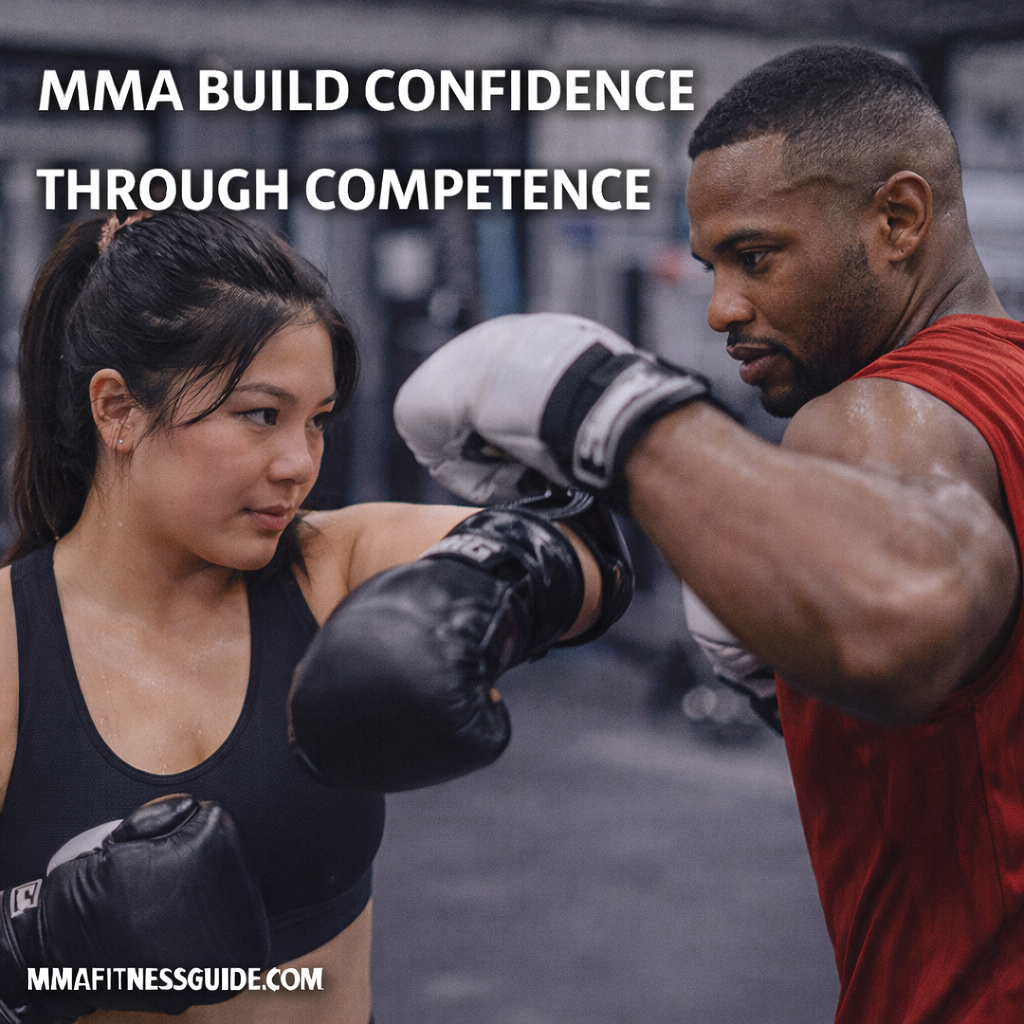
Confidence in MMA doesn’t come from hype, trash talk, or pretending to be fearless. Real confidence is built through competence—the quiet assurance that comes from knowing you’ve put in the work and developed real skill. Fighters who rely on external validation often crumble under pressure, while those grounded in preparation remain steady.
Building confidence through competence creates durable belief that holds up in training, sparring, and competition.
What Confidence Really Means in MMA
Confidence is not the absence of fear. It’s the ability to function despite it.
True confidence looks like:
- Calm decision-making under pressure
- Willingness to engage without hesitation
- Emotional control during adversity
- Trust in your training
This type of confidence is earned, not assumed.
The Difference Between False Confidence and Real Confidence
False confidence is fragile.
It often comes from:
- Ego-driven thinking
- External praise
- Comparing yourself to others
- Short-term success
Real confidence comes from:
- Repetition
- Skill mastery
- Honest self-assessment
- Consistent preparation
Only one survives adversity.
Competence Is Built Through Repetition
Skill development requires deliberate repetition.
Competence grows when you:
- Drill fundamentals consistently
- Practice under varied conditions
- Refine technique instead of rushing progress
- Accumulate quality training hours
Confidence naturally follows proven ability.
Why Fundamentals Matter More Than Flash
Advanced techniques mean little without strong fundamentals.
Fundamentals build confidence because they:
- Work under pressure
- Hold up when tired
- Reduce decision overload
- Provide reliable options
Mastery of basics creates stability.
Training With Intent, Not Just Intensity
Hard training alone doesn’t guarantee competence.
Intentional training includes:
- Clear goals for each session
- Focus on execution quality
- Willingness to slow down to improve
- Feedback-driven adjustments
Mindless intensity builds fatigue—not confidence.
Sparring as a Tool for Confidence Building
Sparring should develop skill, not just toughness.
Confidence-building sparring emphasizes:
- Control over domination
- Learning over winning
- Technical experimentation
- Composure under pressure
Smart sparring builds trust in your abilities.
Competence Reduces Anxiety
Uncertainty fuels anxiety.
As competence increases:
- Decision-making becomes faster
- Reactions feel automatic
- Situational awareness improves
- Fear becomes manageable
Prepared fighters worry less because they know what to do.
Tracking Progress Builds Belief
Seeing progress reinforces confidence.
Track:
- Technical improvements
- Conditioning gains
- Sparring composure
- Recovery consistency
Objective evidence strengthens belief.
Embracing Weaknesses Accelerates Growth
Avoiding weaknesses slows competence.
Confident fighters:
- Identify gaps honestly
- Train weaknesses deliberately
- Ask questions without ego
- View mistakes as data
Growth requires humility.
Coaching and Feedback Matter
External feedback accelerates competence.
Good coaching provides:
- Objective correction
- Clear priorities
- Structured progression
- Accountability
Guidance prevents wasted effort.
Confidence in Competition Comes From Preparation
Fight-night confidence reflects preparation quality.
Prepared fighters:
- Trust their training
- Accept uncertainty
- Focus on execution
- Stay composed under stress
Confidence doesn’t spike overnight—it accumulates.
Handling Setbacks Without Losing Confidence
Losses don’t erase competence.
Resilient fighters:
- Separate performance from identity
- Analyze objectively
- Adjust training intelligently
- Maintain long-term perspective
Confidence rooted in skill recovers quickly.
Daily Habits That Build Competence
Small habits compound.
Examples include:
- Showing up consistently
- Prioritizing recovery
- Studying technique
- Maintaining discipline outside the gym
Consistency beats motivation.
Confidence Shows Up Quietly
True confidence is often subtle.
It appears as:
- Relaxed posture
- Steady breathing
- Clear focus
- Controlled movement
There’s no need to announce it.
Why Confidence Built on Competence Lasts
Competence-based confidence:
- Doesn’t depend on outcomes
- Withstands pressure
- Adapts to new challenges
- Grows with experience
It’s durable because it’s real.
Final Thoughts
In MMA, confidence isn’t something you talk yourself into—it’s something you build through competence. Skill, preparation, and honest work create belief that no opponent can take away. When confidence is rooted in what you’ve done, not what you hope for, it becomes unshakeable.
Train with purpose. Build skill. Let confidence follow.