Introduction
Cauliflower ear is one of the most common—and most misunderstood—injuries in grappling sports like MMA, wrestling, BJJ, and judo. While some athletes view it as a badge of honor, untreated ear damage can lead to chronic pain, infection, hearing issues, and permanent deformity.
Proper ear care helps grapplers protect their health, extend their careers, and make informed decisions about prevention and treatment.
What Is Cauliflower Ear?
Cauliflower ear occurs when repeated trauma causes blood or fluid to collect between the cartilage and skin of the ear. This buildup disrupts blood flow, leading to cartilage damage and permanent thickening if not treated promptly.
Once the cartilage hardens, the damage becomes irreversible.
How Cauliflower Ear Develops in Grappling
Grappling places constant friction and pressure on the ears.
Common causes include:
- Head pressure during clinches
- Repeated mat contact
- Tight head positioning in submissions
- Scrambles and takedown defense
- Training without ear protection
The injury often develops gradually, not from one single impact.
Early Warning Signs to Watch For
Catching ear trauma early makes prevention much easier.
Early symptoms include:
- Swelling or puffiness
- Warmth or redness
- Tenderness to touch
- Fluid-filled feeling
- Mild throbbing or pressure
Ignoring early signs allows damage to progress quickly.
Why Immediate Treatment Matters
Timing is critical with ear injuries.
Prompt treatment:
- Prevents cartilage death
- Reduces permanent deformation
- Lowers infection risk
- Shortens recovery time
Delaying care often turns a manageable injury into a lifelong issue.
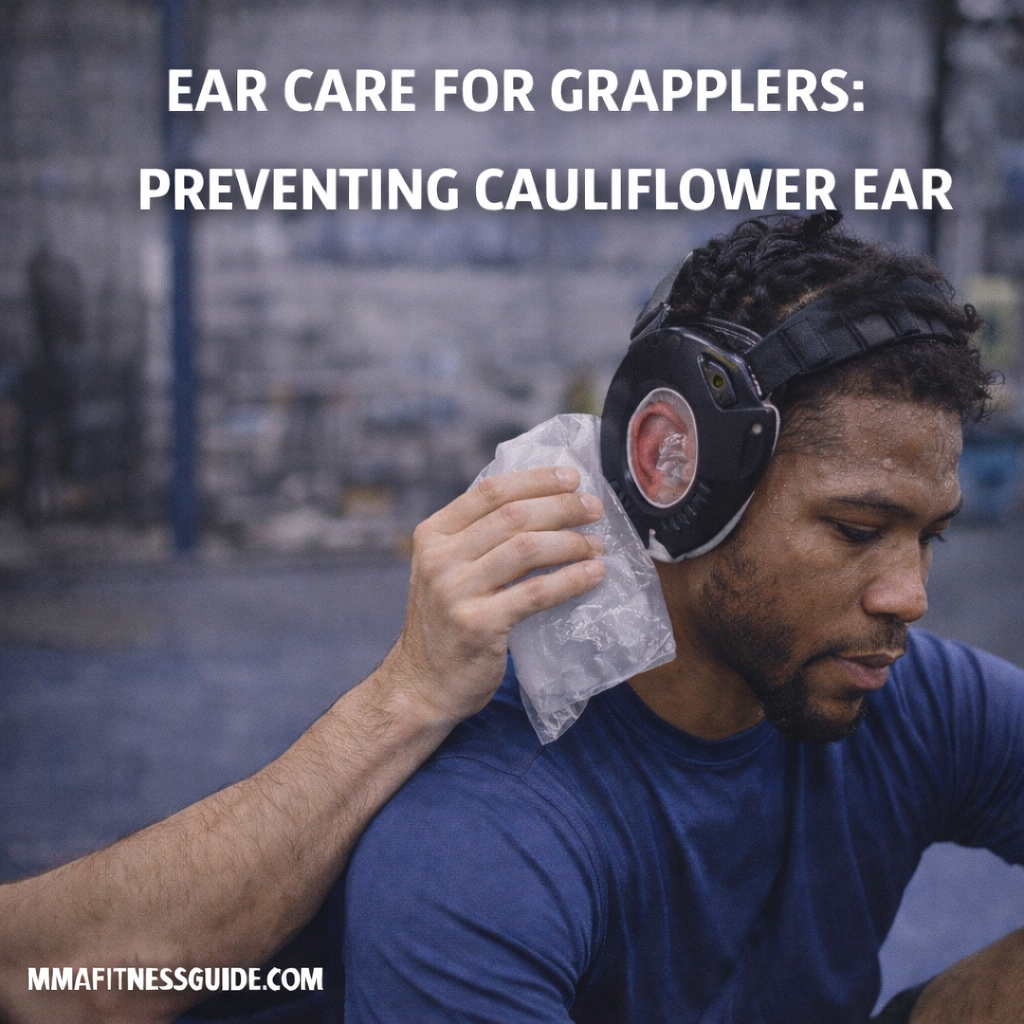
Using Headgear to Prevent Cauliflower Ear
Protective headgear is the most effective prevention tool.
Benefits of grappling headgear:
- Reduces direct ear trauma
- Limits friction during scrambles
- Protects healing ears
- Extends training longevity
While not always popular, headgear significantly lowers risk.
When to Wear Headgear
Headgear is especially useful during:
- High-volume training periods
- Wrestling-heavy sessions
- Recovery from ear swelling
- Drilling with aggressive partners
Selective use still provides protection.
Draining Ear Swelling: What to Know
Draining fluid is sometimes necessary, but it must be done correctly.
Important considerations:
- Always consult a medical professional
- Improper draining increases infection risk
- Compression is required after draining
- Multiple treatments may be needed
Self-treatment without knowledge can cause permanent damage.
Compression and Aftercare
After draining, compression is essential.
Effective aftercare includes:
- Compression magnets or molds
- Clean bandaging
- Monitoring for re-swelling
- Avoiding contact until stable
Compression helps cartilage heal correctly.
Hygiene and Infection Prevention
Ear injuries increase infection risk.
Best hygiene practices:
- Clean ears after every session
- Avoid sharing headgear
- Keep mats and towels clean
- Watch for redness, heat, or discharge
Infections can complicate recovery significantly.
Training Adjustments to Protect the Ears
Small technique changes can reduce trauma.
Helpful adjustments:
- Improve head positioning awareness
- Avoid unnecessary grinding pressure
- Tap early when ears are trapped
- Rotate training intensity
Smart training protects long-term health.
Myth: Cauliflower Ear Is Unavoidable
Not every grappler develops cauliflower ear.
Factors that reduce risk:
- Early intervention
- Consistent headgear use
- Proper recovery periods
- Good hygiene habits
Prevention is possible with awareness.
When to See a Medical Professional
Seek medical care if:
- Swelling persists or worsens
- Pain increases
- Ear feels hot or infected
- Fluid returns after draining
Professional treatment protects hearing and appearance.
Mental and Social Considerations
Some athletes feel pressure to accept ear damage.
It’s important to remember:
- Health comes before aesthetics
- Ear protection doesn’t reduce toughness
- Long-term comfort matters
Career longevity outweighs short-term image.
Long-Term Effects of Untreated Cauliflower Ear
Untreated ear injuries can lead to:
- Permanent deformity
- Chronic pain
- Recurrent infections
- Difficulty wearing earbuds or headsets
- Partial hearing loss
Early care prevents lifelong issues.
Final Thoughts
Cauliflower ear is common in grappling—but it’s not inevitable. With early recognition, protective equipment, proper hygiene, and timely treatment, grapplers can protect their ears without sacrificing performance.
Taking ear care seriously is a sign of professionalism, not weakness. Your ability to train consistently depends on staying healthy everywhere—including your ears.