Introduction
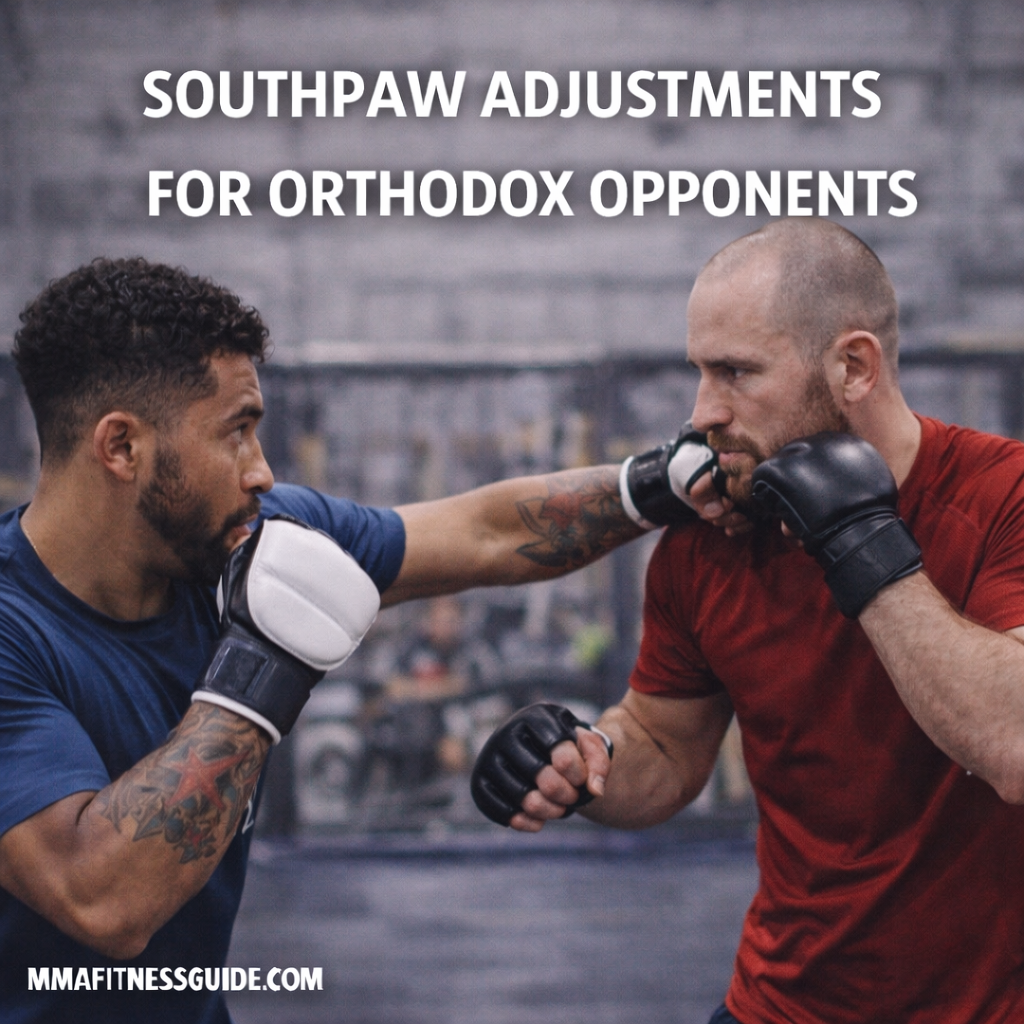
Facing a southpaw can be one of the most challenging adjustments for orthodox fighters. The open-stance matchup changes angles, timing, foot placement, and defensive responsibilities. Fighters who fail to adapt often walk into counters or struggle to establish rhythm.
Learning proper southpaw adjustments allows orthodox fighters to control distance, neutralize threats, and exploit openings that exist specifically in open-stance exchanges.
Understanding the Open-Stance Matchup
In an orthodox vs southpaw matchup, both fighters lead with opposite hands and feet.
Key characteristics include:
- Lead feet battling for outside position
- Power hands lining up in the center
- Different angles for jabs and kicks
- Increased counter opportunities
Foot positioning becomes a primary battle.
Why Foot Positioning Matters
Foot placement determines striking angles and defensive safety.
For orthodox fighters:
- Winning outside foot position opens straight right hands
- Losing foot position exposes the centerline
- Poor footwork increases vulnerability to the left cross
Small foot adjustments have major consequences.
Establishing Outside Lead Foot Control
Outside foot position is a foundational goal.
Tips include:
- Step your lead foot slightly outside their lead foot
- Angle off after punching
- Avoid standing square
- Reset if position is lost
Outside position improves offense and defense simultaneously.
Adjusting the Jab Against a Southpaw
The jab must be smarter in open stance.
Effective jab strategies:
- Aim for chest or shoulder instead of head
- Use double jabs to close distance
- Jab while stepping outside
- Use feints to draw counters
The jab sets up everything else.
Defending Against the Left Cross
The southpaw left hand is the biggest threat.
Defensive priorities include:
- Head off the centerline after jabbing
- Keep right hand high
- Circle toward your left after exchanges
- Avoid lazy entries
Respecting the left cross is essential.
Using the Lead Hand and Lead Hook
The orthodox lead hook is a powerful weapon.
Use it to:
- Counter after southpaw jabs
- Check forward pressure
- Exit exchanges safely
- Set up body shots
Timing beats speed.
Attacking the Body Effectively
Body shots disrupt southpaw movement.
High-percentage targets:
- Right hand to the body
- Left hook to the liver
- Straight punches after foot pivots
Body attacks slow counters over time.
Managing Kicks in Open Stance
Kicks change dynamics significantly.
Effective kicking strategies:
- Inside leg kicks to the lead leg
- Body kicks after punches
- Low kicks when southpaw weight shifts
Avoid naked kicks without setup.
Clinch and Takedown Adjustments
Open stance changes clinch entries.
Key adjustments:
- Enter off angles, not straight lines
- Control head position
- Watch for snap-downs
- Be aware of lead-leg takedowns
Control positioning before committing.
Using Feints to Disrupt Timing
Feints are especially valuable in open stance.
Effective feints:
- Jab feints
- Level changes
- Lead-hand twitches
Feints reveal reactions without risk.
Avoiding Common Mistakes Against Southpaws
Common errors include:
- Walking straight into the left hand
- Overcommitting to the jab
- Ignoring foot position
- Standing too tall
- Chasing instead of cutting angles
Discipline prevents damage.
Southpaw-Specific Drills for Orthodox Fighters
Training adjustments accelerate improvement.
Helpful drills include:
- Foot position sparring rounds
- Jab-only rounds
- Angle-exit drills
- Reaction-based pad work
Focused reps create confidence.
Mental Approach to Open-Stance Fights
Confidence matters as much as technique.
Key mental cues:
- Stay patient
- Control distance
- Win small battles
- Trust preparation
Calm fighters make better decisions.
Studying Southpaw Patterns
Film study improves readiness.
Look for:
- Entry habits
- Preferred counters
- Movement tendencies
- Kick setups
Knowledge reduces surprises.
When to Pressure vs Stay Patient
Not all southpaws respond to pressure the same.
General guidelines:
- Pressure reactive fighters
- Stay patient against counter specialists
- Adjust mid-fight based on feedback
Adaptability wins fights.
Final Thoughts
Southpaw matchups challenge orthodox fighters, but they also offer unique opportunities. With proper foot positioning, disciplined defense, and smart offensive choices, orthodox fighters can turn open-stance complexity into an advantage.
Success against southpaws comes from preparation, patience, and precision—not panic.