A split knuckle during bag work, a scraped knee from the mat, or a finger bent awkwardly during grappling can bring a training session to an early stop. These aren’t dramatic fight-night injuries—they’re the smaller problems that regularly show up after hours of striking, wrestling, and rolling.
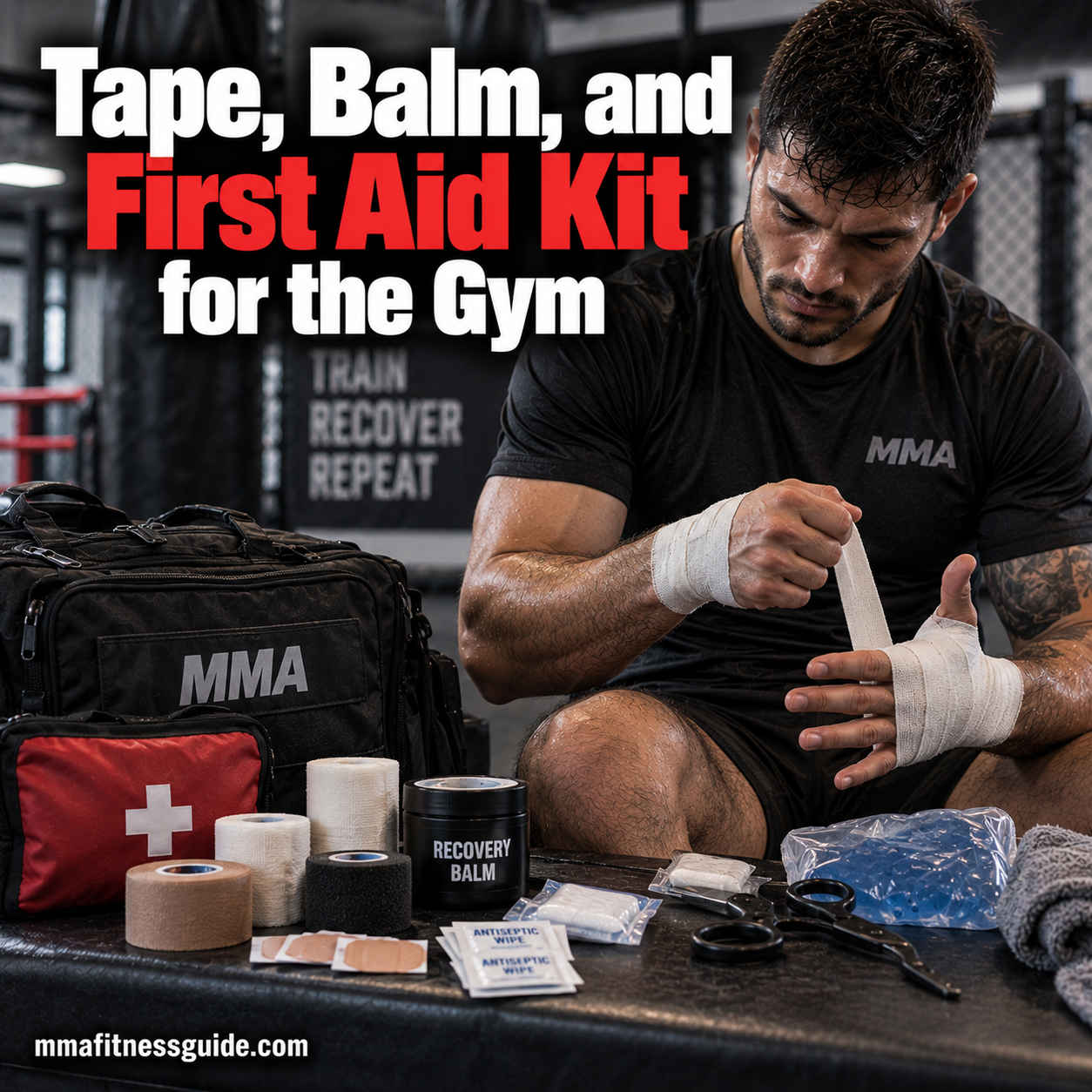
Keeping athletic tape, wound-care supplies, disposable gloves, gauze, and a few basic recovery products in your gym bag means you can deal with minor issues promptly instead of searching the gym for supplies. Tape can provide temporary support or protect vulnerable skin, while a properly stocked first aid pouch gives you clean supplies for handling small cuts and abrasions.
The goal isn’t to patch up an injury so you can ignore it. It’s to have the right supplies for minor problems, recognize when something requires more than basic first aid, and keep cuts and shared training surfaces as hygienic as possible.
Why Basic First Aid Matters in MMA Training
MMA gyms are high-contact environments.
Even controlled training can involve:
- Small cuts and scrapes
- Finger and toe sprains
- Joint irritation
- Mat burns
- Muscle tightness or bruising
Quick care prevents minor issues from becoming major setbacks.
Athletic Tape: A Gym Essential
Tape is one of the most-used items in any MMA gym.
It provides support, protection, and injury prevention when used correctly.
Types of Athletic Tape and Their Uses
White Athletic Tape
This is the most common tape in MMA.
Best used for:
- Wrist support
- Thumb and finger stabilization
- Ankle taping
- Extra support under gloves or wraps
It offers firm support but limited flexibility.
Elastic or Stretch Tape
Elastic tape allows more movement.
Useful for:
- Light joint support
- Compression
- Reducing swelling
- Areas that require mobility
It’s often layered with rigid tape.
Finger Tape
Finger tape is thinner and easier to apply.
It helps with:
- Preventing finger jams
- Supporting small joints
- Protecting skin during grappling
Most grapplers rely on it daily.
When and How to Tape Properly
Taping should support, not restrict.
Best practices include:
- Avoid cutting off circulation
- Tape joints in neutral positions
- Use minimal tape needed for support
- Remove tape after training
Tape is prevention, not a long-term fix.
Balms and Topicals for Recovery
Balms don’t heal injuries, but they help manage discomfort.
They’re commonly used before or after training.
Common Types of Balms Used in MMA
Warming Balms
These increase blood flow and warmth.
Often used for:
- Tight muscles
- Cold joints before training
- Stiff shoulders or hips
They’re best used pre-training or during warm-ups.
Cooling Balms
Cooling balms provide temporary relief.
Helpful for:
- Soreness after training
- Minor inflammation
- Post-session recovery
They’re often used after intense sessions.
Skin Protection Balms
Some balms protect the skin.
Useful for:
- Preventing mat burns
- Reducing friction
- Protecting healing areas
Skin care matters in high-contact sports.
First Aid Kit Essentials for MMA Gyms
A basic first aid kit should be compact but complete.
Must-Have First Aid Items
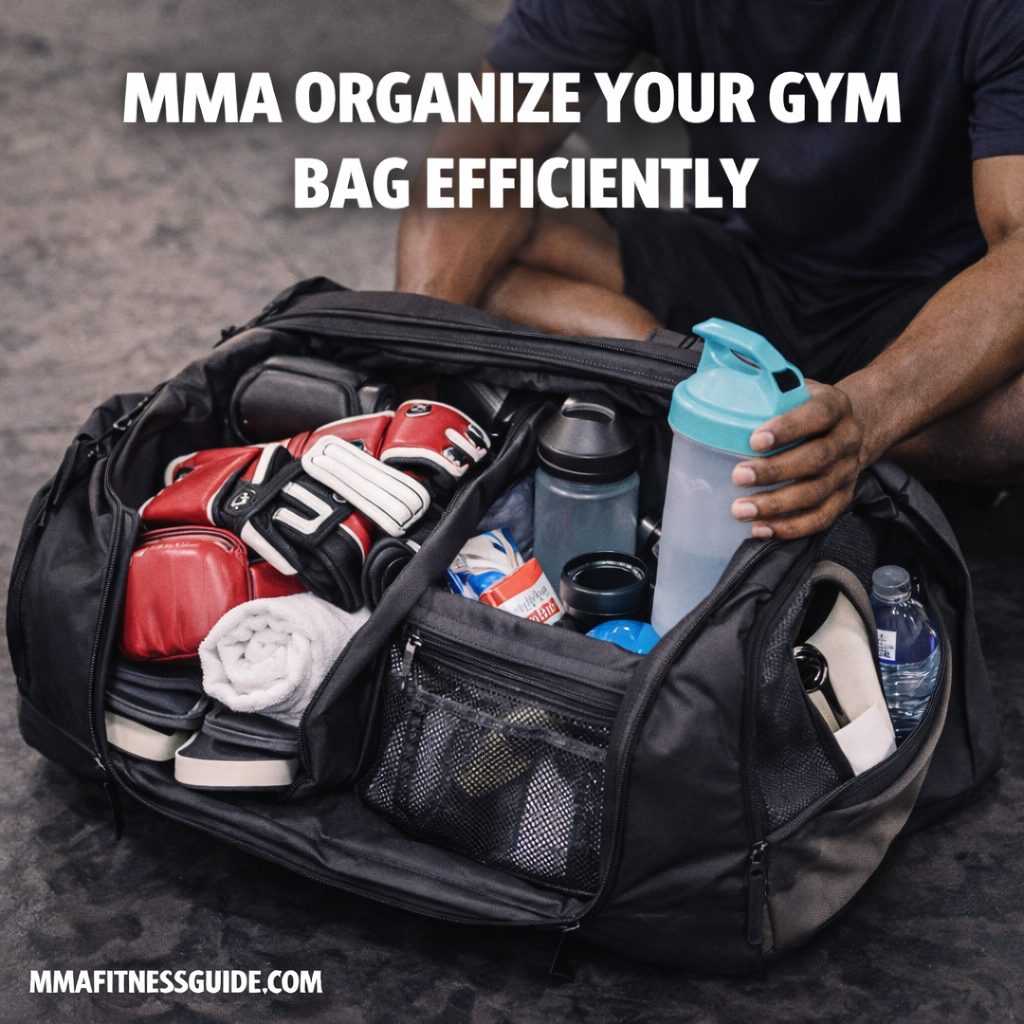
Every MMA gym bag should include:
- Adhesive bandages
- Gauze pads
- Athletic tape
- Antiseptic wipes
- Antibacterial ointment
- Scissors
- Disposable gloves
These handle most minor training injuries.
Items Often Overlooked
Useful additions include:
- Ice packs or cold compresses
- Blister pads
- Alcohol wipes
- Tweezers
- Nail clippers
Small items solve common problems.
Hygiene and Safety Considerations
Clean wounds immediately.
Important habits include:
- Cleaning cuts before taping
- Avoiding training with open wounds
- Disposing of used tape properly
- Washing hands after treatment
Hygiene prevents skin infections.
Keeping Your Kit Organized
An organized kit saves time.
Tips include:
- Using a small zippered pouch
- Restocking monthly
- Separating clean and used items
- Keeping scissors easily accessible
Preparation reduces downtime.
When First Aid Isn’t Enough
Some injuries need professional care.
Seek help if you notice:
- Persistent swelling
- Severe pain
- Loss of mobility
- Signs of infection
- Repeated re-injury
Training through serious injury delays progress.
Tape and Balm Are Not a Substitute for Recovery
These tools support training — they don’t replace recovery.
Remember to prioritize:
- Proper warm-ups
- Strength and mobility work
- Sleep and nutrition
- Load management
First aid supports consistency, not shortcuts.
Final Thoughts
Tape, balm, and a basic first aid kit are essential tools for any MMA athlete. They help manage the small injuries and discomforts that come with hard training, allowing fighters to stay consistent and focused.
Prepared athletes miss fewer sessions, recover faster, and train with confidence. A well-stocked gym bag isn’t about fear — it’s about professionalism and longevity.