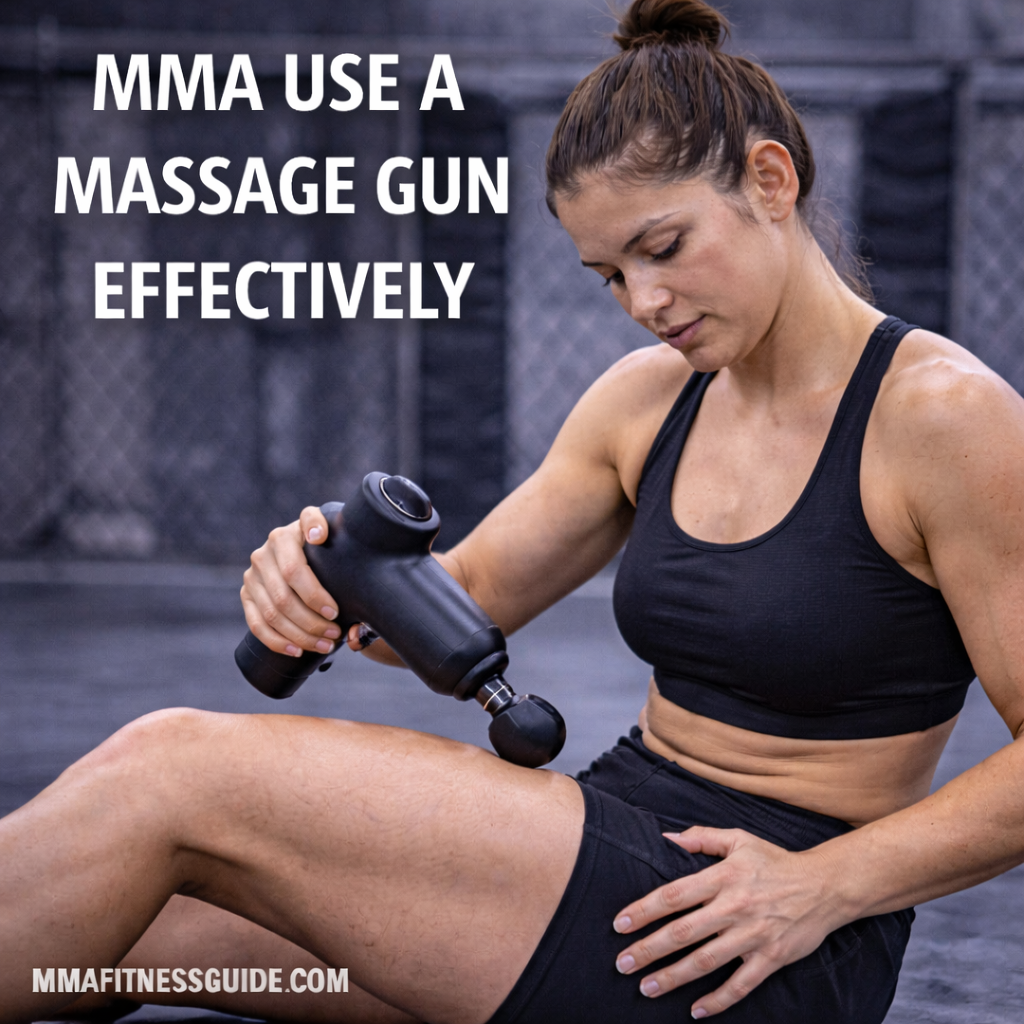
Massage guns have become a common recovery tool in MMA gyms, fight camps, and locker rooms. When used correctly, they can help fighters reduce soreness, improve circulation, and stay mobile between intense sessions. When used incorrectly, they can irritate tissue, delay recovery, or even increase injury risk.
This guide explains how MMA fighters can use a massage gun effectively — when to use it, where to apply it, and how to avoid common mistakes.
Why Massage Guns Are Useful for MMA Fighters
MMA places constant stress on muscles, joints, and connective tissue.
Massage guns can help by:
- Increasing blood flow to worked muscles
- Reducing post-training stiffness
- Supporting recovery between sessions
- Improving short-term range of motion
- Helping fighters relax tight areas before mobility work
They are a recovery aid, not a cure-all.
When to Use a Massage Gun
Timing matters more than intensity.
After Training
Post-training use is the most common and effective.
Benefits include:
- Reducing muscle tightness
- Promoting circulation
- Helping calm the nervous system
- Supporting faster recovery before the next session
Keep sessions controlled and brief.
On Recovery or Rest Days
Massage guns are also useful on lighter days.
Use them to:
- Address lingering tight spots
- Prepare muscles for light movement
- Support mobility work
- Maintain tissue quality without fatigue
Avoid aggressive use on rest days.
Before Training (With Caution)
Massage guns can be used pre-training, but lightly.
Best practices include:
- Low intensity only
- Short durations
- Followed by dynamic warm-ups
The goal is activation, not deep tissue work.
How Long to Use a Massage Gun
More is not better.
General guidelines:
- 30–60 seconds per muscle group
- 5–15 minutes total per session
- Lower intensity for sensitive areas
- Stop if discomfort increases
Overuse can delay recovery instead of improving it.
Best Muscle Groups to Target for MMA
Focus on muscles that absorb the most workload.
Common target areas include:
- Quads and hamstrings
- Glutes and hips
- Calves and Achilles area
- Upper back and lats
- Forearms and grip muscles
- Shoulders (avoiding joints)
Avoid bony areas and the spine.
Areas MMA Fighters Should Avoid
Massage guns are not meant for every area.
Avoid direct use on:
- Neck and cervical spine
- Lower back spine
- Joints (knees, elbows, ankles)
- Bruised or inflamed tissue
- Fresh injuries
If unsure, err on the side of caution.
Pressure and Speed Settings That Work Best
Most fighters use too much intensity.
Effective use involves:
- Starting at the lowest setting
- Letting the device rest on the muscle
- Avoiding pressing hard into tissue
- Adjusting based on comfort, not pain
Pain does not equal effectiveness.
Massage Gun vs Stretching and Mobility
Massage guns should support movement, not replace it.
Best results come from combining:
- Light massage gun use
- Dynamic stretching
- Controlled mobility drills
- Active recovery work
Think of massage guns as preparation, not the solution.
Common Massage Gun Mistakes in MMA
Avoid these errors:
- Using high intensity every session
- Treating it like deep tissue massage
- Using it immediately before hard sparring
- Ignoring pain signals
- Relying on it instead of proper recovery habits
Recovery works best as a system.
When Massage Guns Won’t Help
Massage guns won’t fix:
- Poor sleep
- Inadequate nutrition
- Chronic overtraining
- Structural injuries
If pain persists, consult a professional.
Final Thoughts
Massage guns can be powerful recovery tools for MMA fighters when used correctly. The key is moderation, proper timing, and smart application. Used consistently and carefully, they help fighters stay loose, recover faster, and train more effectively.
Used recklessly, they can do the opposite. Respect the tool, listen to your body, and remember that recovery is about supporting performance — not punishing tired muscles.