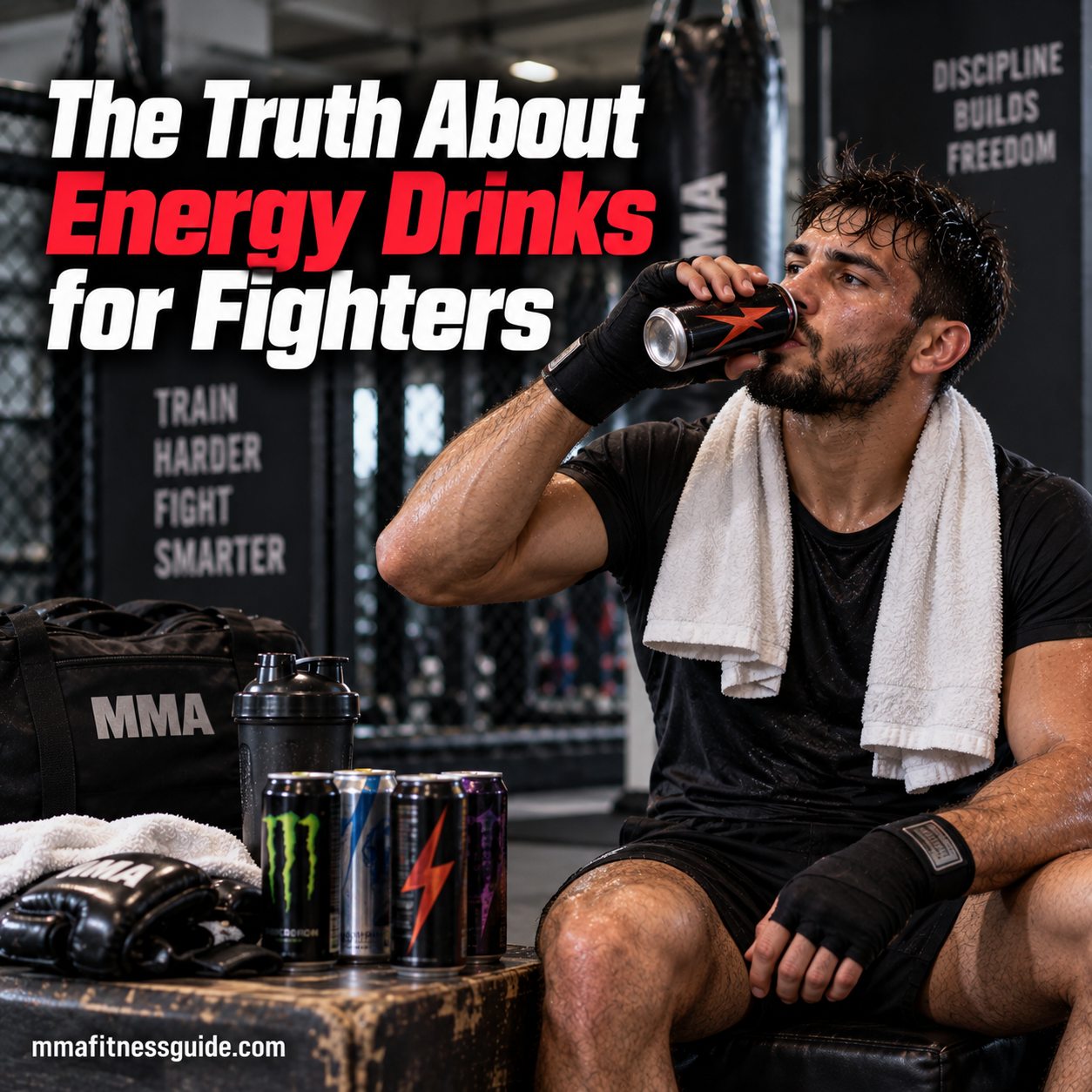
It’s 6 p.m., you’ve already put in a full day at work, and sparring starts in 30 minutes. You’re exhausted, so you grab an energy drink on the way to the gym. Twenty minutes later, you feel more alert and ready to train. But when it’s time to sleep, you’re still wide awake—and tomorrow’s morning session is only a few hours away.
Energy drinks can temporarily improve alertness and reduce perceived fatigue, largely because of their caffeine content. However, the same stimulation that helps you push through a demanding workout can interfere with sleep, increase jitters, or mask how tired you actually are. For MMA fighters, boxers, and grapplers balancing intense training with weight management and recovery, those trade-offs deserve attention.
The real question isn’t whether energy drinks work—it’s whether their short-term benefits fit your overall training and recovery needs. Caffeine dose, timing, individual tolerance, and the ingredients in each drink all influence the outcome. Knowing when an energy drink might be useful, when it could interfere with recovery, and when food, hydration, or rest would serve you better can help you make more informed choices before your next session.
What’s Actually Inside Energy Drinks
Most energy drinks rely on a similar ingredient profile, even if the branding looks different. Common ingredients include:
- Caffeine (synthetic or plant-based)
- Sugar or artificial sweeteners
- Taurine
- B vitamins
- Herbal stimulants such as guarana or ginseng
Caffeine is responsible for most of the performance effect. Sugar provides fast-burning fuel, while many of the other ingredients are added more for marketing than measurable athletic benefit.
For fighters, the concern isn’t just the ingredient list — it’s how these substances interact with intense training schedules, weight management, and recovery demands.
How Energy Drinks Affect Fighter Performance
Short-Term Benefits
When used strategically, caffeine can offer legitimate performance benefits. Fighters may experience:
- Increased alertness and reaction speed
- Reduced perception of fatigue
- Improved focus during drilling or pad work
- Slight endurance improvements during steady efforts
These effects explain why caffeine is widely studied and commonly used across sports.
However, most energy drinks deliver caffeine in doses that are poorly timed and poorly controlled.
Why the Benefits Don’t Last
The stimulation from energy drinks is temporary. As caffeine spikes and blood sugar fluctuates, many fighters experience:
- Sudden energy crashes
- Reduced coordination later in sessions
- Mental fog during extended training
- Dependence on stimulants to maintain intensity
Over time, this pattern leads to inconsistent training quality rather than sustained performance gains.
The Hidden Downsides of Energy Drinks for Fighters
Dehydration Risk
Caffeine has a mild diuretic effect, which can worsen dehydration when combined with:
- Intense sweating
- Weight cuts
- Sauna or hot training environments
Poor hydration negatively impacts endurance, reaction time, and injury risk — all critical factors in combat sports.
Nervous System Overload
Fighting is neurologically demanding. Excessive stimulant use can overstimulate the central nervous system, leading to:
- Increased anxiety
- Poor sleep quality
- Elevated resting heart rate
- Reduced recovery between sessions
For fighters training multiple times per day, this can accumulate quickly and contribute to burnout.
Weight Cut Complications
Energy drinks can complicate weight management by:
- Increasing cortisol levels
- Disrupting appetite regulation
- Encouraging sugar cravings
- Masking true fatigue signals
During fight camp, this can make cutting weight more stressful and less predictable.
Energy Drinks and Fight Camp Performance
Fight camp is about consistency, not temporary spikes. Relying on energy drinks during camp often leads to:
- Strong early-week sessions followed by midweek crashes
- Poor sleep leading into sparring days
- Reduced ability to adapt to training volume
- Increased injury risk due to fatigue masking
Many fighters mistake stimulation for readiness, which can hurt long-term performance.
Are Sugar-Free Energy Drinks Better?
Sugar-free options eliminate blood sugar spikes, but they are not risk-free.
Potential issues include:
- High caffeine doses still stressing the nervous system
- Artificial sweeteners disrupting gut health for some athletes
- Increased reliance on stimulants instead of proper nutrition
While sugar-free versions are generally better than high-sugar drinks, they should still be used sparingly.
Smarter Energy Strategies for Fighters
Use Caffeine Strategically
Instead of energy drinks, fighters can benefit from controlled caffeine intake:
- Black coffee or espresso
- Low-dose caffeine capsules
- Green tea or matcha
These options allow precise dosing without excess additives.
Fuel With Real Nutrition
Sustained energy comes from proper fueling:
- Complex carbohydrates for training days
- Lean protein for recovery
- Healthy fats for hormonal balance
- Electrolytes for hydration
When nutrition is dialed in, the need for stimulants drops dramatically.
Improve Sleep and Recovery First
Many fighters use energy drinks to compensate for poor recovery. Prioritize:
- Consistent sleep schedules
- Active recovery days
- Mobility and breath work
- Proper deload weeks
True performance gains come from adaptation, not stimulation.
When Energy Drinks Might Make Sense
In rare situations, limited use may be acceptable:
- Long travel days
- Early-morning competitions
- Emergency alertness situations
Even then, lower doses and simpler caffeine sources are usually better choices.
Final Thoughts
Energy drinks are not inherently evil, but they are often misused by fighters. While they can provide short-term alertness, the long-term costs to hydration, recovery, sleep, and nervous system health often outweigh the benefits.
For fighters serious about performance, consistency beats stimulation every time. Strategic caffeine use, proper nutrition, and recovery-focused training will always outperform reliance on energy drinks.
If your goal is to train harder, recover faster, and fight better — energy drinks should be the exception, not the foundation.