
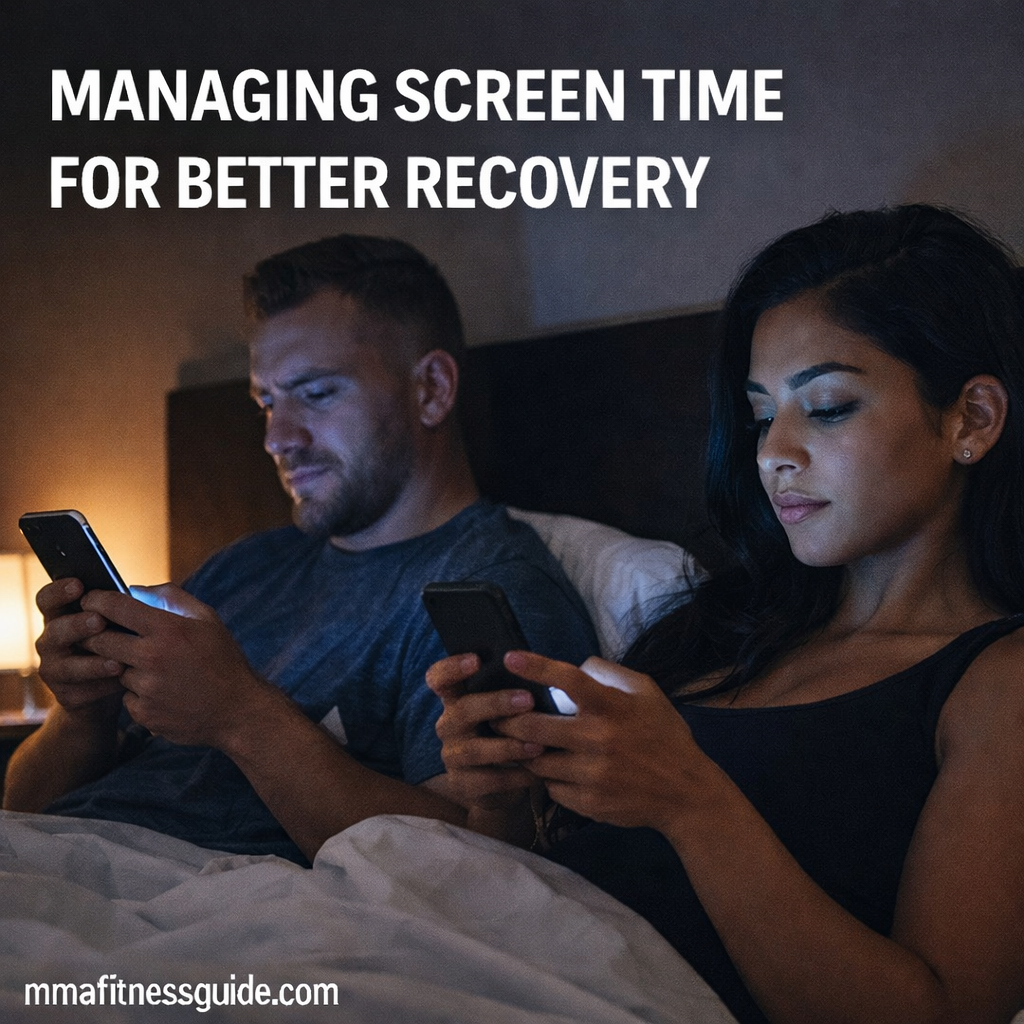
MMA training places demands on the body and the brain. Hard sparring, strength work, conditioning, drilling, and weight management all require adequate recovery between sessions. What happens during the hours outside the gym can determine how prepared a fighter feels when the next session begins.
Screen habits are part of that equation. Phones, computers, tablets, televisions, gaming, and social media can extend mental stimulation late into the evening, encourage later bedtimes, and make it harder to establish a consistent wind-down routine.
The goal isn’t to eliminate screens. It’s to use them in ways that don’t compete with sleep, relaxation, and training readiness.
Why Recovery Goes Beyond the Gym
Recovery continues long after training ends. The body needs time and adequate nutrition to repair tissue, while the nervous system and brain need opportunities to shift away from the demands of training and everyday stress.
Good recovery habits support:
- Muscle repair and adaptation
- Nervous system recovery
- Concentration and decision-making
- Stable mood
- Consistent training performance
- Healthy sleep patterns
Screen use can affect several of these areas, particularly when it extends late into the night or replaces sleep.
How Screen Time Can Affect Fighter Recovery
Screen time itself isn’t automatically harmful. Problems tend to appear when screens interfere with behaviors that support recovery.
For example, a fighter who intends to sleep at 10:30 p.m. may start scrolling at 10:00 and remain awake until midnight. Someone else may spend the hour before bed answering messages, watching intense fight footage, or gaming and then struggle to mentally disengage.
Potential issues include:
- Later bedtimes
- Increased mental stimulation before sleep
- Frequent interruptions from notifications
- Less time spent relaxing away from devices
- Reduced sleep duration
For an athlete training multiple times per week, repeatedly losing sleep can accumulate into noticeable fatigue.
Blue Light and Sleep Quality
Phones, tablets, televisions, and computer displays emit light that can influence the body’s sleep-wake system. Evening exposure is particularly relevant because the brain uses light as one of the signals regulating circadian rhythm.
How Evening Light Exposure Affects Sleep
Bright light in the evening, including short-wavelength blue light from screens, can suppress melatonin and shift the timing of sleep.
The practical problem often extends beyond blue light itself. Screen activities can also keep people awake simply because they’re engaging.
Late-night screen use may contribute to:
- Delayed sleep
- Shorter total sleep time
- Difficulty maintaining a consistent bedtime
- Feeling less rested the following morning
For MMA athletes, those effects can matter during technical practice, conditioning, and sparring.
Why Sleep Quality Matters for MMA
Sleep provides recovery time that cannot simply be replaced by supplements, stretching, or other recovery techniques.
Adequate sleep supports:
- Physical recovery
- Learning and memory
- Reaction and decision-making
- Mood regulation
- Training readiness
A fighter repeatedly sleeping six hours because of late-night scrolling has a different recovery problem than someone who needs another mobility routine.
Mental Fatigue and Overstimulation
Physical rest doesn’t always mean mental rest.
A fighter can spend an evening sitting on the couch while constantly switching between messages, videos, news, social media, and other content. The muscles may not be working hard, but attention remains occupied.
High-stimulation screen habits can leave less room for quiet periods in which the mind can disengage.
This becomes especially relevant when training already requires sustained concentration. Pad work, wrestling exchanges, defensive reactions, and technical drilling all depend on attention.
Reducing unnecessary digital stimulation can preserve more mental bandwidth for those sessions.
Screen Time and Stress
Not every minute spent looking at a screen creates stress. The type of content and the way it is consumed matter.
Repeatedly checking notifications, arguing online, reading upsetting news, comparing yourself with other athletes, or responding to work messages late at night can make it difficult to transition into a relaxed state.
For fighters, the practical objective is to identify which digital habits leave them feeling alert, frustrated, anxious, or mentally drained and reduce those behaviors during recovery periods.
Signs Your Screen Habits May Be Affecting Recovery
Look at patterns rather than blaming every poor training session on your phone.
Screen habits may deserve attention if you regularly experience:
- Going to bed later than planned because you’re using your phone
- Difficulty putting your phone down at night
- Feeling mentally drained after long periods online
- Checking notifications repeatedly during downtime
- Poor concentration during training after late nights
- Irritability following insufficient sleep
- Waking up and immediately reaching for a device
If several of these occur regularly, changing when and how you use screens is worth testing.
Managing Screen Time Without Eliminating It
Phones and computers are necessary for work, communication, entertainment, and sometimes training. A realistic approach is to create boundaries around the periods when recovery matters most.
Create a Pre-Sleep Screen Cutoff
Choose a point in the evening when unnecessary screen use ends.
For some fighters, 30 minutes before bed may be a realistic starting point. Others may prefer 60 minutes or longer.
During that period:
- Put the phone away from the bed
- Dim household lighting
- Avoid work messages when possible
- Skip emotionally stimulating videos or social media
- Prepare clothing and equipment for the next day
- Follow the same general bedtime routine
The exact number of screen-free minutes matters less than establishing a routine that helps you reach bed on time.
Use Night Mode and Reduce Brightness
When evening screen use is unavoidable, reducing brightness and using warmer display settings can decrease light exposure.
Useful adjustments include:
- Enabling night mode
- Lowering screen brightness
- Using dark mode when comfortable
- Keeping screens farther from the face
- Turning off unnecessary notifications
These settings can help, but they shouldn’t become an excuse to scroll for another two hours.
Replace Screen Time With Recovery-Friendly Activities
Simply putting the phone down can leave an empty hour that quickly gets filled with more screen use. Having alternatives makes the habit easier to maintain.
Low-Stimulation Evening Activities
Options include:
- Gentle stretching
- Light mobility work
- Reading a physical book
- Journaling
- Preparing meals or equipment for tomorrow
- Breathing exercises
- Taking a warm shower
- Having a quiet conversation
- Listening to relaxing audio
The activity doesn’t need to qualify as a formal “recovery technique.” It simply needs to help you transition from an active day toward sleep.
Passive vs. Purposeful Screen Use
Screen activities differ considerably.
Twenty minutes reviewing technique footage for tomorrow’s practice isn’t the same as spending two hours moving between short-form videos.
Purposeful screen use has a defined reason and stopping point. Passive use often continues because the next piece of content appears automatically.
Before opening an app, know what you’re there to do. When that task is finished, close it.
Screen Time During the Day Matters Too
Nighttime habits receive the most attention because of their relationship with sleep, but daytime screen use can also affect how mentally fresh you feel.
Mental Overload and Training Performance
Long periods of concentrated computer work, gaming, social media, or constant messaging can create mental fatigue before training begins.
That doesn’t mean fighters with desk jobs need to avoid computers. Instead, they can reduce unnecessary stimulation around required screen time.
If you’ve spent eight hours working at a computer, another hour of random scrolling immediately before practice may not be the best use of your remaining attention.
Take Strategic Screen Breaks
Breaks don’t need to be complicated.
Try:
- Standing and walking for a few minutes
- Looking away from the screen regularly
- Stretching after long periods of sitting
- Eating meals without a phone
- Taking a short walk before training
- Keeping the phone in your bag during warm-ups
These habits create natural breaks in otherwise screen-heavy days.
Social Media and Recovery
Social media presents a specific challenge for competitive athletes because training, competition, rankings, physiques, and personal progress are constantly visible.
Comparison and Mental Stress
Seeing another fighter’s highlight reel doesn’t provide much context about their actual training, injuries, setbacks, or daily life.
Constant comparison can shift attention away from useful questions such as:
- Did my technique improve this week?
- Am I recovering between sessions?
- Am I following my coach’s plan?
- What needs work before my next competition?
Your own training data and coaching feedback are more useful than comparing yourself with carefully selected clips from other athletes.
Set Boundaries Around Social Media
Practical options include:
- Checking social media during designated periods
- Removing notifications from nonessential apps
- Avoiding social media immediately before bed
- Keeping the phone away during training
- Muting or unfollowing accounts that consistently create unnecessary stress
- Removing apps from the home screen to reduce automatic checking
Even small barriers can interrupt habitual scrolling.
Screen Habits and Injury Risk
Screen time doesn’t directly cause most MMA injuries, but poor sleep and fatigue can create conditions that make safe training harder.
A tired fighter may have slower reactions, reduced concentration, poorer decision-making, or less precise technique.
This matters during activities where mistakes have immediate consequences, including:
- Hard sparring
- Wrestling exchanges
- Takedown practice
- Heavy strength training
- High-intensity conditioning
Managing evening screen habits is therefore part of a broader strategy for arriving at training rested and attentive.
Create a Recovery-Focused Daily Routine
Instead of tracking every minute of screen time, build a few predictable boundaries into the day.
A simple structure could look like this:
Morning: Avoid immediately spending 20–30 minutes scrolling in bed. Get up, hydrate, eat, and begin the day.
Work or school: Take periodic movement breaks during long stretches of computer use.
Before training: Reduce unnecessary scrolling and give yourself time to mentally transition into practice.
After training: Eat, hydrate, shower, and complete any planned recovery work before settling into entertainment.
Before bed: Put unnecessary screens away and follow a repeatable wind-down routine.
A predictable routine reduces the number of decisions you have to make when you’re already tired.
Use Screens Intentionally for Recovery
Digital devices can also support training and recovery when there is a clear purpose behind their use.
Examples include:
- Following a guided breathing session
- Logging training and recovery information
- Reviewing technique footage
- Following a short mobility routine
- Setting sleep or wake reminders
- Communicating with coaches
- Planning the following day’s training
The distinction is simple: use the device to complete the intended task rather than allowing the task to turn into another hour of unrelated browsing.
Balancing Modern Life With Fighter Recovery
Most fighters can’t eliminate screens. Work, school, family communication, training footage, scheduling, and entertainment all involve technology.
A more useful goal is controlling the timing and purpose of screen use.
Start with the periods most likely to affect training:
- The hour before bed
- The first part of the morning
- The period immediately before training
- Dedicated recovery time
Adjust one period at a time and pay attention to whether sleep, concentration, and training readiness improve.
Common Screen-Time Mistakes Fighters Make
Several approaches tend to be difficult to sustain:
- Attempting to eliminate nearly all screen use overnight
- Staying up late because night mode is enabled
- Watching highly stimulating content immediately before sleep
- Keeping notifications active throughout recovery periods
- Using the phone during every break in the day
- Focusing on total screen-time numbers without considering what the screen is being used for
- Sacrificing sleep for entertainment after evening training
The objective isn’t to achieve an artificially low screen-time statistic. It’s to prevent digital habits from interfering with sleep and recovery.
Final Thoughts
Screen management for MMA recovery comes down to timing, content, and boundaries.
If your phone routinely pushes bedtime back an hour, start there. If social media leaves you mentally drained before practice, change when you use it. If computer work is unavoidable, build short periods away from the screen into the day.
Small adjustments are easier to maintain than a complete digital detox. Protect your sleep, create periods of genuine downtime, and arrive at training with enough physical and mental energy to do productive work.