Hard rounds leave their mark in predictable places: tight calves after hours of footwork, stiff hips after wrestling, knotted forearms from grip fighting, and tense shoulders from striking and clinch work. When those areas stay tight between sessions, normal MMA movements can start to feel restricted or uncomfortable.
Targeted pressure with a foam roller, massage ball, or similar tool can temporarily reduce muscle tension and improve range of motion. For fighters training several times per week, a short trigger point routine can be incorporated alongside sleep, nutrition, mobility work, and appropriate rest.
What Are Trigger Points?
Trigger points are sensitive areas within muscle tissue that may feel like tight knots or bands when pressed. They can develop after repeated muscular loading, sustained tension, or changes in how a fighter moves because of fatigue or soreness.
These areas may be associated with:
- Localized tenderness
- Reduced range of motion
- Pain that seems to spread into nearby areas
- Stiffness during specific movements
A fighter might notice one while rotating the shoulders to punch, changing levels for a takedown, or trying to regain normal hip mobility after a hard grappling session.
Why Fighters Develop Tight, Sensitive Muscles
A single MMA session can involve hundreds of repeated movements. Jabs repeatedly load the shoulders, wrestling exchanges tax the hips and back, and prolonged grip fighting keeps the forearms under tension.
Common contributors include:
- Repetitive striking and grappling movements
- Sudden increases in training volume
- Inadequate recovery between sessions
- Muscle imbalances or restricted mobility
- Fatigue and prolonged muscular tension
Instead of treating every tight spot as something that needs aggressive pressure, consider what created it. Persistent tightness may be a sign that training volume, technique, recovery, or an underlying injury needs attention.
How Trigger Point Release Can Help MMA Athletes
Applying controlled pressure to a tight muscle can temporarily change how that area feels and moves. That can be useful when stiffness is interfering with otherwise pain-free movement.
Fighters may use trigger point work to:
- Reduce feelings of muscular tightness
- Temporarily improve range of motion
- Make subsequent mobility work more comfortable
- Manage post-training stiffness
- Prepare specific muscles for light movement
The goal isn’t to crush a knot until it disappears. Use enough pressure to produce manageable discomfort while still allowing the muscle to relax.
Trigger Point Release vs. Traditional Stretching
Stretching and targeted pressure affect the body differently and can be used together.
Stretching generally involves moving a muscle or joint into a lengthened position and holding or moving through that range. Trigger point work concentrates pressure on a smaller area of muscle tissue.
For example, a fighter with tight calves might spend 30–60 seconds working a sensitive area with a foam roller and then perform controlled ankle mobility exercises. Someone with stiff glutes might use a massage ball before moving into gentle hip mobility work.
Neither technique needs to be forced to be useful.
Common Trigger Point Areas for Fighters
The most useful areas to target usually reflect what happened during training.
Upper Back and Shoulders
Punching, hand fighting, clinching, framing, and posting repeatedly load the muscles surrounding the shoulders and upper back.
Common areas of tension include:
- Trapezius
- Rhomboids
- Rear deltoids
A massage ball against a wall can provide more control than lying directly on the floor, especially when an area is particularly sensitive.
Hips and Glutes
Shots, sprawls, kicks, guard work, and scrambling require repeated hip extension, rotation, and stabilization.
Fighters often notice tightness around the:
- Glutes
- Piriformis region
- Muscles surrounding the outer hip
A ball or foam roller can be used with gradual pressure while the fighter changes position slightly to locate sensitive areas.
Be cautious when attempting to apply direct pressure to deeper structures around the front of the hip. Persistent hip or groin pain deserves proper assessment rather than increasingly aggressive self-massage.
Calves and Ankles
Stance changes, bouncing, pivots, kicks, and wrestling can leave the lower legs feeling stiff.
Calf tightness may make ankle movement feel restricted, particularly when lowering into a wrestling stance or driving the knee forward over the foot.
Slow foam rolling followed by ankle mobility work can be incorporated after training or during recovery sessions.
Forearms and Hands
Hand fighting and prolonged gripping can leave the forearm muscles noticeably tense.
Light massage or controlled pressure through the forearm may help reduce that feeling after grappling-heavy sessions. Avoid pressing aggressively around irritated joints, nerves, or recently injured fingers and wrists.
Tools Used for Trigger Point Release
Different tools provide different amounts of pressure and precision.
Foam Rollers
Foam rollers distribute pressure across a relatively large area, making them useful for:
- Calves
- Glutes
- Upper back
- Larger leg muscles
Move slowly rather than rapidly rolling back and forth. When you find a sensitive area, reduce movement and control the amount of bodyweight placed on the roller.
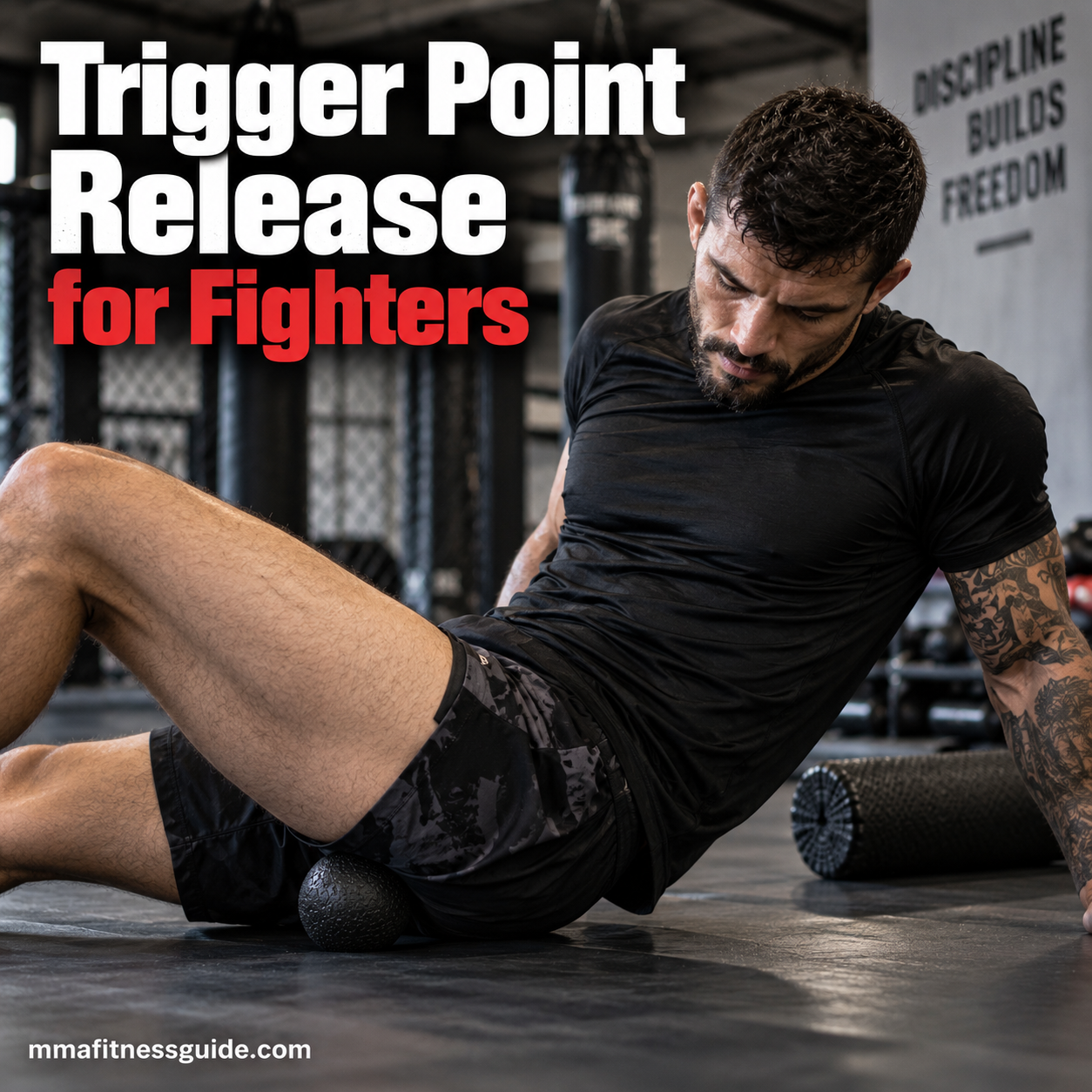
Massage Balls and Lacrosse Balls
A ball concentrates pressure into a smaller area.
They can be useful around:
- Glutes
- Upper back
- Feet
- Selected shoulder muscles
Because the pressure is more concentrated, start gently. Using a ball against a wall gives you more control than placing your full bodyweight over it on the floor.
Handheld Massage Tools
Massage sticks and percussion devices allow pressure to be adjusted without placing bodyweight on the area.
Percussion devices should be moved over muscular tissue rather than held aggressively against joints, bones, or sensitive structures. More intensity does not automatically produce a better result.
How to Perform Trigger Point Release Safely
Choose a muscular area that feels tight rather than pressing directly onto a painful joint.
Apply gradual pressure and give the area time to relax.
A practical approach is to:
- Begin with light pressure
- Increase pressure only if it remains tolerable
- Spend roughly 20–60 seconds on a sensitive area
- Keep breathing normally
- Follow the release work with comfortable movement
The sensation may be uncomfortable, but it shouldn’t produce sharp, electrical, burning, or shooting pain.
When to Stop
Stop applying pressure if you experience:
- Numbness
- Tingling
- Sharp or shooting pain
- Significant swelling
- Increasing pain instead of decreasing tension
Pain following a significant impact, joint injury, suspected muscle tear, or other acute injury should not simply be rolled or massaged away.
When Fighters Should Use Trigger Point Release
There isn’t one mandatory time for self-release work. Match it to what you’re trying to accomplish.
After Training
After a hard session, light pressure can be used on muscles that feel unusually tense.
This can be followed by:
- Easy mobility work
- Light stretching
- Hydration and a post-training meal
- Normal recovery and sleep
Keep the session brief if the muscles are already heavily fatigued.
On Rest Days
Recovery days provide an opportunity to address stiffness without immediately returning to hard training.
A short session combined with walking or easy mobility work may be enough. There is little reason to turn a recovery session into another physically demanding workout.
Before Training
If a specific muscle feels stiff before training, brief and moderate pressure may make movement feel easier.
Follow it with dynamic movement and a proper warm-up. Avoid prolonged or painful pressure immediately before sparring, wrestling, or explosive strength work.
Integrating Trigger Point Work Into a Recovery Routine
Ten focused minutes can be more practical than rolling every muscle in the body.
After a grappling-heavy session, for example, a fighter might spend a few minutes on the forearms, glutes, and calves before performing light hip and ankle mobility work.
A simple routine could include:
- 30–60 seconds on each problem area
- One or two passes rather than repeated aggressive rolling
- Gentle movement afterward
- Extra attention only where training has created noticeable stiffness
Adjust the routine according to the day’s workload instead of automatically targeting the same areas every session.
When Trigger Point Work Backfires
Trigger point work becomes less useful when intensity replaces control.
Common mistakes include:
- Rolling rapidly over muscles
- Applying enough pressure to cause sharp pain
- Spending excessive time on one spot
- Pressing directly over joints or injured tissue
- Using massage to repeatedly push through worsening symptoms
- Skipping strength, mobility, sleep, and appropriate rest
If the same area continually tightens despite recovery work, the underlying cause deserves more attention.
Trigger Point Release and Injury Prevention
Trigger point work should not be treated as insurance against injury. MMA injuries involve many factors, including workload, technique, previous injuries, fatigue, strength, and unpredictable contact.
Where self-release work can contribute is in maintaining comfortable movement. If tight calves are limiting ankle motion or stiff glutes are making hip movement uncomfortable, addressing that tension may make subsequent mobility and warm-up work easier.
It belongs within a broader injury-management strategy rather than replacing one.
Trigger Point Release During Fight Camp
Fight camp increases the importance of controlling unnecessary recovery stress. A fighter already completing hard sparring, wrestling, conditioning, and technical sessions doesn’t need aggressive self-massage that leaves muscles tender the following day.
During high-volume weeks:
- Keep pressure moderate
- Prioritize areas that actually feel restricted
- Use shorter sessions
- Avoid creating additional soreness
- Reduce or stop treatment if symptoms worsen
The purpose is to arrive at the next important session ready to move, not sore from the recovery work itself.
Final Thoughts
A tight calf after footwork drills or stiff shoulders after clinch rounds doesn’t always require a lengthy recovery session. A few minutes of controlled pressure followed by comfortable movement may be enough to reduce stiffness and restore easier movement.
Use trigger point work selectively and pay attention to how your body responds. When pain persists, worsens, follows an acute injury, or includes symptoms such as numbness, weakness, or significant swelling, stop self-treating the area and have it properly evaluated.
For everyday muscular tightness, keep the approach simple: identify the area that feels restricted, apply controlled pressure, restore movement, and get back to the recovery habits that matter between training sessions.