A wrist that bends back while posting, an ankle that rolls during a scramble, or a finger that gets caught during grip fighting can turn a normal training session into weeks of limited work. In MMA, joints are repeatedly exposed to impact, twisting, and awkward positions, so even minor irritation can become a persistent problem when training volume stays high.
Tape and braces can add support where it’s needed without unnecessarily limiting movement. Fighters commonly use them to stabilize wrists, fingers, ankles, and knees during striking, grappling, sparring, and return-to-training sessions.
The key is knowing when that extra support makes sense. Tape or a brace can help manage stress on a vulnerable joint, but it shouldn’t be used to push through an injury that needs rest, rehabilitation, or medical evaluation.
Why Taping and Bracing Matter in MMA
MMA places unique stress on the body. Fighters must strike, grapple, scramble, and absorb force in unpredictable positions. Wrists, ankles, knees, shoulders, and fingers are especially vulnerable.
Taping and bracing help by:
- Providing external joint support
- Limiting excessive or unsafe movement
- Improving proprioception (joint awareness)
- Reducing reinjury risk during training
They are not substitutes for rehab or strength work—but they are valuable tools when used responsibly.
Taping vs Bracing: What’s the Difference?
While taping and bracing serve similar goals, they function differently and suit different situations.
Athletic Taping
Athletic tape is flexible, customizable, and lightweight. It’s commonly used for:
- Wrists and hands
- Fingers and thumbs
- Ankles and feet
- Light shoulder support
Benefits of taping include:
- Precise control over joint movement
- Minimal bulk inside gloves or wraps
- Adjustable tension based on need
Taping is ideal for training sessions where mobility and feel are still important.
Bracing
Braces provide more rigid, consistent support and are typically used for:
- Knees
- Ankles
- Elbows
- Shoulders
Benefits of bracing include:
- Stronger structural support
- Easy application and removal
- Reliable compression and stability
Braces are best for ongoing joint issues, heavier training days, or post-injury return phases.
Common MMA Injuries That Benefit from Taping or Bracing
Certain joints are repeatedly stressed in MMA and benefit the most from added support.
Wrist and Hand Injuries
Punching, posting on the mat, and grip fighting put constant strain on the wrists.
Taping helps by:
- Limiting wrist extension
- Supporting small stabilizing ligaments
- Reducing impact shock
This is especially useful during bag work, pad rounds, and grappling-heavy sessions.
Finger and Thumb Injuries
Grip fighting leads to jammed fingers and strained ligaments.
Finger taping:
- Prevents hyperextension
- Protects minor sprains
- Allows continued grappling with reduced risk
Buddy taping fingers together is a common and effective approach.
Ankle Injuries
Ankles take abuse during takedowns, pivots, and scrambles.
Taping or bracing helps:
- Reduce rolling risk
- Improve joint awareness
- Support ligaments during explosive movement
Many fighters tape ankles during wrestling-focused sessions.
Knee Injuries
Knees are vulnerable during shots, sprawls, and scrambles.
Knee braces or sleeves:
- Provide compression and warmth
- Improve tracking and stability
- Reduce discomfort during long sessions
They are especially helpful for fighters with previous ligament or meniscus injuries.
When to Use Tape or Bracing in Training
Using support at the right time matters as much as using the right type.
Smart Times to Use Tape or Bracing
- During high-intensity sparring
- After returning from a minor injury
- On joints with a known history of issues
- During fight camp volume peaks
Support should help you train—not allow reckless movement.
When to Avoid Overuse
Avoid taping or bracing:
- Every joint at all times
- Minor discomfort that should be addressed with rest
- As a substitute for rehab or strengthening
Over-reliance can weaken stabilizing muscles if used incorrectly.
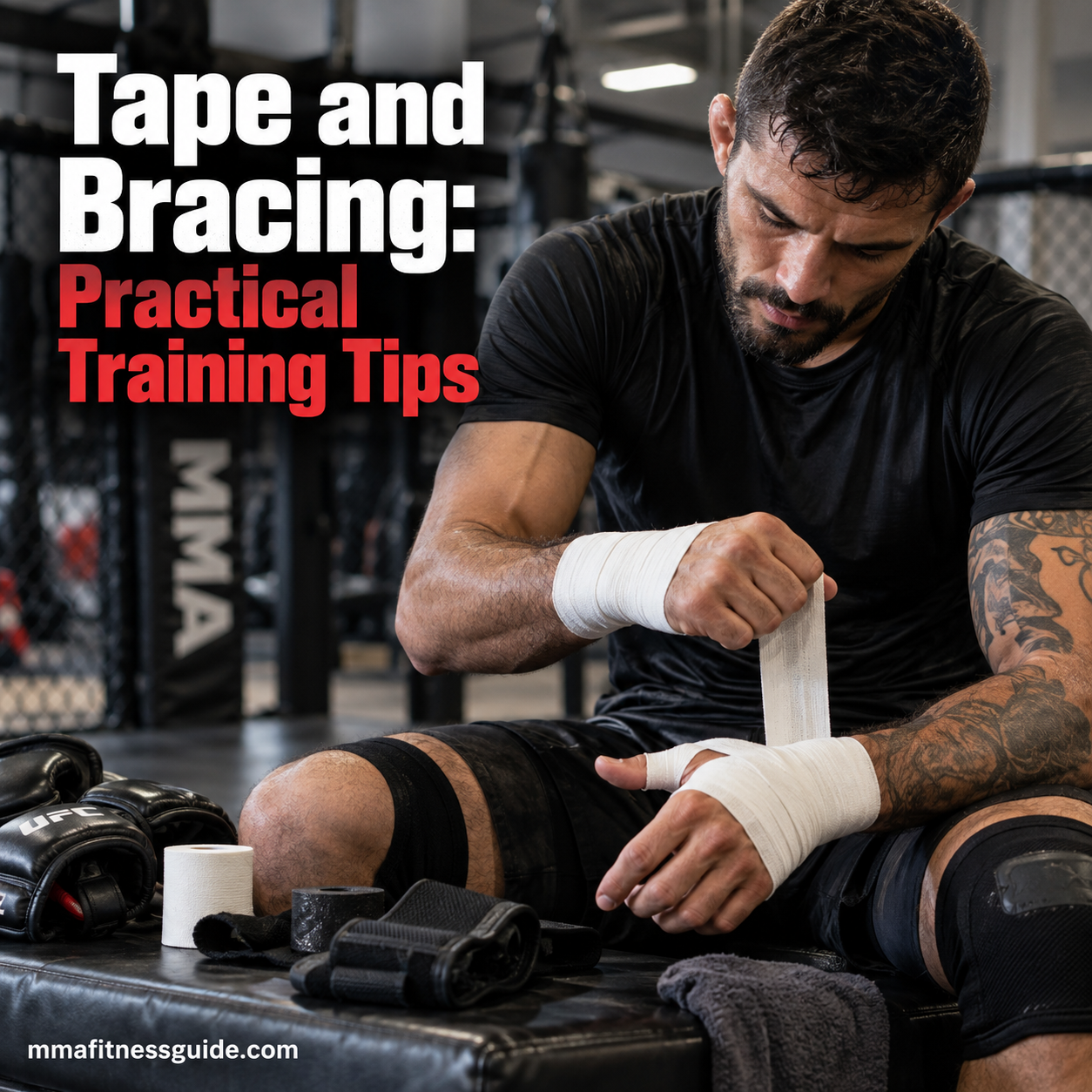
Practical Taping Tips for MMA Fighters
Improper taping is uncomfortable and ineffective. A few fundamentals make a big difference.
Basic Taping Guidelines
- Clean and dry the skin before taping
- Avoid cutting off circulation
- Anchor tape properly above and below the joint
- Use smooth, even tension
Tape should feel supportive—not restrictive or painful.
Learn a Few Essential Techniques
Every MMA athlete should know basic taping for:
- Wrists
- Fingers
- Ankles
Learning these skills saves time and ensures consistent support when needed.
Choosing the Right Brace for MMA Training
Not all braces are suitable for MMA. Bulk, flexibility, and movement compatibility matter.
What to Look for in a Training Brace
- Low-profile design
- Secure fit without slipping
- Breathable material
- Freedom of movement
Avoid overly rigid braces unless prescribed for rehab or medical reasons.
Training vs Sparring Considerations
Some gyms limit brace use during sparring for safety reasons. Always:
- Check gym rules
- Communicate with training partners
- Adjust intensity accordingly
Safety applies to everyone on the mat.
Taping and Bracing for Injury Prevention vs Recovery
Support tools serve different roles depending on context.
Injury Prevention
Used preventively, tape and braces:
- Reduce excessive joint movement
- Improve awareness and control
- Help manage training volume
This is common during heavy training phases.
Recovery and Return to Training
After injury, taping and bracing:
- Protect healing tissues
- Allow controlled movement
- Support gradual reintroduction to intensity
They should decrease over time as strength and stability return.
How Fighters Misuse Tape and Braces
Even experienced athletes misuse support tools.
Common errors include:
- Taping too tightly
- Ignoring pain signals
- Using braces without addressing mobility issues
- Skipping rehab exercises
Tape and braces are support tools—not solutions by themselves.
Final Thoughts
Taping and bracing are practical, effective tools for injury prevention and recovery in MMA when used correctly. They help fighters stay consistent, manage joint stress, and reduce setbacks—but they work best alongside smart training, proper recovery, and strength development.
Used intentionally, tape and braces keep you training longer, safer, and with more confidence on the mats.