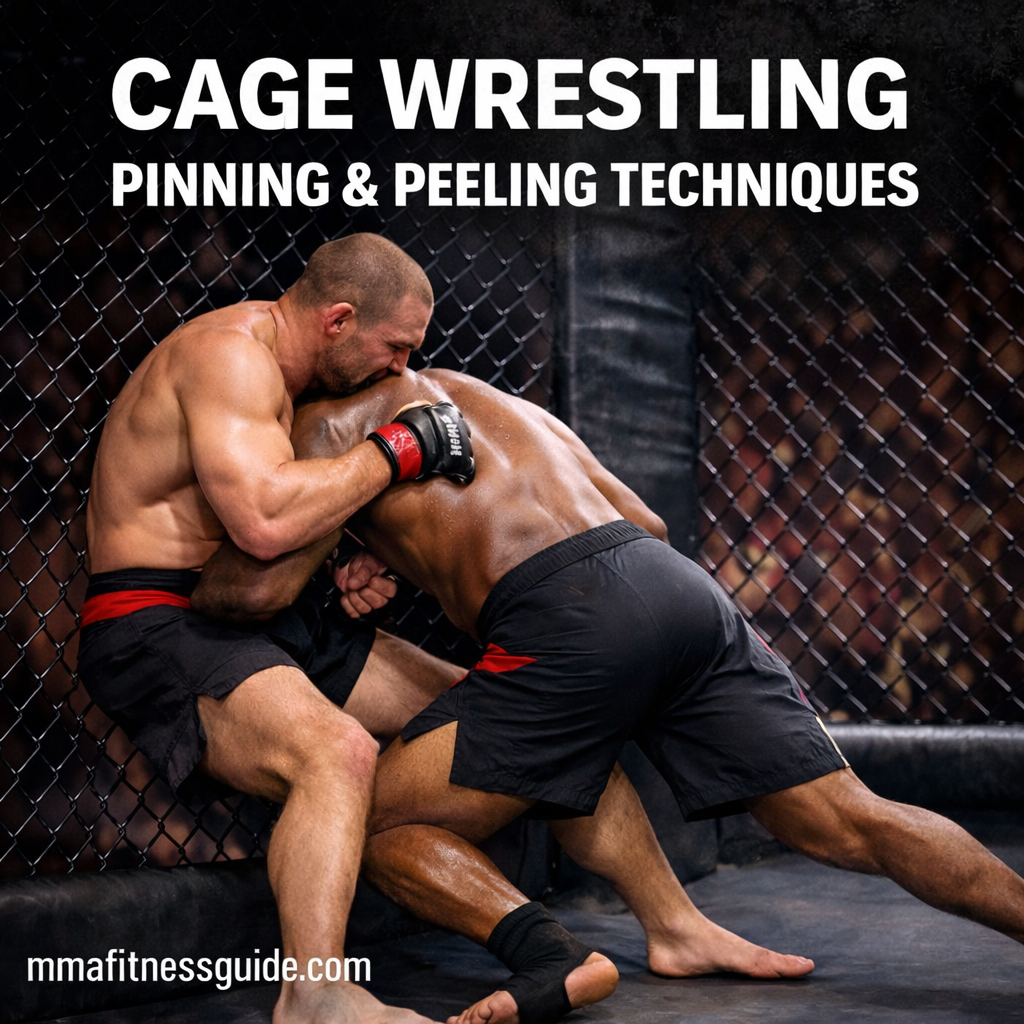
An opponent’s back hits the fence, but they immediately dig for an underhook, frame against your shoulder, and turn their hips toward open space. Simply driving harder won’t necessarily keep them there. You need to control their position, clear the frames preventing your advance, and adjust your pressure before they escape.
That’s where pinning and peeling come together in cage wrestling. Pinning limits an opponent’s movement through head position, underhooks, foot placement, and body pressure. Peeling removes the grips and frames they use to create space, opening opportunities for body locks, trips, single-leg takedowns, and short strikes.
The challenge is connecting those movements without wasting energy. Rather than holding an opponent against the fence through strength alone, effective cage wrestling uses small positional adjustments to turn defensive reactions into openings for the next attack.
What Makes Cage Wrestling Different?
Cage wrestling blends traditional grappling with pressure-based tactics that use the fence as a weapon. Unlike open-mat wrestling, the cage gives fighters a structure they can drive opponents into—removing mobility, limiting escapes, and increasing control.
The Core Concept: Pinning
Pinning in cage wrestling refers to trapping an opponent against the fence long enough to achieve one of the following:
- Secure a takedown
- Land short strikes
- Drain the opponent’s energy
- Advance to double-unders or dominant clinch positions
Effective Pinning Mechanics
Head Positioning: Your forehead on their jawline or temple creates discomfort and prevents them from turning.
Hip Pressure: Keep your hips lower and driving inward to make the opponent carry your weight.
Underhook Control: Strong underhooks stop level changes and open paths to takedowns.
Foot Placement: Step outside their foot to block pivots and maintain the angle.
The best pinning feels “sticky’’—your opponent should feel like they can’t peel you off.
Peeling: Breaking an Opponent’s Frames
Peeling refers to clearing the opponent’s defensive frames (elbows, hands, overhooks, or head position) so you can advance your pressure.
Common Peeling Techniques
1. Inside Wrist Peel
Control their wrist, pull it inward, and pin it to their body to kill their frame.
2. Elbow Lift Peel
Slide your hand under their elbow and lift upward to expose the torso or underhook.
3. Overhook Break
Rotate your trapped arm inward while stepping your hips back to break their overhook grip.
4. Head Position Peel
Use your forehead to displace their head, creating space to dig for underhooks.
5. Double-Under Peel
Start with one underhook, peel the opposite arm upward, and slide into full double-unders.
Combining Pinning and Peeling for Takedowns
The real power comes when pinning and peeling flow together:
- Pin the opponent with shoulder or underhook pressure
- Peel their frame to open a path
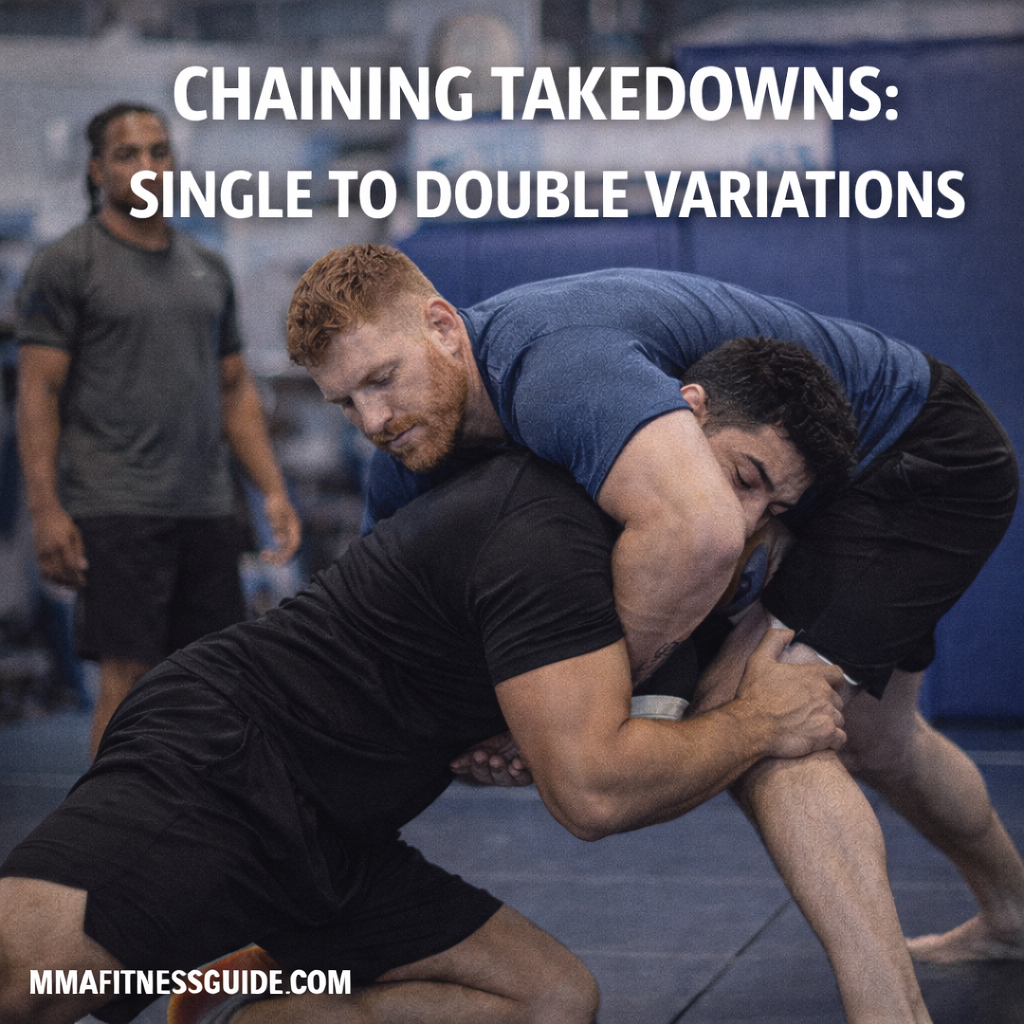
- Switch to a takedown:
- body lock trip
- single-leg run-the-pipe
- knee tap
- drop step double-leg
This sequence is a cornerstone of cage control at the highest levels of MMA.
Common Mistakes to Avoid
- Standing too tall, allowing easy escapes
- Relying only on strength instead of proper head and hip positioning
- Staying static instead of constantly adjusting angles
- Forgetting to strike to force reactions
- Not using the cage edge to block pivots
Clean mechanics beat brute force every time.
Training Drills to Build Skill
- Wall Walk Defense Drill – improves your ability to counter peeling and rise up the fence
- Underhook Battle Rounds – isolation rounds focused only on winning underhooks
- Head-Position Sparring – teaches pressure without relying on strength
- Cage Shadow Wrestling – practice entries and pinning angles solo
- Pummel-to-Peel Rounds – integrate clinch wrestling with peeling mechanics
Consistent cage-specific training builds confidence and efficiency fast.
Final Takeaway
Mastering pinning and peeling elevates every part of your MMA game—striking, takedowns, and control. Fighters who understand cage wrestling don’t just defend or attack; they dictate the entire pace of the fight. Add these techniques to your training, drill them often, and you’ll feel the difference in every clinch exchange.