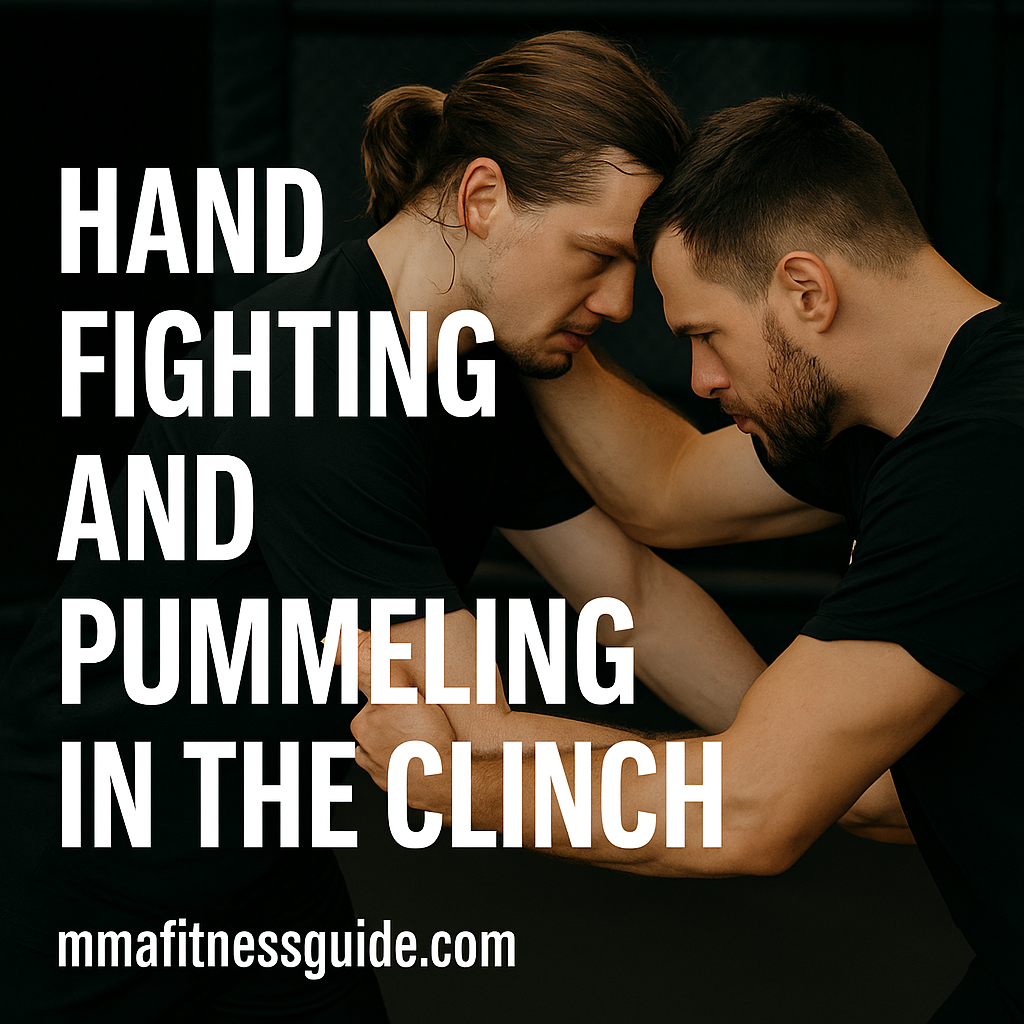
Hand fighting and pummeling are two of the most important — yet often overlooked — skills in clinch work. Whether you’re fighting in MMA, Muay Thai, wrestling, or grappling, the clinch is a battlefield of micro-adjustments, grip fighting, and positional control. The fighter who wins the hand battle usually wins the clinch.
In MMA, mastering these skills allows you to neutralize strikes, create dominant positions, defend takedowns, and set up your own offense with far more efficiency.
Why Hand Fighting Matters in the Clinch
Hand fighting is the constant battle for inside control, wrist control, and grip dominance. It determines who dictates the clinch exchanges.
Successful hand fighting leads to:
- Better control of the opponent’s posture
- Ability to stop underhooks, collar ties, and body lock attempts
- Cleaner transitions into takedowns
- Stronger defense against knees and uppercuts
- Less energy wasted fighting from bad positions
If you lose the hand battle, you’re always reacting instead of attacking.
What Is Pummeling?
Pummeling is the repetitive motion of exchanging underhooks and positions to gain inside control. It’s one of the foundational drills in wrestling, but it applies perfectly to MMA and Muay Thai clinch fighting.
Good pummeling develops:
- Timing
- Sensitivity to pressure
- Automatic reactions
- Dominant positioning
- Comfort in body-to-body contact
Every clinch sequence — defensive or offensive — is built on pummeling mechanics.
Key Goals in the Clinch
Whether you are striking or grappling, your goals in the clinch remain consistent:
- Get inside control (underhooks or head position)
- Break opponent posture
- Control their hips and shoulders
- Create angles for attacks
- Prevent the opponent from striking freely
Hand fighting and pummeling are what allow you to achieve all of these.
Essential Hand Fighting Skills
Wrist Control
Controlling your opponent’s wrists disrupts their ability to strike, swim for underhooks, or set grips. Strong wrist control sets the tone of the clinch.
Swimming the Arms
“Swimming” refers to sliding your arms inside your opponent’s in order to win inside control. This is the basis of both offense and defense in tight spaces.
Hand Peel & Strip
When an opponent establishes a strong grip, you peel their hands off using leverage, not strength. Good fighters strip grips instantly to avoid getting stuck in bad positions.
Fighting for Underhooks
Underhooks give you access to:
- Body locks
- Knee strikes
- Takedowns
- Turning angles
A single underhook is good. Double underhooks are dominant.
Push-Pull Manipulation
You control the opponent’s balance by pushing their arms or pulling their elbows to break structure and create openings.
Mastering Pummeling: How It Works
Pummeling is a repetitive inside-control drill. The goal is to develop “feel” — a sensitivity to pressure, weight shifts, and openings.
Steps in Basic Pummeling
- Start chest-to-chest with one underhook each.
- Swim your free arm inside to replace their control.
- Maintain hip connection to avoid giving space.
- Repeat, alternating sides rhythmically.
- Increase resistance gradually.
Great pummeling looks effortless, smooth, and constant.
Advantages of Dominant Clinch Positioning
Better Grappling Opportunities
Underhooks and inside ties transition easily into:
- Body lock takedowns
- Trips and sweeps
- Single-leg and double-leg entries
- Hip throws
Winning the pummeling exchange directly improves your takedown success.
Safer Defense
Good hand fighting allows you to:
- Stop knee strikes
- Prevent elbows
- Shut down head control
- Block snap-downs
- Break free from collar ties
A defensive clinch becomes an offensive opportunity when your hands win the battle.
Cleaner Striking
With inside control, you can:
- Land knees to the body
- Fire short uppercuts or hooks
- Frame for elbows (in Muay Thai and MMA)
- Turn the opponent to expose angles
Striking from a dominant clinch is efficient and safe.
Clinch Drills to Improve Hand Fighting and Pummeling
1. Classic Pummeling Drill
Continuous inside-control swims. Start slow, then add resistance.
2. Underhook-to-Body-Lock Drill
Win an underhook → step in → secure body lock → rotate your partner.
3. Wrist Control to Underhook Cycling
Fight for wrist control → peel grip → swim inside → underhook.
4. Wall Clinch Battle
Start against the wall. One fighter tries to escape, the other maintains underhooks. Switch roles.
5. Snap Down to Front Headlock
From hand fighting, learn to pull the opponent’s head downward and catch front headlock entries.
These drills create automatic reactions in real fights.
Common Mistakes in the Clinch
- Relying on strength instead of leverage
- Being too upright, making it easier to be off-balanced
- Ignoring head position
- Forgetting to fight for inside control
- Standing square and giving hips away
- Freezing when an opponent gets double underhooks
Fixing these mistakes instantly improves clinch capability.
Final Takeaway
Hand fighting and pummeling are the hidden engines of effective clinch work. When you master them, the clinch becomes a place of control — not chaos. You dictate the pace, create openings, shut down your opponent’s offense, and transition into strikes or takedowns with far less effort.
In MMA, the fighter who wins the hand battle almost always wins the clinch.