Introduction
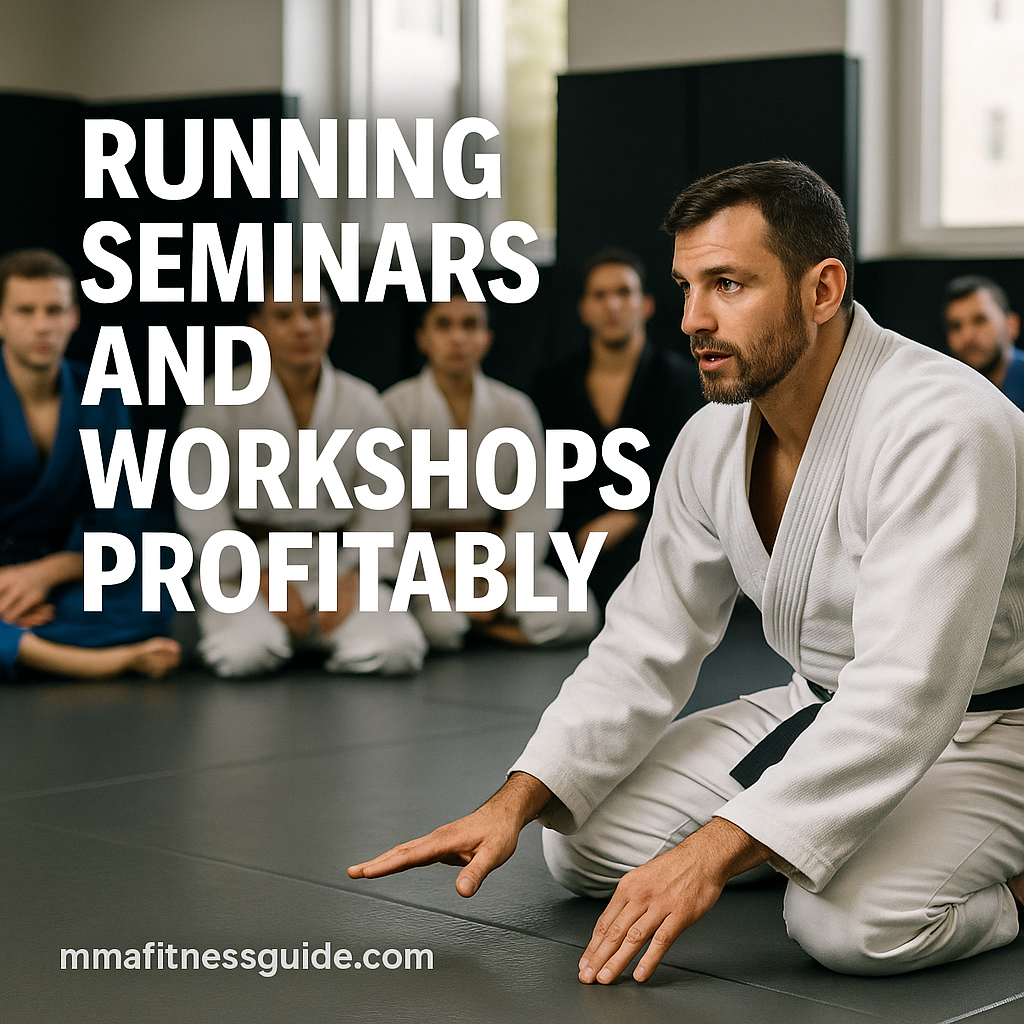
Seminars and workshops are one of the best ways for martial arts instructors and gym owners to increase income, build their personal brand, and offer something special to their students. When done right, a single seminar can bring in more revenue than a week of regular classes — all while providing high-impact training and strengthening your gym’s community.
But profitable seminars don’t happen by accident. They require clear planning, smart pricing, strong marketing, and a great experience on the day of the event.
Here’s how successful coaches run seminars and workshops that consistently make money.
Why Seminars Are So Profitable
Seminars aren’t limited by monthly membership fees.
They generate revenue through:
- one-time ticket sales
- premium pricing
- higher perceived value
- optional merchandise or upsells
- visiting attendees from other gyms
You’re offering your expertise in a focused, high-value format — and people will pay for that when delivered well.
Step 1: Choose a High-Value Topic
People don’t buy “general training.” They buy specific outcomes.
Some of the best-selling seminar topics include:
Striking
- advanced combinations
- footwork systems
- counter-striking fundamentals
Grappling
- leg lock safety and offense
- guard retention systems
- takedowns for MMA
MMA Specialized Topics
- cage wrestling
- ground-and-pound
- fight IQ & strategy
Other profitable topics
- women’s self-defense
- beginner “intro to MMA” workshops
- cardio/conditioning camps
- youth MMA or grappling seminars
The more specific the topic, the easier it is to market and sell.
Step 2: Set the Right Price
Seminar pricing varies by coach experience, location, and demand, but profitable ranges look like this:
Local instructors:
$30–$70 per person
Regional names:
$70–$120 per person
Well-known competitors or coaches:
$120–$200+
Private workshops:
$200–$500 for groups
$150–$300 per private hour
Price too low, and people assume it isn’t valuable.
Price too high without delivering? You won’t get repeat success.
Find your sweet spot and be consistent.
Step 3: Market the Seminar Early and Clearly
You don’t need complicated marketing — just smart communication.
Use these channels:
- your gym’s social media
- email newsletter
- flyers on gym walls
- announcements at the end of class
- other local gyms (with permission)
- your personal network
What your promo should clearly state:
- topic
- date/time
- price
- skill level required
- instructor credentials
- limited spots
- how to register
“Limited spots” boosts urgency and helps seminars fill quickly.
Step 4: Cap Attendance Strategically
Don’t overcrowd the mats.
Ideal seminar sizes:
- 10–20 people for technical grappling
- 20–30 people for striking
- 25–50 people for fitness workshops
Limited space increases:
- perceived value
- attendee experience
- profitability
- safety
Better to sell out a smaller seminar than struggle to fill a large one.
Step 5: Build a Strong Curriculum
A profitable seminar needs structure.
Simple working formula:
- Short warm-up (5–10 minutes)
- Technique instruction (core of the seminar)
- Positional drilling
- Q&A session
- Photo + social share moment
Students should leave feeling like:
- they learned something new
- they can apply it right away
- they were coached personally
If they leave excited, they’ll attend your next one too.
Step 6: Offer Upsells (Without Being Pushy)
Upsells increase profit dramatically.
Good upsell options include:
- branded shirts
- seminar-exclusive rashguards
- technique PDFs
- online course access
- private lessons at a discount
- future seminar pre-registration
If the value is real, students appreciate having more ways to learn.
Step 7: Build Momentum With Photos & Social Media
After the seminar:
- post a group photo
- tag participants
- thank everyone publicly
- encourage reposting
- share highlight clips
This builds credibility and gives you free marketing for the next seminar.
Every photo is proof that your seminar was worth attending.
Step 8: Track Your Numbers
Smart gym owners treat seminars like a business.
Track:
- attendance
- total revenue
- time invested
- profit margins
- marketing methods that worked best
This helps you improve each event.
Step 9: Repeat What Works
Profitable seminars are rarely a one-time event.
If a topic sells well, run it again 3–6 months later or expand it into a small workshop series.
Consistency builds your reputation as a sought-after instructor.
How to Avoid Common Seminar Mistakes
❌ Too much talking, not enough drilling
People want movement and hands-on coaching.
❌ Overcrowding
Destroys the experience and reduces repeat sales.
❌ No clear theme
General seminars are harder to sell and less satisfying.
❌ Underpricing
You work hard — charge appropriately.
❌ No follow-up
You lose momentum when you don’t stay engaged afterward.
Final Thoughts
Seminars and workshops are one of the most profitable and rewarding parts of an MMA career. When you choose strong topics, market clearly, set fair pricing, and deliver a great experience, students get real value — and your business grows every time.
The best part?
Each seminar builds your reputation, attracts new students, and strengthens your gym community.
Run them smart, run them consistently, and they can become a major income stream.