Introduction
Fight camp is one of the most demanding periods in a fighter’s life. Training intensity goes up, recovery needs increase, and everything becomes more structured. But even during those tough weeks, top fighters find ways to stay balanced — mentally, physically, and emotionally. Without that balance, burnout becomes almost guaranteed.
Here’s how fighters maintain stability during camp and stay focused all the way to fight night.
Why Balance Matters in Fight Camp
Camp is stressful.
You’re dealing with:
- stricter training schedules
- weight management
- increased sparring intensity
- mental preparation
- personal responsibilities
If you don’t manage everything well, camp becomes exhausting instead of productive.
Balance keeps fighters:
- consistent
- healthy
- motivated
- mentally sharp
- less injury-prone
Fighters don’t succeed because they push nonstop — they succeed because they manage the push correctly.
Key Ways Fighters Maintain Balance During Camp
Below are the habits fighters rely on to keep their energy, focus, and stability throughout the toughest weeks of camp.
1. Structured Training Schedules (Not Random Workouts)
Balanced fighters plan every session ahead of time:
- striking on certain days
- grappling on others
- S&C at scheduled intervals
- sparring only when required
This prevents overtraining and ensures the right sessions get the right intensity.
A predictable schedule reduces stress and keeps the body from burning out.
2. Prioritizing Sleep as Part of Training
Sleep becomes non-negotiable during camp.
Most fighters aim for:
- 7–9 hours of sleep
- optional 20–40 minute mid-day nap
Why it matters:
- greatest recovery adaptation happens during sleep
- reaction time improves
- stress hormones drop
- appetite and mood stabilize
Sleep isn’t downtime — it’s active recovery.
3. Setting Clear Boundaries With Friends & Family
During camp, fighters simplify their social life.
This doesn’t mean isolation — just boundaries.
Examples:
- declining late nights
- limiting draining social commitments
- focusing energy on training and recovery
Balanced fighters communicate early so expectations are clear.
4. Nutrition That Supports Training — Not Just Weight Cut
Fighters who feel balanced during camp don’t diet aggressively.
They eat strategically:
- consistent meals
- plenty of protein
- high-quality carbs around workouts
- healthy fats for hormone function
- electrolytes to stay hydrated
They avoid extreme cuts until the appropriate time — most balance comes from fueling correctly, not starving.
5. Controlled Sparring (Not Every Round Is a War)
High-level fighters rarely go to war every session.
They control the intensity of sparring:
- technical rounds
- situational rounds
- only a few tough rounds weekly
This preserves joints, keeps the brain sharper, and reduces emotional stress.
Balanced fighters choose smart training over constant brawling.
6. Mental Reset Rituals
Fighters often build small habits that keep their mind steady:
- breathwork
- meditation
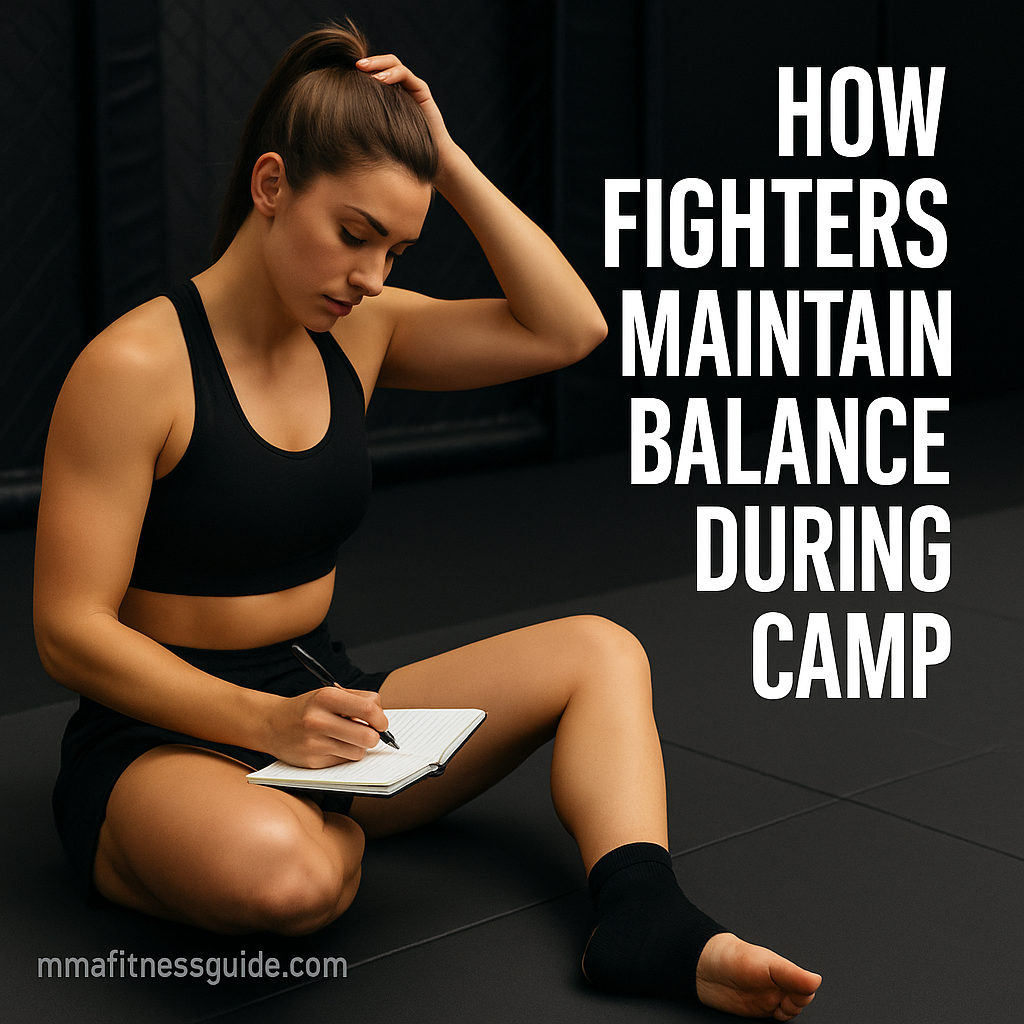
- journaling
- visualization
- gratitude practice
- pre-training routines
These routines reduce anxiety, build confidence, and help control pre-fight nerves.
7. Keeping Camp “Life-Simple”
Fighters simplify daily life to reduce stress:
- fewer errands
- less screen time
- cleaner diet
- minimal distractions
- predictable routines
Life gets quieter so training can get louder.
8. Spending Time With the Right People
Fighters intentionally spend time with:
- supportive coaches
- training partners
- positive friends or family
Balanced camps avoid drama, negativity, or anyone who drains energy.
The right environment keeps motivation steady.
9. Active Recovery on Off Days
Rest doesn’t mean lying still all day.
Balanced fighters use active recovery:
- mobility
- stretching
- light cardio
- sauna sessions
- cold exposure
- massage or bodywork
These reduce soreness, improve performance, and boost mood — all essential during camp.
10. Monitoring Mental Fatigue
Body fatigue is obvious, but mental fatigue sneaks up.
Balanced fighters check in with themselves:
- Am I getting irritable?
- Am I moving slower than usual?
- Am I losing focus in drills?
- Am I dreading sessions I usually enjoy?
When answers trend negative, they adjust training volume before burnout hits.
What Throws Fighters Off Balance During Camp
Avoid these common pitfalls to stay grounded:
❌ Overtraining from excitement
Camp hype often pushes fighters too hard too fast.
❌ Cutting weight too early
Leads to mood swings, low energy, slower recovery.
❌ Too much sparring
Mental and physical exhaustion builds quickly.
❌ Not enough “life balance”
You can’t live in the gym 24/7 — rest days matter.
❌ Trying to impress everyone
Camp is for improving, not proving.
Simple Daily Checklist for Balance in Camp
Here’s a practical checklist any fighter can follow:
- slept 7–9 hours
- ate enough protein & carbs
- hydrated + electrolytes
- moved (light or hard)
- had at least one mental reset moment
- avoided unnecessary stress
- finished all scheduled training (or adjusted safely)
- kept mindset steady and controlled
A balanced fighter becomes a dangerous fighter.
Final Thoughts
Fight camp is challenging, but staying balanced makes it manageable — and often enjoyable. When fighters control their schedule, nutrition, mindset, recovery, and environment, they perform better and feel better. Balance doesn’t happen by accident — it’s built through smart habits and intentional choices.
Train hard.
Rest smart.
Keep life simple.
Balance is a skill — and every fighter can learn it.